


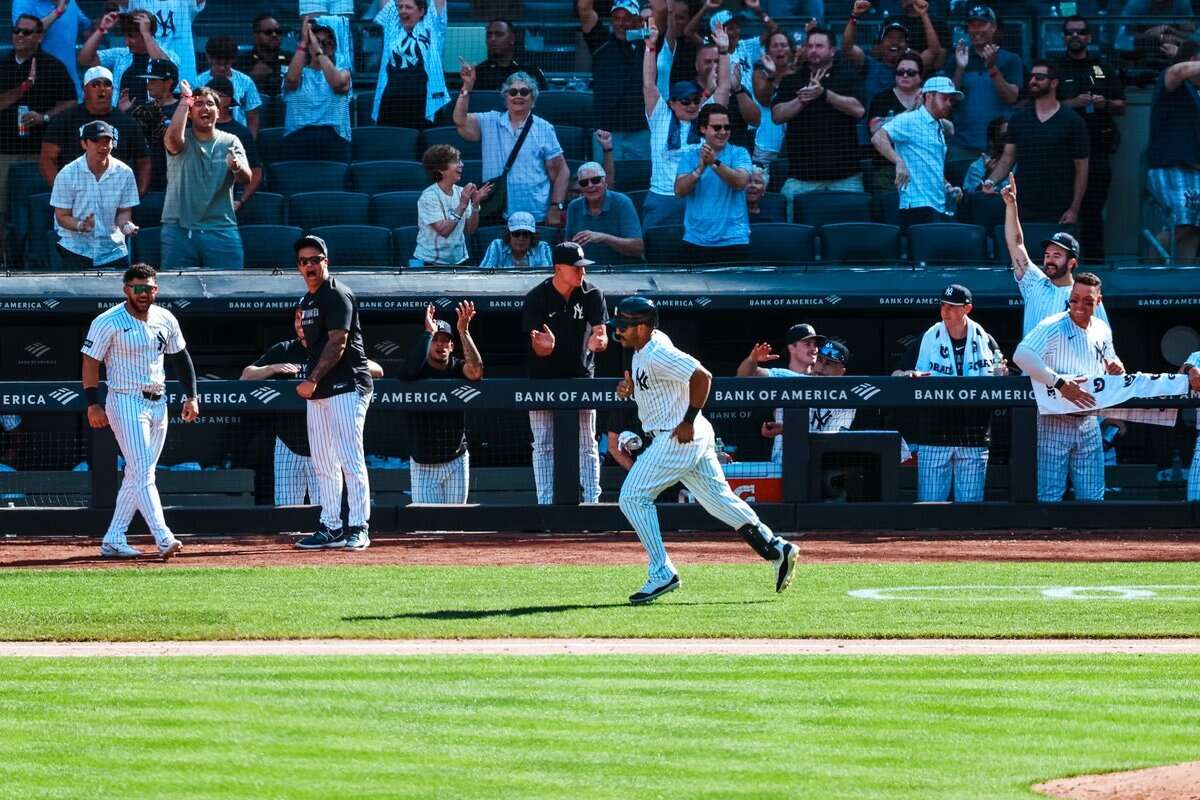
NEW YORK — A late July phone call nearly altered the New York Yankees’ season. What seemed like a logical baseball trade at the time now stands out as a crisis narrowly avoided.
On July 22, the team’s worst fears came true when Aaron Judge injured his elbow during a game. His throwing motion looked uncomfortable, and he was quickly removed. Medical staff diagnosed a flexor strain, forcing the captain onto the injured list and sparking alarm across the organization.
“The Yankees knew that their remaining schedule was relatively soft, and their team talented,” SNY’s Andy Martino reported about the front office discussions that followed. But behind the scenes, executives were weighing options that could have reshaped the roster entirely.
Secret talks that could have destroyed Yankees season
While fans worried about Judge’s timetable, Yankees officials explored significant moves before the trade deadline. These were not minor roster adjustments. Instead, the front office discussed parting with a key player to cover what they feared would be a major void.
“One example, according to league sources, was a discussion with the Mets about dealing Trent Grisham for Brett Baty. The Mets needed a rental center fielder, while the Yankees sought a controllable third baseman and liked Baty’s lefty swing,” Martino reported.
The idea was simple: swap outfield depth for long-term infield security. Yet the implications of losing Grisham were not fully clear until later in the season.
What the Mets were willing to give up

Baty, 25, once a top pick in 2019, showed flashes of his potential but struggled to find consistency in Queens. The Mets viewed center field as a pressing need, and Grisham looked like a strong fit for a playoff push.
Baty’s left-handed bat and team control through 2029 made him an appealing option for the Yankees, who were suddenly thinking about the future rather than the present. On paper, the move had logic. But sometimes, the deals that seem balanced can unravel a team’s trajectory.
The decision that saved a championship run
In the end, the Yankees turned away from the idea of sending Grisham to their crosstown rival. Instead, they pursued Ryan McMahon from the Colorado Rockies to fill the gap at third base. McMahon has since given the Yankees elite defense, posting six defensive runs saved in limited games.
The bigger win came from keeping Grisham, who quickly became a surprise centerpiece of the Yankees’ lineup.
The numbers that tell the whole story
The results since that near miss make the decision clear.
| Player | AVG | OBP | SLG | OPS | HR | RBI | Games |
| Trent Grisham (NYY) | .238 | .349 | .469 | .818 | 34 | 67 | 133 |
| Brett Baty (NYM) | .254 | .313 | .435 | .748 | 18 | 50 | 130 |
Grisham’s 34 home runs more than doubled his previous career high of 17. His 131 wRC+ marks elite production, and he has been even hotter since the deadline. Over his last 49 games, he has hit 16 homers and driven in 34 runs, numbers comparable to MVP stretches.
Baty, meanwhile, has been steady but unspectacular for the Mets. His .748 OPS with 18 home runs shows progress but does not match Grisham’s game-changing impact.
How close the Yankees came to disaster
Since August, New York has surged to a 28-11 record, climbing to 93-68. Grisham’s power surge has played a critical role in that run. Without his bat in the order, the Yankees’ late-season climb in the standings would have looked very different.
“Grisham has been a big part of that surge, continuing what has been a career year for the 28-year-old outfielder,” one analyst noted.
The Mets, on the other hand, went in a different direction when the Grisham talks collapsed. They acquired Cedric Mullins from Baltimore, a move that quickly soured. Mullins has hit just .183 with a .569 OPS in 41 games, failing to deliver what the Mets had hoped.
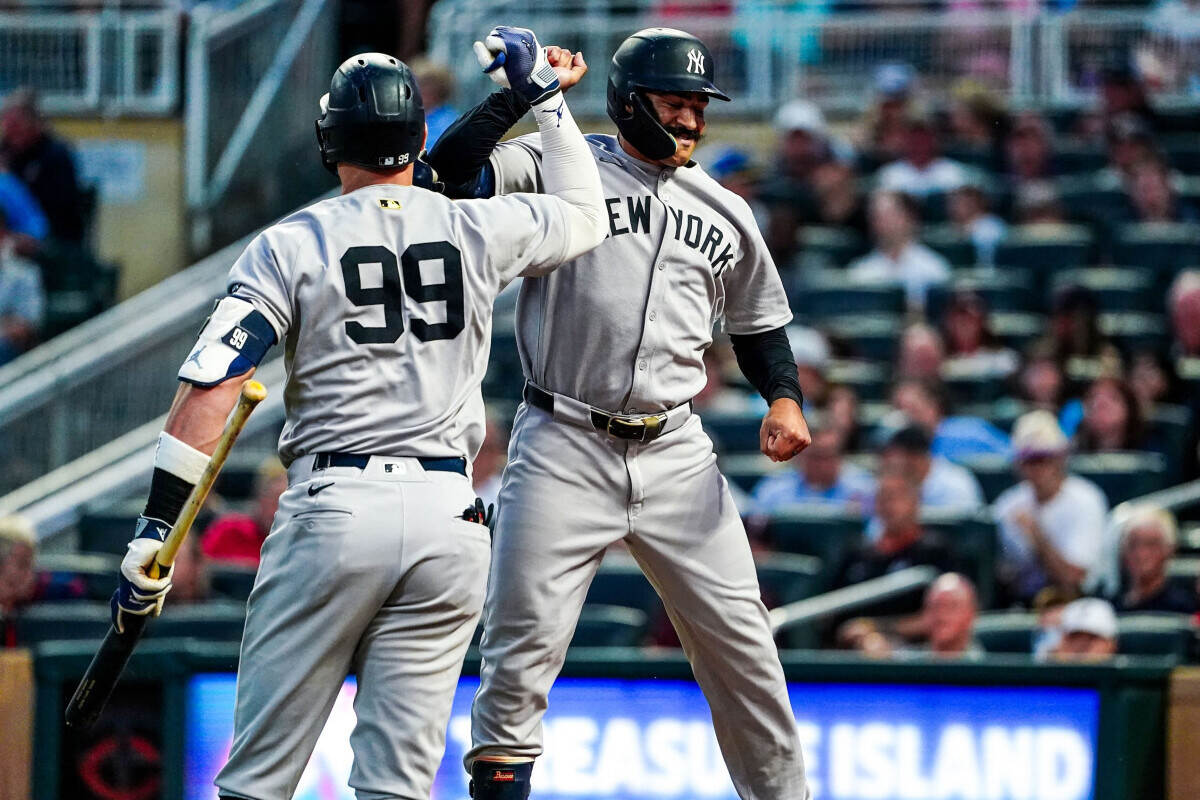
Baty’s injury adds to the Mets’ woes
Just as Baty was showing consistency, his season came to a halt. The third baseman strained his right oblique during a game against Miami, ending his regular season and potentially ruling him out of the playoffs.
“It hurts a lot,” Baty told reporters. “But I’m going to root on my teammates, and we’re going to try to go to the postseason.”
The injury happened during an at-bat against Sandy Alcantara and worsened on a throw from third base. Recovery typically takes three to four weeks, meaning the Mets will be without him during a playoff chase.
The timing could not be worse. The Mets entered the final weekend tied with Cincinnati for the last National League wild-card spot and Baty into the injured list.
The trade that never was
For the Yankees, the story could not be more different. Grisham’s 34 home runs have made him an unexpected star and the difference-maker in their October plans.
The irony for the Mets is sharp. Even if they had pulled off the trade, Baty’s injury means they would now be without either player. For the Yankees, walking away from those July talks has become one of the most important non-moves in franchise history.
As the season closes, one thing is clear: what looked like a reasonable swap in July would have cost the Yankees far more than they realized. Instead, they avoided disaster, kept a breakout bat, and are heading into October with their lineup intact.
What do you think? Leave your comment below.













I think the thing that really stopped the deal from going through was Spencer Jones’s back spasms. Since the Yankees lie to the public about injuries, they must’ve known that it was bad. Spencer Jones had been so burning red hot, at first AA for 4 weeks (.337 BA .569 SLG), and even hotter the next 4 weeks at AAA (about .400 BA and roughly .850 SLG), so doing a deal like that was almost a gimmie. Making it even better, still playing garbage, that trade one could be considered a shock move, something that many people, not just fans like me thought they needed to do to put a heart beat back in this then-dead team. Oh, one of the 3 pitchers (LHP Griffin Herring) up for MiLB Pitcher of the Year was traded for McMahon.