TAMPA, Fla. — Something is different about the New York Yankees this spring. The talk inside George M. Steinbrenner Field has a particular buzz to it. Not the usual spring training optimism that fades by April. This feels more grounded, more specific. Two players, one a third baseman trying to reinvent himself at the plate, the other a left-handed pitcher hungry to prove the critics wrong, are generating the kind of early conversation that sticks.
It is early. Spring Training results rarely translate directly to regular-season success. Ask any veteran manager or general manager and they will say as much. But what the Yankees are seeing from Ryan McMahon and Ryan Weathers is not just about box scores. It is about process. It is about change. And change, when it is this visible this early, is worth paying attention to.
The Yankees open their 2026 season on March 25 against the San Francisco Giants. Between now and then, every rep, every at-bat, and every pitch in Tampa matters. And right now, two names keep coming up in every conversation about what this team could become.
A third baseman with elite tools and a rebuilt approach
Ryan McMahon has been one of baseball’s most frustrating puzzles for years. The numbers never matched the tools. He ranked in the 95th percentile in average exit velocity at 93.3 mph last season. His barrel rate sat in the 76th percentile at 12.1%. His hard-hit rate reached the 89th percentile at 50.5%. In other words, when McMahon connects, he connects hard. The problem has been making enough contact to let those tools breathe.
The Yankees acquired the 31-year-old from the Colorado Rockies at the 2025 trade deadline. In 54 games with New York, he slashed .208/.308/.333 with four home runs and 18 RBIs. His strikeout rate of 33.5% told the real story of why his offensive line never matched his raw ability.
So the Yankees went to work on the root cause. What they found was striking. McMahon had been using the fourth-widest batting stance in all of Major League Baseball, averaging 42.7 inches between his feet. That extreme width, analysts and coaches agreed, was limiting his ability to use his upper half and generating the mechanical drag that led to so many strikeouts.

The fix? Close the stance. Significantly. The winter work and the opening of spring camp have shown a noticeably narrower base, allowing McMahon to generate more rotation through his swing and use his hands more effectively.
“There’s plenty of video of me in the past where I’m not nearly that wide, and a lot of better things are happening in my swing,” McMahon told reporters during camp.
Yankees manager Aaron Boone has seen enough to believe the adjustment can stick.
“I feel like there’s a real two-way player in there. There’s some things he does in his swing that get him in trouble a little bit, but it would not surprise me at all to see him go to a different level offensively,” Boone said.
Those words carry weight because McMahon’s glove is already elite. He ranked in the 92nd percentile for range last season with six outs above average and 10 Defensive Runs Saved. With starters like Max Fried and Carlos Rodon generating ground balls at a high rate, a premium defender at third base is not a luxury for the Yankees. It is a necessity.
McMahon carries two years and roughly $32 million remaining on his contract. FanGraphs projects him for 17 home runs and a 91 wRC+ in 2026. If the stance change delivers for the Yankees even a modest offensive uptick, that projection could look conservative by July.
A left-hander who made the Bronx sit up and take notice
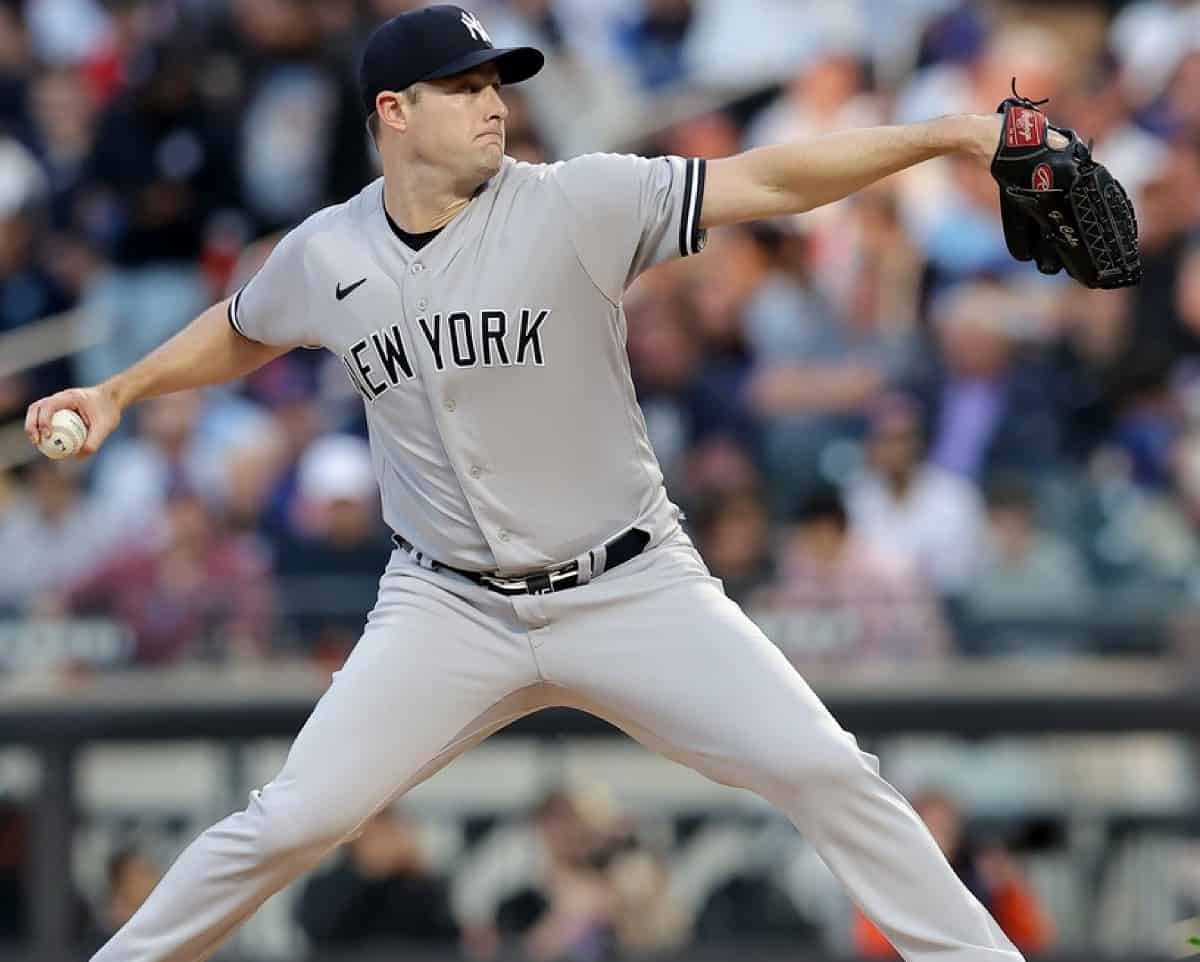
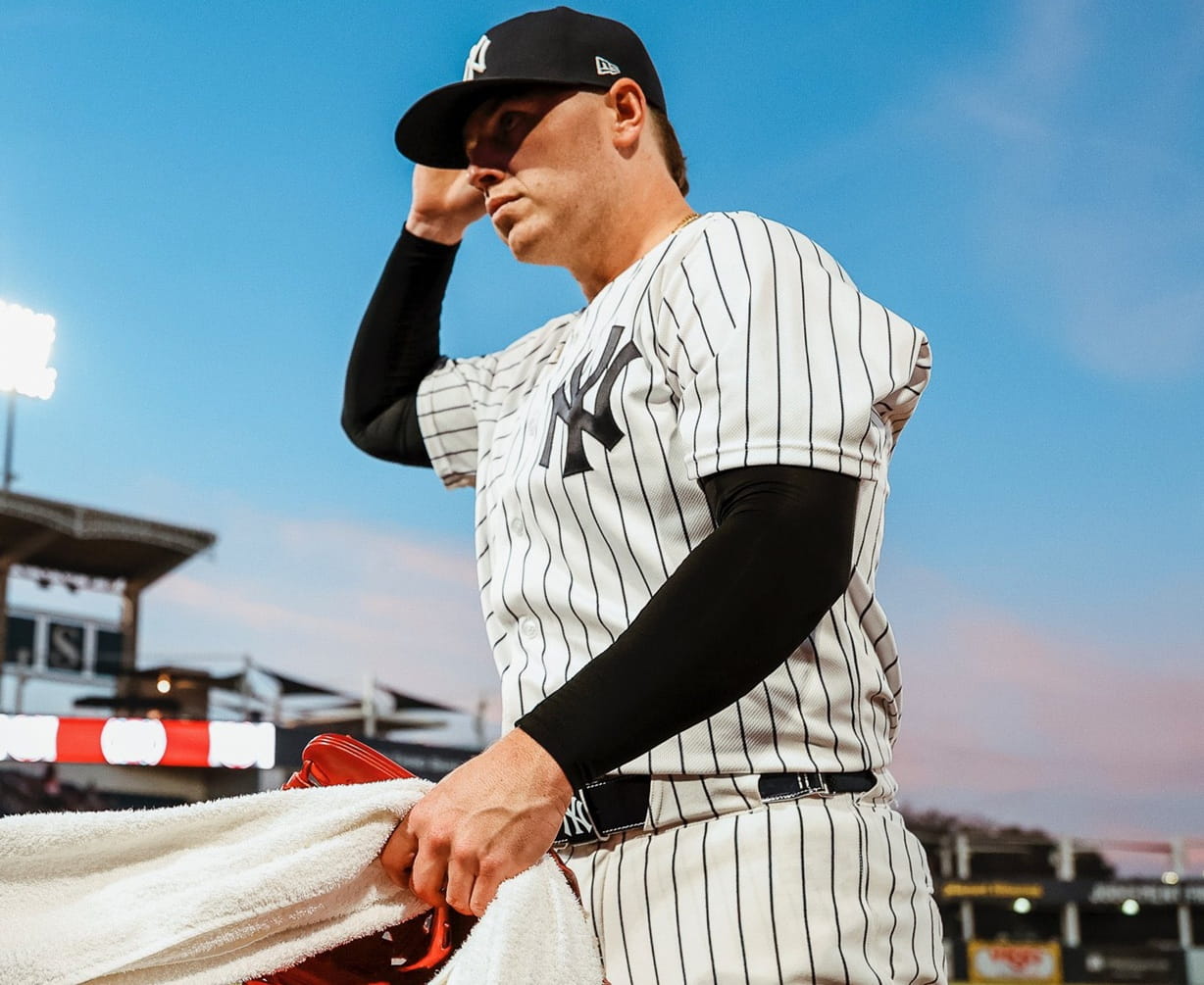
Ryan Weathers made his Yankees debut on Feb. 25 against the Washington Nationals at Steinbrenner Field and left the organization buzzing. The 26-year-old southpaw struck out five batters over 3.2 innings, threw 49 pitches with 32 for strikes, and touched 99.8 mph on his four-seamer. It was, by any spring standard, a statement performance.
But the velocity was almost a footnote. What turned heads inside the Yankees’ organization was the overhaul in Weathers’ pitch mix and the early evidence that their pitching development staff has already made its mark.
The Yankees acquired Weathers from the Miami Marlins this past winter, sending four prospects north including Lewis, Jones, Jasso and Matheus to Miami to make the deal happen. It was a gamble on upside from an organization that rarely bets on risk without a plan. That plan became clear on Tuesday night.
One of Weathers’ most glaring weaknesses with Miami was his inability to neutralize left-handed batters. Southpaws crushed his four-seamer to the tune of a 1.184 slugging percentage over a two-year stretch. It was a flaw that kept him from taking the step everyone around baseball knew his arm talent deserved.

The Yankees’ pitch design lab got to work. Weathers debuted a sinker with 18.5 inches of arm-side run, a pitch designed to jam left-handed hitters and eliminate the gaping hole in his game. He also refined his sweeping slider, adding more than 200 RPMs of spin and roughly five additional inches of glove-side movement to make it a genuine swing-and-miss weapon. His gyro slider received treatment as well, gaining four inches of drop and three inches of lateral break to give him a devastatingly effective put-away offering against right-handed hitters.
He also had help that money cannot buy. Andy Pettitte, the Yankees legend who won five World Series rings in the Bronx, worked with Weathers in a live bullpen session before his spring debut. The lesson was mental as much as mechanical.
“Andy really helped me with my breaking ball,” Weathers told YES Network reporter Meredith Marakovits after his debut. “I have a tendency to want to muscle it up and try to make it look pretty instead of just throwing it for a strike. He really helped me mentally, just kind of simplify and just literally just spin your breaking ball.”
Weathers has also been soaking up knowledge from Gerrit Cole, Carlos Rodon and Max Fried since arriving in Tampa. He is surrounded by Yankees arms that have performed at the sport’s highest level. That environment, as much as any pitch tweak, could be the ingredient that finally unlocks what this lefty can do.
Where both players fit in the Yankees’ 2026 picture
The Yankees enter 2026 with real questions alongside real strengths. Gerrit Cole is recovering from Tommy John surgery and is not expected back until May or June. Carlos Rodon is returning from left elbow surgery with a late April target. Until both aces return, the rotation needs dependable innings from the group Boone has assembled. That group currently runs Fried, Cam Schlittler, Will Warren, Weathers, and Luis Gil.
Weathers does not need to be an ace. He needs to be a reliable bridge arm who eats innings, keeps the Yankees competitive, and hands the ball back with the team in the game. Over his final 24 appearances with Miami, he posted a 3.74 ERA and struck out 22% of hitters while walking just 6.8%. Those are the numbers of a pitcher who can hold his own in a big-league rotation. The overhauled pitch mix could push the ceiling well beyond that.
For McMahon, the opportunity is similarly clear. Third base was a problem for the Yankees for several seasons. Now they have a defender who ranks among the sport’s elite at the position. If the offensive retooling produces even modest gains, such as reducing his strikeout rate enough to let his power metrics translate more fully, the Bronx has a true two-way contributor locked in through 2027.
The Yankees are not a team built on hope. They are built on Aaron Judge, a deep rotation once fully healthy, and a front office that has shown it can identify and develop underperforming talent. McMahon and Weathers are the current embodiment of that approach. Neither has arrived. But both are moving in the right direction at exactly the right time. And in the Bronx, that is enough to make a spring feel like something more.
What do you think? Leave your comment below.