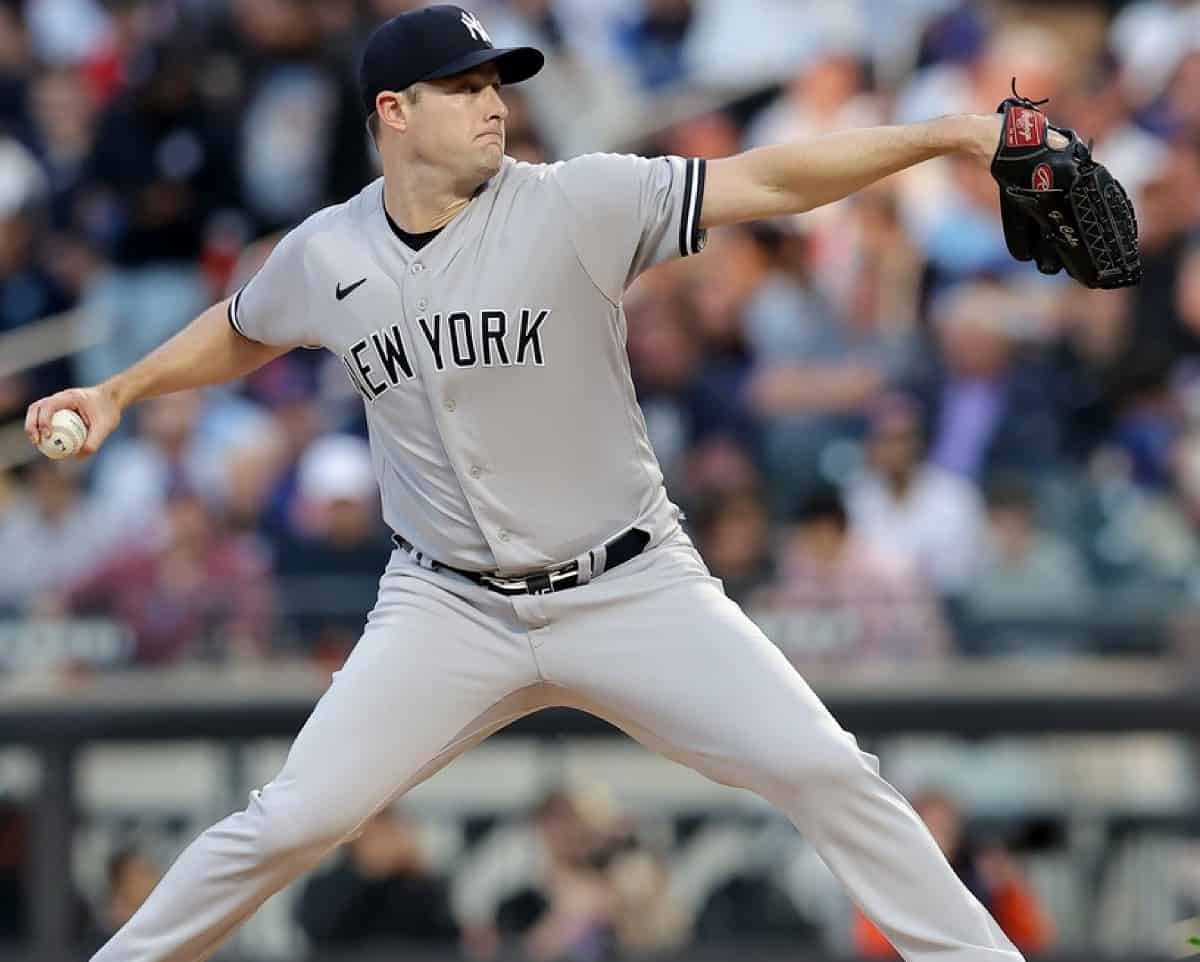
New York — The New York Yankees continue assembling bullpen depth for the 2026 MLB season. Their latest move reflects both faith and calculated risk. The club signed right-handed reliever Dylan Coleman to a minor league contract. The deal includes an invitation to spring training.
Coleman announced the signing himself on social media on January 17. He posted a Yankees logo on his X account with the caption “the next chapter.” The 29-year-old arrives in the Bronx after three difficult seasons that remain hard to explain.
The decision highlights how aggressively the Yankees are searching the margins of the MLB relief market. Recent seasons proved how fast bullpen depth can disappear. Coleman brings pedigree, power stuff, and a track record that once made him one of the better late-inning arms in the American League.
A bullpen still under construction
The Yankees enter 2026 with a retooled relief corps. Devin Williams and Luke Weaver both departed in free agency. Both later signed with the crosstown Mets. The front office also non-tendered Jake Cousins, Scott Effross, Mark Leiter Jr., and Ian Hamilton. Jonathan Loaisiga saw his club option declined.
That leaves David Bednar, Camilo Doval, and Fernando Cruz as the primary high-leverage options. Bednar emerged as a stabilizing force after arriving from Pittsburgh at the 2025 trade deadline. He posted a 2.19 ERA in roughly 25 innings with the Yankees. He also collected 10 saves in 22 appearances.
The bullpen finished 23rd overall in ERA at 4.37 during the 2025 MLB season. The group allowed 75 home runs, which ranked 13th most in baseball. The strikeout-to-walk ratio sat at 16th overall. Those numbers pushed the front office to continue cycling power arms into the system.

From rising star to reclamation project
Coleman’s rise in MLB came quickly. The Missouri State product made his debut with the Kansas City Royals in September 2021. He flashed elite velocity right away. His fastball averaged 98.2 mph over his initial 66 pitches, the highest average among Royals pitchers that year.
The 2022 season brought his breakout. Coleman appeared in 68 games for Kansas City. He finished with a 5-2 record and a 2.78 ERA across 68 innings. He struck out 71 batters and limited opponents to a .213 batting average. He allowed just five home runs all season.
That version of Coleman looked ready to become a long-term bullpen fixture. Then everything changed.
The decline nobody saw coming
Coleman struggled badly in 2023. He posted an 8.84 ERA across 18.1 MLB innings with Kansas City. He walked 19 batters while striking out 21. The Royals sent him to Triple-A Omaha multiple times. He logged a 4.70 ERA across 30.2 innings there.
Royals manager Matt Quatraro noticed the issues early. “He realized that he was not himself,” Quatraro said during that season. “Whether it’s mechanical, strike-throwing, whatever it is, there’s something that’s off, and he recognizes that.”
The Royals traded Coleman to the Houston Astros in December 2023 for Carlos Mateo. Houston’s pitching lab had revived several struggling arms before. The hope was they could find what ailed Coleman.
That never happened. Coleman threw just one MLB inning with the Astros in 2024. He spent most of the season at Triple-A Sugar Land, posting a 6.50 ERA across 36 innings. Houston designated him for assignment in August.
Coleman signed a minor league deal with the Baltimore Orioles in February 2025. He split time between Double-A Chesapeake and Triple-A Norfolk. He finished with a 4.91 ERA and 14 strikeouts across 14.2 innings in 11 appearances. He became a free agent after the season.
The stats that fuel the bet
A closer look at the numbers shows why the Yankees still see potential. Coleman’s raw velocity has dropped but not vanished. His fastball averaged 95.7 mph at Triple-A in 2024, down from his peak near 98 mph. That still grades above average for most MLB relievers.
The decline has not stemmed from a loss of raw stuff. Command metrics highlight the difference. In 2022, Coleman threw first-pitch strikes to roughly 63 percent of hitters. That figure dropped below 55 percent during his struggles.
His walk rate tells the story. Coleman walked 37 batters even in his best season. That rate ballooned past 11 percent during his downturn. Falling behind hitters forced him into predictable counts. Secondary pitches lost their effectiveness.
Batted-ball data shifted as well. In 2022, more than 44 percent of contact against Coleman came on the ground. That ground-ball rate fell below 38 percent during his struggles. More balls in the air meant more damage.
Why the Yankees believe they can fix him

The Yankees have built a reputation for identifying mechanical inefficiencies. Pitching coach Matt Blake has revived several careers in the Bronx. The organization believes Coleman’s struggles stem from release-point drift and predictability rather than physical decline.
Manager Aaron Boone has consistently emphasized that bullpen success often depends on environment and role clarity. He expressed optimism about Camilo Doval heading into 2026, citing strong communication with the pitching staff during the offseason.
“I know just in talking to our pitching guys, it seems like he’s had a really good, efficient winter in terms of communication and throwing program and getting himself ready to go,” Boone said of Doval. That same approach will apply to Coleman.
The Yankees have previously turned struggling relievers into contributors through pitch redesign and usage changes. Coleman will not face immediate pressure. He will likely begin the season at Triple-A Scranton/Wilkes-Barre.
Low risk with potential reward
The signing did not arrive with fanfare. Coleman’s minor league contract carries no guaranteed roster spot. That reflects how the Yankees view him as a developmental project rather than an immediate bullpen anchor.
This approach mirrors recent MLB trends. Teams increasingly target relievers whose surface stats mask underlying strengths. Bullpen volatility remains at historic highs. Clubs spread risk across multiple low-cost acquisitions.
The Yankees are betting that Coleman’s 2022 form was not a fluke. His strikeout ability that season ranked among the better marks for American League relievers. His contact suppression gave him margin for error.
If he fails to rediscover form, the Yankees can move on without consequence. If he clicks, the reward could be a cost-controlled reliever capable of handling meaningful innings.
The bigger bullpen picture
The significance of the move becomes clearer when examining the broader roster. The Yankees finished 2025 with 94 wins. They reached the American League Division Series before losing to the Toronto Blue Jays.
The bullpen proved to be a weak spot. Of all teams in playoff position last season, the Yankees posted the highest bullpen ERA at 4.52. That number trailed only clubs like the Colorado Rockies and Washington Nationals, teams nowhere near contention.
General manager Brian Cashman addressed the problem at the trade deadline. He acquired Bednar, Doval, and Jake Bird. Those moves helped stabilize the group down the stretch. But the Yankees still need depth heading into spring training.
Coleman adds another power arm to the mix. He is capable of missing bats if mechanical issues get resolved. The skills that once made him effective have not vanished. The Yankees appear convinced of that.
A familiar gamble for Bronx faithful
For Yankees fans, the signing represents a familiar storyline. The club has repeatedly rolled the dice on relievers with uneven track records. Sometimes they strike gold. Other times they absorb minimal losses.
In a league where bullpen reliability remains elusive, the Yankees are choosing to bet on upside. The path back to effectiveness remains clouded by unanswered questions. Three down years demand explanation.
But the raw tools that made Coleman dominant in 2022 still exist. The Yankees trust data over recent box scores. That philosophy drives this signing.
Spring training will provide the first test. Coleman will get a chance to prove the numbers right. For now, he joins a bullpen searching for stability in an increasingly volatile MLB landscape.
What do you think? Leave your comment below.