Newly elected Hall of Famer Sabathia endorses Gary Sheffield despite BALCO steroid scandal connections
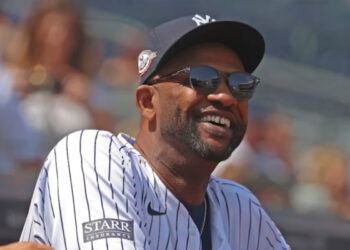
CC Sabathia, just weeks before his July 27 Hall of Fame induction, has thrown his support behind Gary Sheffield‘s candidacy for Cooperstown despite the former Yankees slugger’s documented connections to the BALCO steroid scandal. The endorsement represents a notable stance from baseball’s newest Hall of Famer on one of the most controversial eligibility cases in recent memory.
Sabathia told USA Today’s Bob Nightengale that Sheffield represents “baseball royalty” and “deserves his spot in the Hall of Fame.” The comments came as Sabathia prepares to join Ichiro Suzuki and Billy Wagner in the 2025 Hall of Fame class after earning election with 86.8% of the vote on his first ballot.
Sheffield’s Hall of Fame case ended in disappointment this past January when he received 63.9% support in his final year of eligibility, falling short of the required 75% threshold. His candidacy was complicated by his central role in federal grand jury testimony during the BALCO steroid investigation, where he admitted to unknowingly using performance-enhancing substances provided by trainer Greg Anderson.
Sheffield’s steroid era baggage weighs heavy
The former Yankees outfielder became the only active player to voluntarily admit steroid use when he told Sports Illustrated in 2004 that he unknowingly used “the cream” and “the clear” during the 2002 season. Sheffield testified that Barry Bonds introduced him to Anderson with instructions to “don’t ask any questions, just trust me.”
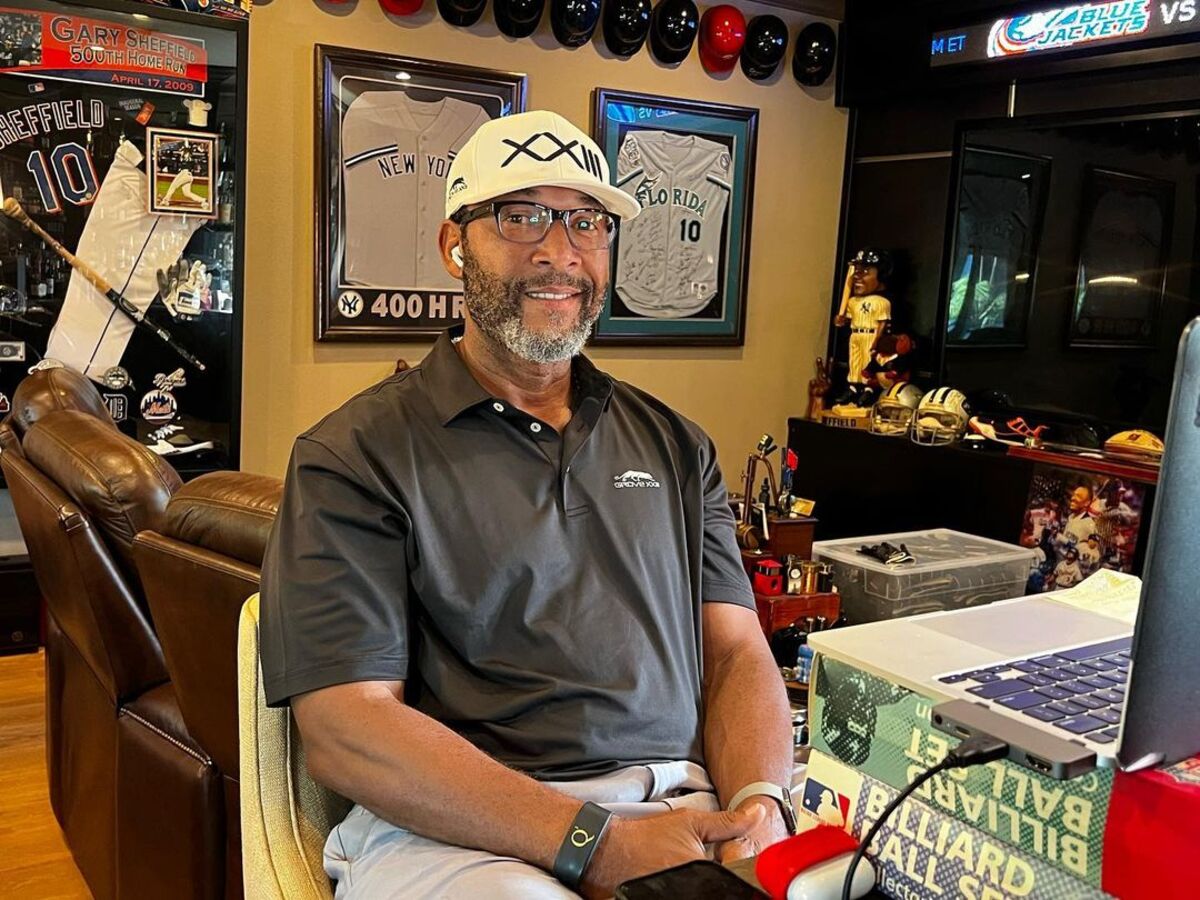
Federal investigators later identified the substances as testosterone-based steroids and THG, a designer steroid at the center of the BALCO scandal that rocked professional sports. Sheffield’s grand jury testimony revealed he paid Anderson and BALCO $10,000 for training and substances he believed were legitimate recovery aids.
“I was mad. I want everybody to be on an even playing field,” Sheffield said after his admission became public. Despite claiming ignorance about the substances, his involvement in federal testimony and inclusion in the Mitchell Report branded him as “PED-tainted” in the eyes of many Hall of Fame voters.
Statistical analysis shows Sheffield’s performance remained consistent before and after his documented PED use. He averaged 22 home runs in the years before 2002 and 24 home runs afterward, suggesting the substances provided no significant competitive advantage.
Yankees tenure highlighted prolific career
Sheffield’s Yankees years from 2004-2006 represented the peak of his Hall of Fame credentials. He smashed 36 home runs with 121 RBIs in his first Yankees season, finishing second in American League MVP voting while helping drive the team’s playoff push.
The powerful right fielder compiled a .290/.393/.534 slash line during his Yankees tenure, providing the middle-of-the-order protection the franchise sought after acquiring him from Atlanta. His 2004 admission about prior steroid use occurred while wearing pinstripes, creating an uncomfortable dynamic for the organization during baseball’s steroid era reckoning.
Sheffield’s overall statistical resume includes 509 career home runs, a .292/.393/.514 career line, and 60.5 Wins Above Replacement. Those numbers typically translate to Hall of Fame induction, but his BALCO connections prevented election during his 10 years on the Baseball Writers’ Association of America ballot.
Sabathia’s endorsement carries institutional weight
Sabathia’s support for Sheffield reflects his pragmatic approach to evaluating troubled legacies from baseball’s steroid era. The newly minted Hall of Famer maintains close relationships with PED-connected former teammates, including Alex Rodriguez and Andy Pettitte, suggesting he prioritizes on-field performance over character concerns.

“For me, Andy is a Hall of Famer,” Sabathia recently said about Pettitte, who admitted using human growth hormone. “Anybody that wins 19 games in the playoffs, I think deserves to be in the Hall of Fame.”
As MLB’s Special Assistant to Commissioner Rob Manfred since 2022, Sabathia’s endorsements carry institutional credibility within baseball’s power structure. His first-ballot election provides immediate validation that makes his Hall of Fame opinions particularly relevant.
Beyond Sheffield, Sabathia endorsed former teammate Andruw Jones and six-time All-Star Kenny Lofton for Hall of Fame consideration. Jones received 66% support in his most recent ballot appearance and has two years of eligibility remaining. Lofton must rely on Era Committee consideration after falling off the writers’ ballot.
Voting patterns show continued PED resistance
Sheffield’s case illustrates the ongoing challenges facing steroid-era players seeking Hall of Fame recognition. Despite never failing an MLB drug test and using PEDs before baseball’s testing program existed, his voluntary admission and federal testimony proved insurmountable barriers.
The Hall of Fame electorate has consistently rejected players with documented PED connections. Barry Bonds and Roger Clemens, arguably the era’s best position player and pitcher, fell off the ballot in 2022 after 10 years without reaching the 75% threshold.
Alex Rodriguez, Sheffield’s former Yankees teammate, received just 37.1% support in his fourth ballot appearance this year despite 696 career home runs. Robinson Cano, suspended twice for PED violations, becomes eligible for the 2028 ballot with dim prospects based on current voting patterns.

Era committees offer final hope for controversial cases
Sheffield now must await consideration from Hall of Fame Era Committees, which evaluate players no longer eligible for writers’ ballots. The Contemporary Era Committee meets every three years, with its next session scheduled for December 2027.
Historical precedent suggests Era Committees remain resistant to PED-connected players, though the passage of time occasionally softens voter attitudes. Recent committee results show continued emphasis on character considerations alongside statistical accomplishments.
Yankees legend Sabathia’s endorsement may influence future discussions as baseball grapples with how to handle its steroid era legacy. His institutional voice and recent election provide credibility that could shift conversations about players like Sheffield who occupy the gray area between documented cheating and competitive enhancement.
The debate reflects broader questions about baseball’s values and how history should judge an era where institutional failures enabled widespread PED use among players seeking any competitive edge.
What do you think?