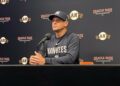
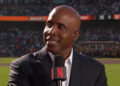
The New York Yankees sent shockwaves through the MLB offseason by signing left-handed ace Max Fried to an eight-year, $218 million contract, the largest guarantee ever for a southpaw in baseball history. While the acquisition undoubtedly strengthens the Yankees’ rotation and their World Series aspirations, critics have labeled the deal as one of the biggest overpays in recent free agency history.
Yankees’ Max Fried deal excessive
Max Fried’s contract breaks down to an average annual value (AAV) of $27.25 million, with a full no-trade clause ensuring the Yankees’ long-term commitment. The deal extends through Fried’s age-38 season, raising questions about how his performance might hold up in the later years of the agreement. Tim Kelly of Bleacher Report has been vocal about his skepticism, writing that the Yankees may have overextended themselves to secure Fried after missing out on Juan Soto, who signed a record-breaking contract with the New York Mets.
“The critique here is more with the length of the contract than anything,” Kelly explained in a December 21 analysis. “At the outset of the offseason, B/R projected a six-year, $168 million contract for Fried in free agency. That would have come with an average annual value of $28 million. The deal Fried ultimately signed has him with an AAV of $27.25 million. So the Yankees didn’t lower the AAV in a significant way from what our projection was and still added two extra years.”
Long-term cost of Yankees’ Max Fried deal
One of the most contentious aspects of Fried’s deal is the financial burden it imposes in its later years. By 2030, Fried will be earning $31.5 million annually in his mid-to-late 30s. Critics argue that such contracts often hamstring teams as players age and their production declines. The Yankees’ willingness to shoulder this risk underscores their urgency to win now, even at the expense of long-term flexibility.
However, Yankees General Manager Brian Cashman has defended the signing, emphasizing Fried’s unique value. He highlighted Fried’s reputation as a proven winner and a key addition to the rotation, expressing confidence in his ability to help the Yankees compete for another championship.
Balancing risk and reward

The Yankees’ decision to go all-in on Fried appears to be a calculated risk. Since undergoing Tommy John surgery in 2014, Fried has avoided major injuries but hasn’t been an ironman. Over his career, he’s been an elite pitcher when healthy, but critics point to his history of periodic absences as a potential liability over the course of such a lengthy contract.
“Since undergoing Tommy John surgery as a prospect in 2014, Fried has avoided major injuries,” according to Kelly. “But he hasn’t been an iron man, either. When you give someone an eight-year deal—in addition to surrendering draft capital because the Atlanta Braves had saddled him with a qualifying offer—you would expect a pitcher with a bit less injury risk than Fried carries.”
Kelly also highlighted the financial trade-offs associated with the signing: “When you give someone an eight-year deal—in addition to surrendering draft capital because the Atlanta Braves had saddled him with a qualifying offer—you would expect a pitcher with a bit less injury risk than Fried carries.”
While the Yankees’ front office has acknowledged the inherent risks, they’re banking on Fried’s talent and track record to make an immediate impact. Fried has consistently ranked among the league’s top left-handed pitchers, boasting a career ERA of 3.03 and multiple All-Star selections. His ability to anchor a rotation gives the Yankees a formidable weapon as they aim to dethrone the Houston Astros in the American League and reclaim their place atop the baseball world.
Some observers speculate that the Yankees’ aggressive pursuit of Fried was fueled by their frustration over losing Juan Soto to the crosstown Mets. Soto’s record-breaking contract not only bolstered the Mets’ lineup but also served as a symbolic blow to the Yankees, who had prioritized Soto as their primary offseason target. By landing Fried, the Yankees may have sought to make a statement of their own, demonstrating their willingness to spend big in pursuit of a championship.
This dynamic has led to comparisons between the two New York franchises and their divergent strategies. While the Mets invested in Soto’s offensive firepower, the Yankees opted to double down on pitching, a facet they’ve historically relied upon to secure postseason success.
What Max Fried brings to the Bronx
For all the criticisms surrounding the contract, there’s no denying Fried’s ability to transform the Yankees’ rotation. Known for his impeccable control, devastating curveball, and ability to generate weak contact, Fried has been a nightmare for opposing hitters. He’s also proven himself in high-pressure situations, including the postseason, where his composure and effectiveness have shone.
Adding Fried to a rotation that already includes Gerrit Cole and Carlos Rodon gives the Yankees one of the most formidable pitching trios in the league. With the AL East shaping up to be as competitive as ever, having an ace like Fried could be the difference between a division title and a wild card berth.

Max Fried’s signing is emblematic of the Yankees’ win-now mentality. While critics may view the contract as an overpay, the team’s willingness to take risks underscores their ambition to end their championship drought. Only time will tell if Fried can live up to the expectations that come with his record-breaking deal, but one thing is certain: the Yankees are betting big on their newest ace to bring glory back to the Bronx.
What do you think? Leave your comment below.