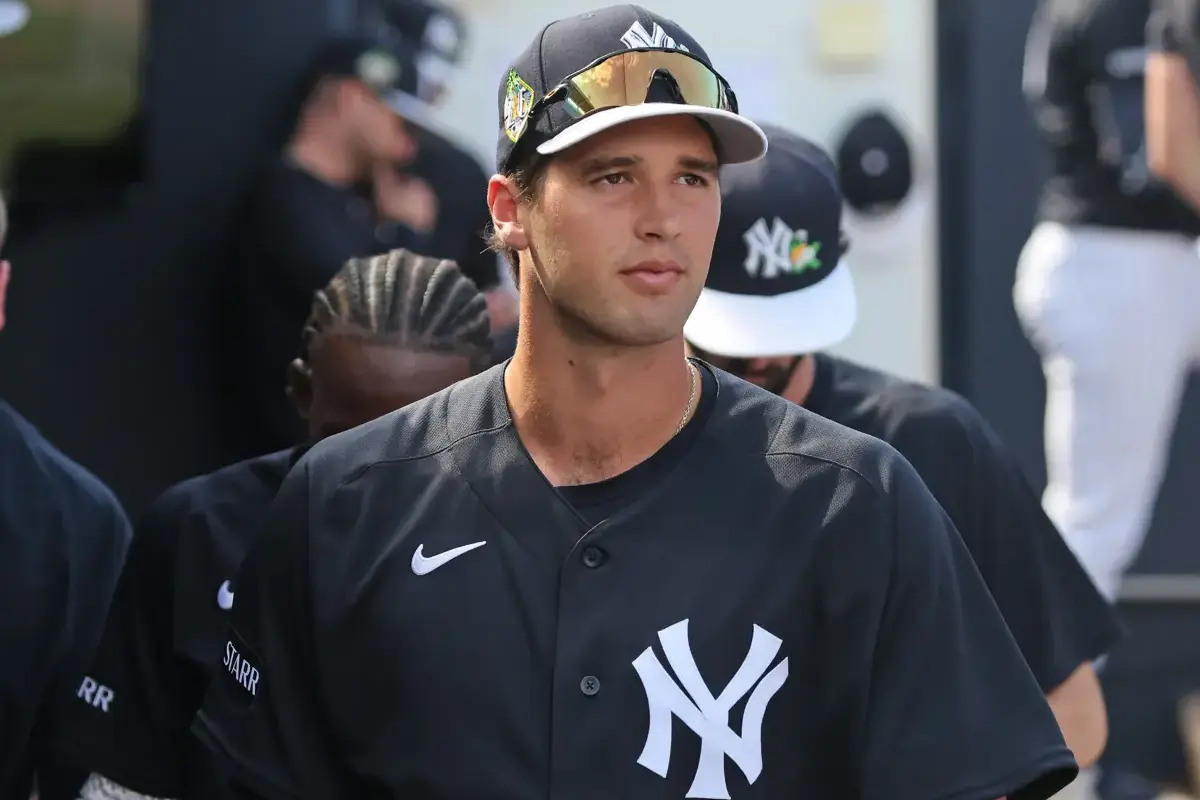
WEST PALM BEACH, Fla. — Spencer Jones is doing everything right. He is hitting the ball out of stadiums, stealing bases, and making the kind of plays in the outfield that draw attention in a camp full of veterans. Yet as of early March 2026, the New York Yankees’ top outfield prospect is almost certainly headed for Triple-A Scranton/Wilkes-Barre when the season opens. The question being asked around baseball is whether that caution could cost the Yankees something they cannot get back.
A prospect producing at every turn
Jones, 24, stands 6-foot-7 and brings a left-handed swing that has generated legitimate Shohei Ohtani comparisons this spring. Set aside the hype and the numbers still hold up on their own.
Through six Grapefruit League games in 2026, Jones has three home runs and six RBIs, along with a walk and a stolen base. He hit a 408-foot homer in just the second spring game of the year. The power has never been the debate. The Yankees have always known that much.
Last season at Triple-A, he hit .274 with a .342 on-base percentage, a .897 OPS, 19 home runs and 48 RBIs in 67 games. He also belted 35 homers across the minor league levels during the 2025 campaign. General manager Brian Cashman said last October that Jones had put himself in position to be considered an everyday big leaguer. That statement has not been walked back.
Yet Jones has still never appeared in a major league game. He has been blocked, traded around in rumors, and now faces a 2026 outfield that has no obvious opening for him at Opening Day.
The Nationals example the Yankees cannot afford to ignore
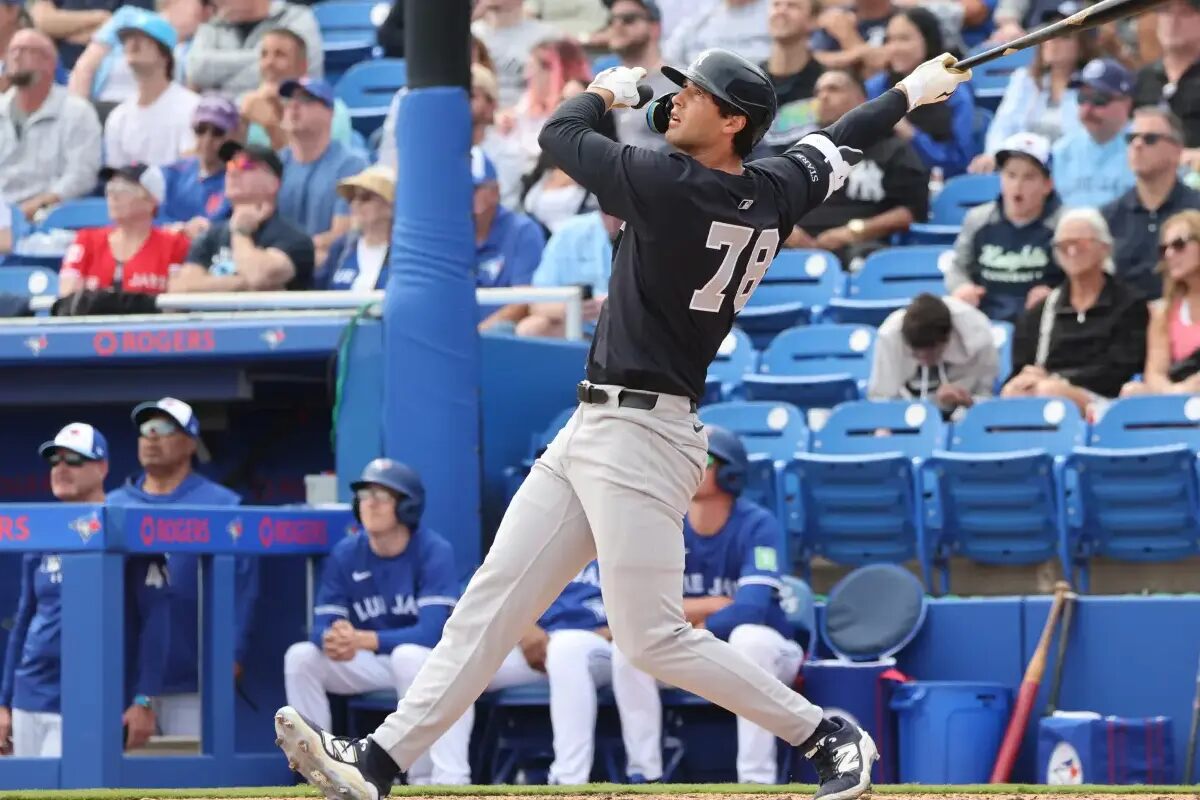
Yanks Go Yard raised a comparison that Yankees fans and the front office would do well to sit with. Washington Nationals outfielder James Wood was in a similar position two years ago. Like Jones, Wood combined a high strikeout rate, currently around 32 percent in the big leagues, with elite raw power and the kind of athleticism that makes evaluators uncomfortable about keeping him in the minors too long.
The Nationals, a rebuilding club with nothing to lose, promoted Wood in July 2024 and let the strikeouts come with the rest of the package. The result, Wood hit 40 home runs and driven in 135 RBIs since his promotion. He made the All-Star team in 2025.
The argument is not that the Yankees are in the same roster situation as Washington. They are not. The Nationals were rebuilding. The Yankees are in the middle of a championship window tied to Aaron Judge’s prime. Those are different worlds.
But the argument is about the cost of waiting. Wood is now one of the better young outfielders in the National League. Had the Nationals kept him down another full season out of concern about his strikeouts and shaky defense, they would have delayed his development and potentially his peak years with the organization.
Could the Yankees be making the same mistake?
The crowded outfield and what it actually means
The Yankees enter 2026 with Aaron Judge locked in right field. Cody Bellinger, who re-signed in January, projects as the left fielder. Trent Grisham, who accepted a qualifying offer last fall, takes center. That is your starting three.
Beyond them, Jasson Dominguez and Randal Grichuk fill bench roles. Dominguez, 23, spent 2025 transitioning from center to left field in the majors and played 123 games, slashing .257/.331/.388 with 10 home runs and 23 stolen bases. He is not going anywhere. Grichuk was signed specifically to add right-handed depth.
So Jones, despite his production, has no clear path to the starting lineup in April. The Yankees are transparent about that.
What matters is what happens after that. Bellinger is already nursing a back issue during spring training. Giancarlo Stanton, the primary DH, dealt with severe tennis elbow in both arms last season. Over 162 games, the outfield picture always changes. The Yankees know this. Which is why Jones traveling with the big league club for road games against the Nationals and Mets in early March, while most starters remain home or are at the World Baseball Classic, is not an accident.
Boone’s verdict on Jones and what the strikeouts really mean
Manager Aaron Boone has been measured but encouraging about Jones this spring. He pointed directly to Aaron Judge as the blueprint for what a player of Jones’ size and swing can become once the mechanical pieces fall into place.
“He’s done a nice job. He’s worked really hard this winter to make adjustments to try to hone his craft and had pretty good results here the first few weeks of games.”
On the strikeout issue, which was a significant concern after Jones whiffed 179 times in 506 plate appearances during 2025 at Triple-A, Boone placed the challenge in perspective.
“Those are the challenges of being a big guy. It’s a hard thing to figure out, but if you can do it, [that size is] a massive advantage.”
He then made the Judge comparison explicit.
“You’ve just got to figure out your mechanics. It’s a challenging thing to do when you’re really big, but once you do, you have an advantage.”
Judge turned 25 the year he set the rookie home run record in 2017. Jones turns 25 in May. The parallel is deliberate. The Yankees have seen this before. They know what a big left-handed hitter with swing-and-miss issues and historic raw power can become. They watched it happen in their own dugout.
The defining roster decision of the season
The Yankees placed Jones on their Spring Breakout roster for the March 21 showcase game against the Atlanta Braves. That event is for top prospects, not fringe players. It signals internal confidence.
Cashman has also kept Jones off the trade market despite multiple inquiries. The Yankees reportedly declined to include him in discussions at last year’s deadline unless the return was Paul Skenes level. That standard has not changed.
So this is where things stand. Jones is too good to trade cheaply. He is too raw to start on Opening Day. He is too talented to keep buried in Scranton for an entire season if the Yankees have genuine championship ambitions.
The Nationals did not overthink it with James Wood. They saw a player whose strengths outweighed his flaws when the stakes were low enough to absorb the learning curve. The Yankees are in a different position, but the lesson still applies. At some point, protecting a prospect’s service time and protecting a team’s chances in October become competing interests. This season, those interests may collide sooner than the front office expects.
What do you think? Leave your comment below.