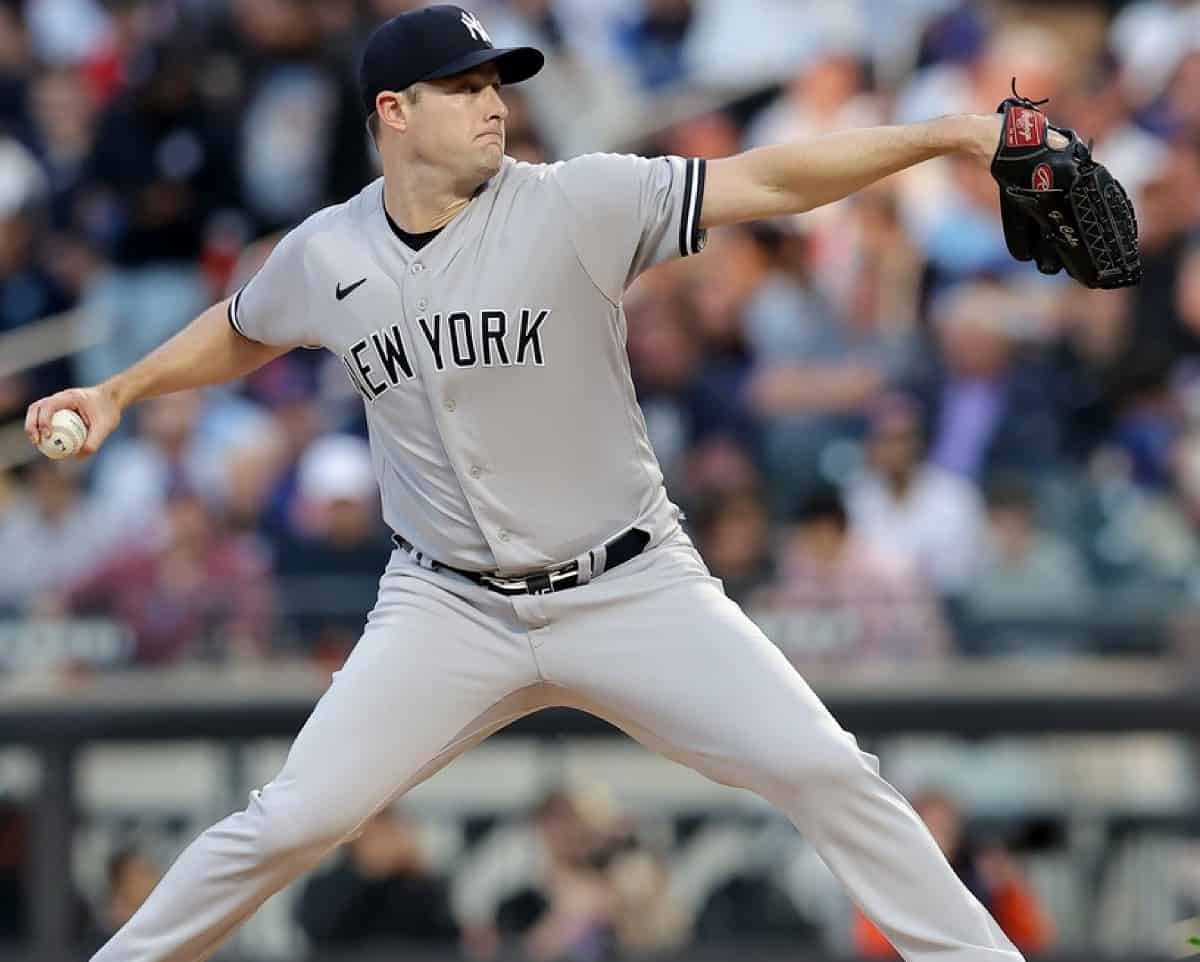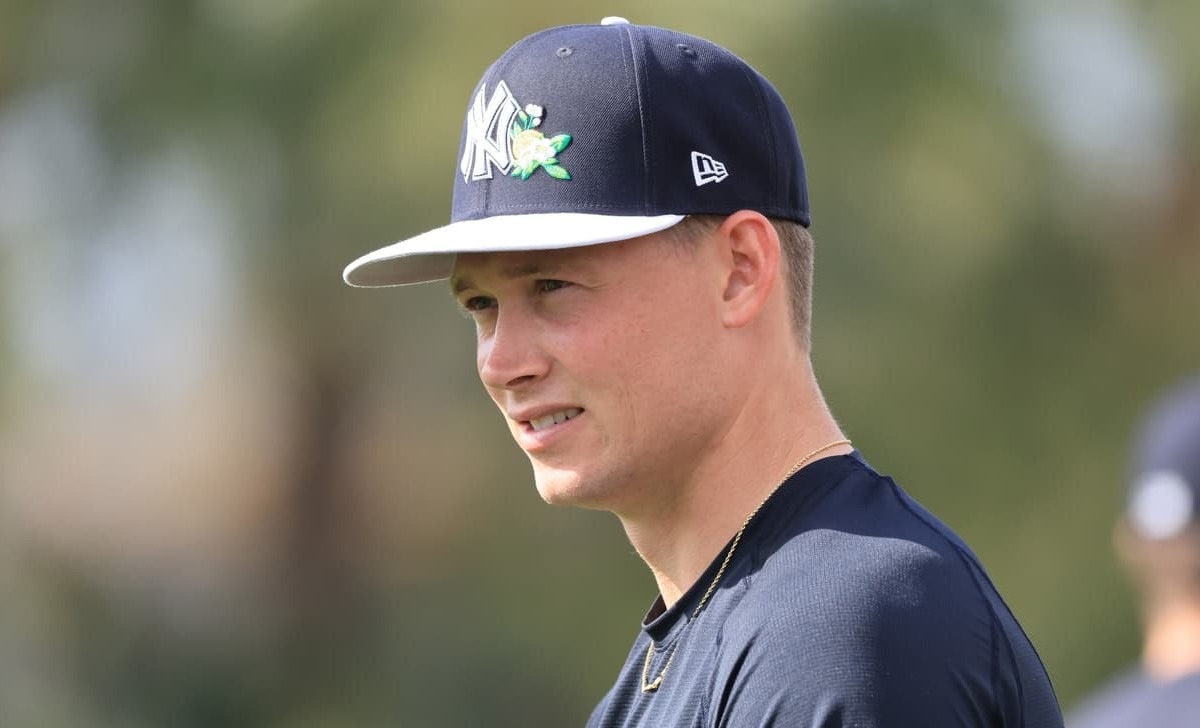
TAMPA, Fla. — Nobody saw Will Warren coming last season. The right-hander was not supposed to be a fixture in the Yankees’ rotation. Injuries to Gerrit Cole, Luis Gil and Clarke Schmidt forced open the door, and Warren walked through it for a league-high 33 starts.
He posted a 4.44 ERA across 166 innings. He was left off the postseason rotation. For a lot of fans, that was the whole story. Another young arm who was fine but not good enough when it counted.
Except that is not what the numbers say. Not even close. And what happened Saturday at George M. Steinbrenner Field made it clear the Yankees believe that, too.
The surface stats are lying about Warren’s stuff
Start with the fastball. Will Warren’s four-seam run value ranked in the 95th percentile last season, according to Statcast. That is not a misprint. His heater sits 93.3 mph, which sounds pedestrian until you factor in his extension. Warren releases the ball at 6.8 feet from the mound, placing him in the 81st percentile. That combination of late life and deception made his fastball one of the most effective in baseball when he commanded it.
Opposing hitters posted just a .216 batting average against the pitch. The expected batting average was .236, meaning the actual results were even better than the underlying quality. He threw it 41.6 percent of the time and used it to set up a sinker at 21 percent usage and a sweeper at 20.6 percent.
The sweeper is the secondary weapon that could unlock everything. It generated a .291 expected batting average with a .478 expected slugging percentage and graded as a plus-plus offering against both right-handed and left-handed hitters.
His ground ball rate of 42.8 percent sits in the 55th percentile. Combined with elite extension, that profile means Warren can survive even on nights when his command is shaky. He grinds, he limits damage, and he gives his team a chance. That is what the Yankees need from the No. 3 spot in the rotation.
Warren strikes out Judge and Goldschmidt in live BP showcase
The analytics are one thing. What happened Saturday afternoon at Steinbrenner Field was something else entirely.
Warren threw two innings of live batting practice. He struck out both Aaron Judge and Paul Goldschmidt.
That is the reigning home run champion and a former MVP swinging at live pitches in February, and Warren sat them both down. It is one live BP session. Nobody is engraving a Cy Young plaque. But the data backing Warren’s stuff, combined with that kind of early camp dominance, paints a picture of a pitcher whose ceiling is far higher than his ERA suggested last season.
Manager Aaron Boone confirmed earlier this week that Warren slots into the opening rotation behind Max Fried and Cam Schlittler.
“We’re talking about probably Fried, Schlittler, Warren, Weathers and Gil to start the season in the rotation,” Boone said. “And you always have Yarbrough and Blackburn there that can fill that role very capably.”
That the Yankees are placing Warren at No. 3 rather than at the back of the rotation tells you how the organization views his development trajectory. This is not a placeholder. They are betting on a breakout.
The command fix that could change everything

Warren’s problems last season were real, but they were specific. His chase rate sat at just 24.5 percent, which ranked in the 8th percentile. That means hitters were not expanding the zone against him. His walk rate of 9.1 percent was not disastrous but not efficient for a pitcher who relies on weak contact over strikeouts.
The barrel rate of 10.9 percent tells the real story. Warren was leaving pitches over the heart of the plate when he fell behind in counts. His first-pitch strike rate hovered around 60 percent. If he can push that above 65, the rest of his profile clicks.
Warren himself has said he wants to model his career after the man he now shares a clubhouse with. Speaking to SNY this week, he laid out a telling ambition.
“I want to be Gerrit Cole in 10 years,” Warren said.
That is a massive goal for a pitcher who was benched in October. But it also reflects a mentality the Yankees are counting on. Warren has 184.1 innings of big-league experience now. He closed the 2025 regular season with a 3.69 ERA over his final 12 starts. The raw ability was never the question. The mental side was.
The rotation safety net changes Warren’s outlook
Here is what makes 2026 different. Last year, Warren was asked to carry a rotation that was missing Cole for the entire season and lost multiple arms to injury early. He was the No. 1 option by default and shouldered innings he was never built to handle.
This year, Carlos Rodon is targeting a late April return from elbow surgery. Cole is expected back from Tommy John rehab in May or June. When both return, the Yankees’ rotation could feature Fried, Cole, Rodon, Schlittler and Gil at full strength. Warren would slide into a depth role or bullpen, but by then, the data suggests he will have already proven he belongs.
The pressure is off. The runway is clear. And the advanced metrics are screaming that the stuff is already there.
Saturday’s live BP against Judge and Goldschmidt was a snapshot, not a verdict. But for a pitcher whose fastball run value grades in the 95th percentile and whose sweeper can neutralize any lineup, it was a snapshot that should make Yankees fans pay closer attention to the name they might have written off last October.
What do you think? Leave your comment below.