


NEW YORK — Devin Williams face the most pertinent question soon after the Yankees’ season-ending loss.
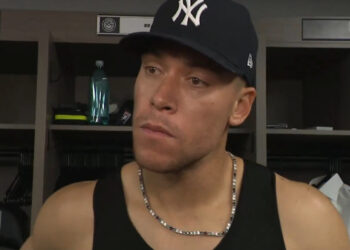
The 30-year-old reliever was asked whether he was considering coming back to New York.
“I’m definitely open to that,” Williams said. “It takes two parties for that. I would definitely be open to that.”
The words sounded positive, but hidden within another answer that night was the condition that ended all hope of a reunion.
One factor changes everything

Williams’ 2025 season was a rollercoaster. He endured a career-worst 4.79 ERA, lost his closer role twice, and heard Bronx fans boo him on Opening Day and again during the Division Series. Away from baseball, he became a first-time father. In the clubhouse, he was part of the push that led the Yankees to ease their decades-old facial hair policy.
Despite the rough patches, Williams said he had grown fond of the city.
“At first it was a challenge, but I’ve grown to love being here,” Williams said. “I love the city. I love taking the train to the field every day. Yeah, I really enjoyed my experience here.”
But when asked what mattered most to him entering free agency, Williams revealed the deal-breaker. He wanted the closer job back — and that’s something the Yankees can’t promise.
“It’s a factor,” Williams admitted when asked about the ninth-inning role. “I don’t know. I can’t really answer that right now. It depends on the scenario. But we’ll cross that bridge when we get there.”
That bridge, as it turns out, leads him away from the Bronx.
The trade deadline changed everything


The turning point came months earlier. On July 31, Williams had just blown another save. His ERA had ballooned to 7.50 across six outings. Manager Aaron Boone had already demoted him once after a miserable April stretch where he carried an 11.25 ERA through 10 games.
That day, Brian Cashman made five trades. Two directly affected Williams’ job security. The Yankees acquired David Bednar from the Pittsburgh Pirates and Camilo Doval from the San Francisco Giants, both of whom had previous closing experience.
Bednar immediately took over the ninth inning and thrived. The two-time All-Star recorded a 2.19 ERA with 10 saves after joining the Yankees, adding two more saves in the postseason while allowing only one earned run over six innings.
Across the full season with Pittsburgh and New York, Bednar posted a 2.30 ERA and 27 saves — numbers that made him the clear favorite for the closer role in 2026. He also remains under team control for another season.
Williams finished strong but too late
To his credit, Devin Williams rebounded over the summer. From May 7 through June 27, he put up a 1.45 ERA across 20 appearances. Over his final 19 regular-season outings, he logged a 2.50 ERA and finished the year with nine consecutive scoreless games.
In the postseason, he was even better. Williams threw four shutout innings in four appearances against Boston and Toronto.
“First and foremost, it starts with he’s great at this,” Boone said during the Division Series. “Even when he struggled early or whatever, that didn’t go away. We weren’t trying to salvage a guy that had lost some things or lost a tick on his stuff.”
His best moment came in Game 3 of the ALDS against Toronto. With the Yankees rallying from a 6-1 deficit, Williams delivered a flawless seventh inning, then returned to get another out in the eighth — his first multi-inning appearance of the season.
As he walked off the mound, the crowd gave him a standing ovation.
“It’s nice to feel appreciated sometimes,” Williams said afterward. “It was definitely better than what I heard for much of the year.”
The next night, however, the cheers turned back to boos. With two outs and runners on the corners in a 2-1 game, Williams went away from his signature changeup and threw back-to-back high fastballs to Nathan Lukes. The second pitch, a mistake over the plate, turned into a two-run single.
Toronto went on to clinch the series, and Williams’ time in New York effectively ended there.
The numbers tell a difficult story
Even with his late improvement, Williams’ final numbers painted a frustrating picture. His strikeout rate dipped to 34.7%, down from 43.2% the year before. Opponents hit .194 against his changeup, a sharp rise from .137 in 2024. His whiff rate on that pitch fell from 48.8% to 37.3%.
The average exit velocity against him also climbed to a career-high 89.5 mph, up from 84.2 mph a season ago.
In his 55 best outings, Williams allowed only seven runs in 54⅓ innings. But in his other 12 appearances, he surrendered 26 runs in just 7⅓ innings — the definition of inconsistency.
“I think overall it was pretty good, to be honest,” Williams said. “At the end of the day, I think it was along the lines of what I’ve done in the past, outside of a few blowup games. But I feel like I contributed.”
The Yankees, however, viewed things differently. Among 64 pitchers who appeared in at least 65 games, Williams’ 4.79 ERA ranked as the third-highest in Major League Baseball.
The adjustment period took its toll

Williams arrived in New York the day before Opening Day after a December 2024 trade that sent Nestor Cortes, Caleb Durbin, and $2 million to the Milwaukee Brewers. For the two-time NL Reliever of the Year, the move brought major lifestyle changes.
“I played in the smallest market in the league to the biggest market in the league,” Williams said. “I drove to the field every day. It took me 10 minutes to get there in Milwaukee. There’s just a lot of life stuff. It’s an adjustment.”
He showed up to spring training with a full beard, a rarity in a Yankees clubhouse. Williams openly disliked the facial hair policy and complained about the constant media attention. He wasn’t used to being booed or scrutinized daily.
Behind closed doors, he reportedly told team officials that the grooming rule could affect whether he re-signed. Cashman and Aaron Judge consulted with veterans about possible changes. Many favored relaxing the policy while still maintaining professionalism.
Just over a week later, Hal Steinbrenner approved a modified policy allowing neatly trimmed beards — a small but symbolic shift. Williams grew his beard back immediately, though his comfort on the mound took longer to return.
Why the Yankees will move on
The Yankees rarely hand out big contracts to relievers, and Williams is still expected to command strong offers despite his uneven year. His dominant six-year run in Milwaukee, where he posted a 1.83 ERA, remains fresh in the minds of many front offices.
This winter’s free-agent market for closers is deep. Veterans like Edwin Diaz, Robert Suarez, Raisel Iglesias, Ryan Helsley, Kenley Jansen, and Kyle Finnegan could all be available.
Williams will find a new home — likely one that lets him return to the ninth inning. But that’s a role the Yankees have already filled. Bednar earned it through performance and poise, locking down games after the trade deadline and again in October. With another year of team control, he’s set to remain their closer in 2026.
Williams wants to close. The Yankees already have one. That difference ensures his departure, regardless of polite talk about mutual interest.
“It takes two parties for that,” Williams said of a possible return.
He’s right. Both sides know the ninth inning belongs to someone else. After one stormy year in pinstripes, the relationship between Devin Williams and the Yankees will end quietly — firm, final, and without regret.
What do you think? Leave your comment below.






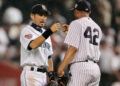

If he wants the closer roll back, go out and earn it. Plain and simple