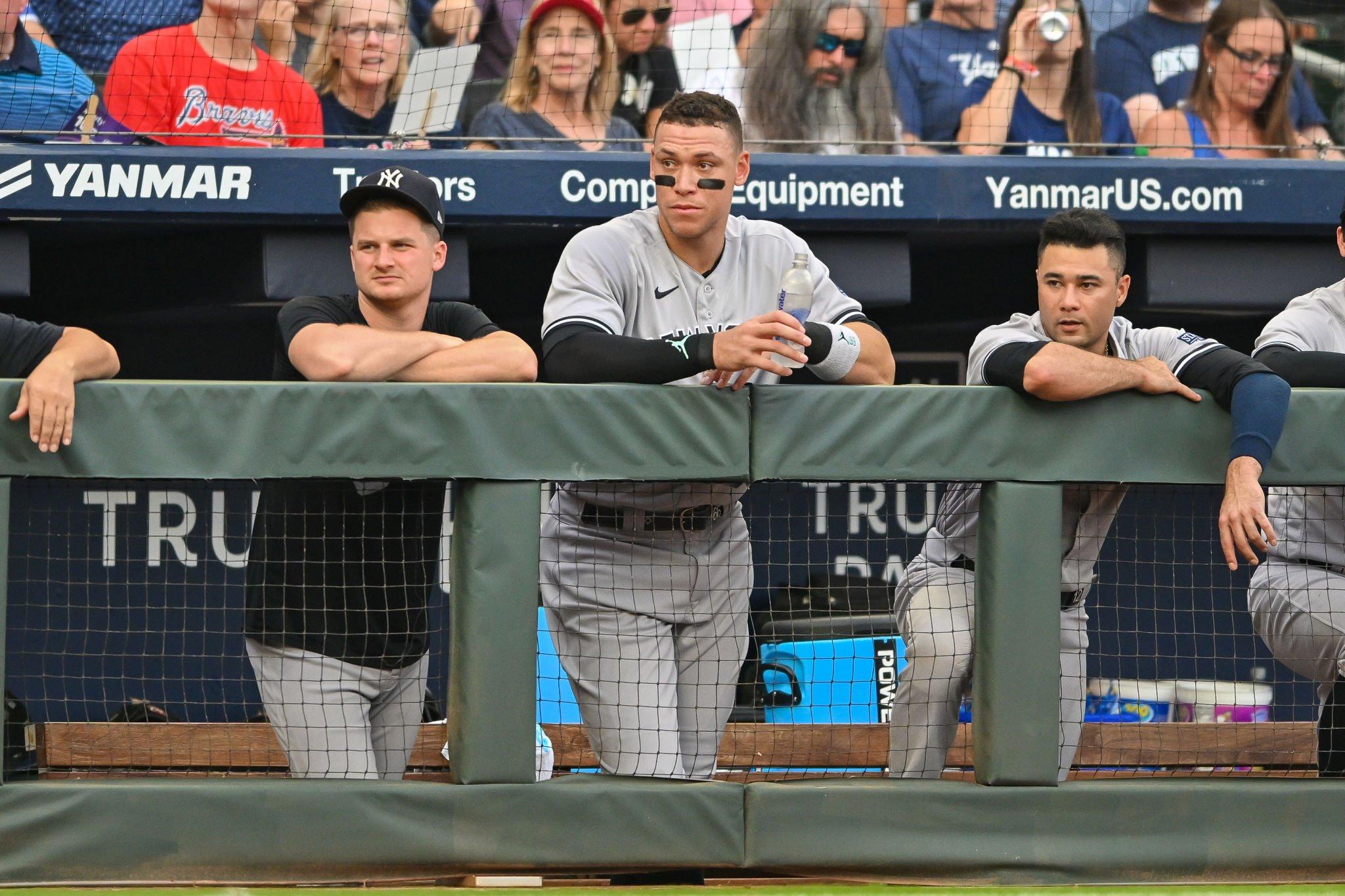
Atalanta/ New York — Ronald Acuna Jr.’s strained relationship with Atlanta Braves manager Brian Snitker has turned into one of the most intriguing late-season storylines in baseball. The clash came to a head in early September when Snitker moved the former MVP out of his usual leadoff role. That lineup change drew immediate criticism from analysts, who said the move risked “destroying the player.”
For the New York Yankees, the timing of this rift is hard to ignore. With Cody Bellinger likely to opt out of his contract after the 2025 season, New York could soon be searching for another star to anchor its lineup. Acuna Jr. fits that profile, though the path to making such a move is complicated.
Snitker’s lineup shuffle fuels Braves’ clubhouse fight
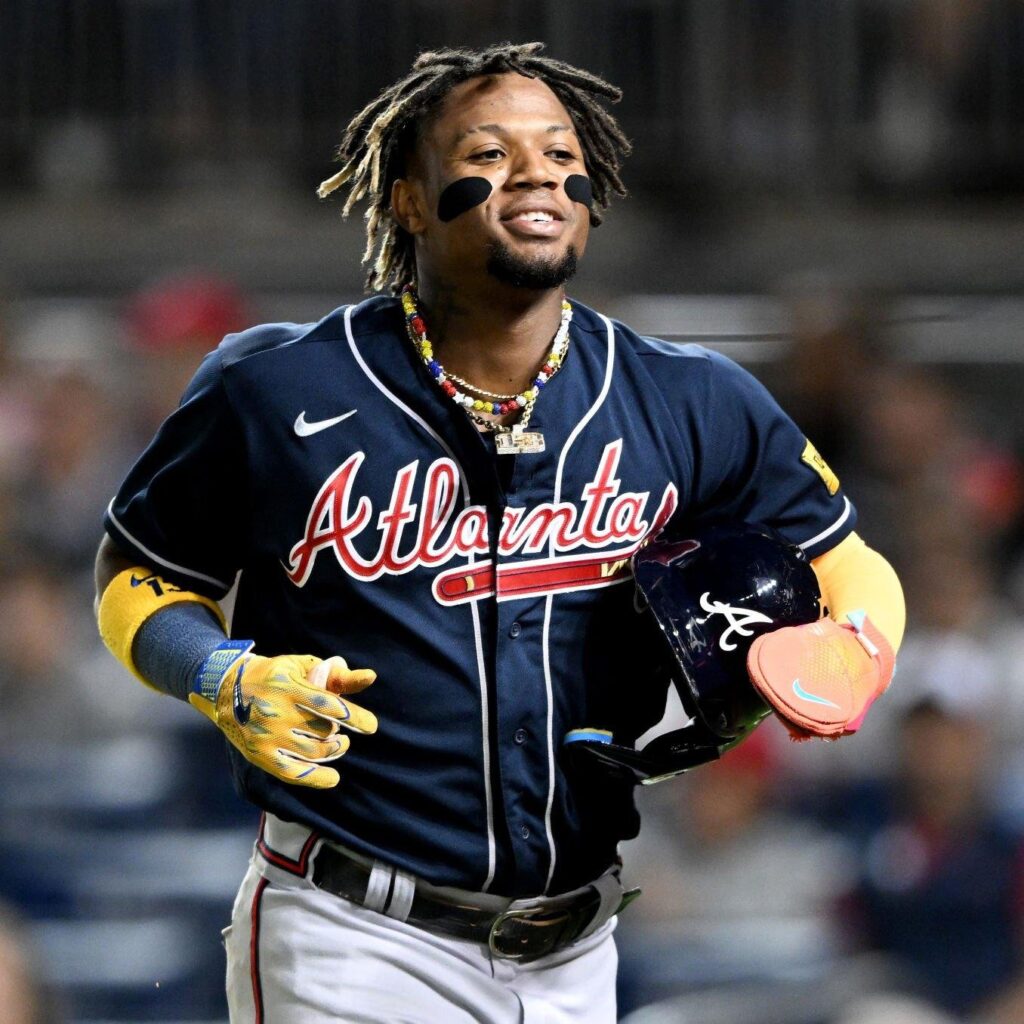
Ronald Acuna Jr.’s frustration with Snitker began during a rare slump in early September. After returning from Achilles issues in late August, he endured a seven-game hitless stretch despite carrying a .300-plus average deep into the season.
Snitker’s response was to drop him in the batting order. For four consecutive games beginning Sept. 6, Acuna was slotted into the sixth or seventh spot. It marked the first time since his rookie season in 2018 that he had hit that low.
The decision drew a sharp response from MLB Network’s Harold Reynolds.
“If you are going to put him at sixth or seventh in the lineup, that is destroying the player, and that ain’t helping the team at all,” Reynolds said. “This guy did everything – MVP, best player – at the top of the order. So he comes back from injury, everything else, he’s not getting it going. So let’s put him in an uncomfortable position in the lineup?”
This wasn’t the first sign of strain between player and manager. Back in April, Acuna posted — and later deleted — a social media comment critical of Snitker’s handling of teammate Jarred Kelenic. Reports have suggested Acuna believes he is held to different standards than other players, which has only deepened the divide.
Bellinger’s possible departure opens Yankees window
The Yankees, meanwhile, are facing their own uncertainty. After losing Juan Soto to the Mets last winter, they turned to Bellinger as their backup plan, acquiring him from the Cubs in December 2024. The move has worked out, as Bellinger has produced a .270/.325/.491 slash line with 22 home runs in 112 games.
Yet most expect him to test free agency. CBS Sports’ Mike Axisa predicted Bellinger will “opt out of his contract and pursue free agency” to secure a longer-term deal projected at $140 million over five years.
Cody Bellinger has kept his answers vague.
“The true answer is it’s just so far ahead,” he said last month. “I’m thinking about today, obviously tomorrow, the All-Star break, and that’s really it.”
If Bellinger departs, the Yankees will need a star-caliber bat. That is where Acuna Jr. could, in theory, come into play.
Contract comparison favors Acuna Jr.
Financially, Acuna Jr. represents a bargain compared to Bellinger. He is locked up through 2026 at $17 million annually, with team options at the same salary for 2027 and 2028.
Bellinger, in contrast, will make $27.5 million in 2025 and is expected to demand more than $30 million per year on the open market. For the Yankees, Acuna’s contract offers far better value.
On the field, Acuna’s production when healthy has been elite. Since returning from an ACL injury on May 23, he has hit .331 with a 1.011 OPS in 43 games. Advanced metrics underline his dominance: a 92.2 mph average exit velocity, a 51.2% hard-hit rate, and a 14.9% barrel rate, all stronger than Bellinger’s marks.
The biggest concern is durability. Acuna has suffered two ACL tears in four years and has dealt with recurring Achilles and calf problems. Those injuries raise legitimate long-term questions that Bellinger does not face to the same extent.
Yankees’ trade chips a concern
Speculation has swirled about what the Yankees could offer. Jim Riley of the BALLCAP Sports podcast suggested a package centered around shortstop Anthony Volpe, pitcher Ian Hamilton, and top prospects Spencer Jones (ranked MLB No. 87) and Bryce Cunningham.
“I think Yankee fans would sign up for this all day long,” Riley said. “Braves fans, I don’t know.”
Other possible names include catcher Austin Wells, now an established starter after finishing third in AL Rookie of the Year voting. Right-hander Will Warren, who holds 4.44 ERA so far in 2025.
But analysts widely agree the Yankees do not have the prospect firepower to compete with teams like Seattle, which boasts higher-ranked young talent. The Braves would likely insist on at least three top-100 prospects to even consider parting with Acuna.

Reality check on trade feasibility
Despite the noise, no credible insider has reported active trade talks. Braves GM Alex Anthopoulos said at the July 2025 deadline that the organization had no plans to move stars under long-term control.
The rumors have largely been media-driven, focused more on Snitker’s lineup choices than any actual front-office action. Atlanta has little incentive to trade Acuna Jr., who is under contract at below-market rates through at least 2026.
Snitker’s expected retirement after this season could also cool the tension. At 69, with his contract ending, a managerial change could resolve the friction without a trade.
But for Yankees, they lack the prospects to compete in an Acuna sweepstakes and may not even need him if Bellinger stays. The more realistic focus is keeping Bellinger in pinstripes rather than chasing an unlikely blockbuster with Atlanta.
History gives Yankees big hope
Baseball history proves that even franchise stars are not untouchable once relationships fracture. The stunning June 2025 deal that sent Rafael Devers from Boston to San Francisco underscored that point. Despite a $313.5 million contract, tensions over position changes created what insiders called an “unsalvageable situation.”
Similar examples exist. In 2021, Nolan Arenado pushed his way out of Colorado, saying there was “a lot of disrespect” before the Rockies moved him to St. Louis. Ken Griffey Jr. once requested a return to Cincinnati, while Mookie Betts’ breakdown in negotiations with Boston ended with his move to Los Angeles. These cases show that when trust erodes, trades happen regardless of financial cost or logic.
This gives Yankees fans a hope though the priority is to keep Cody Bellinger long-term.
What do you think?