NEW YORK — For five games, David Bednar had been exactly what the Yankees needed him to be. He entered. He recorded the save. He left. No drama, no questions. The Yankees led the majors in saves and their closer led the majors in save totals.
Then came Tuesday’s 14-pitch appearance. Then Wednesday’s ninth inning.
Bednar allowed a pair of hits and the go-ahead run in the ninth inning of Wednesday’s 3-2 loss to the Oakland Athletics, giving up the lead on Brent Rooker’s sacrifice fly after Nick Kurtz singled and Shea Langeliers doubled. It was Bednar’s first blown save of the season. The Yankees dropped to 8-3.
After the game, reporters asked Bednar about the velocity readings on his four-seamer and his splitter, which had dipped from where they ran earlier in the season. The numbers raised a question about fatigue after heavy usage in consecutive days and the lingering effects of a demanding World Baseball Classic workload in March.
Bednar was measured in his response.
“It’s early in the season and the weather is cold,” Bednar said. “It’s nothing to panic about.”
The pitch that defined the blown save
David Bednar entered the ninth protecting a 2-2 tie. What followed was a sequence that illustrated everything the clutter in his recent outings has looked like. Kurtz singled on a well-located pitch that found a gap. Langeliers doubled. Rooker did not need to pull the trigger on a hard swing. He just needed to make contact on a fly ball, and with Kurtz’s legs doing the work, that was enough.
After recording the final out, Bednar reflected on what went wrong.
“I got ahead of guys and couldn’t put them away,” Bednar said. “That can’t happen in a game like that. I got in a jam, tried to get out of it and unfortunately wasn’t able to.”
The frustration in that assessment was notable. Bednar is not a pitcher who hides behind circumstances. He owns his outings. Getting ahead and failing to finish speaks to a specific issue with command at the edges of the zone, which is where his velocity matters most. When the four-seamer is at 97 or 98 mph, batters cannot sit on it. When it drops even two or three miles per hour, the margin for error on location shrinks.
A velocity dip both Bednar and Boone are brushing aside
Bednar’s four-seamer averaged 97.1 mph last season during his time with the Yankees, ranking in the top 88th percentile among all pitchers according to Baseball Savant data. His fastball velocity has been one of the defining tools of his arsenal since he became a full-time reliever in Pittsburgh.
The dip in recent outings has been measurable. It has also come during a stretch of heavy use. In his last four appearances, Bednar has thrown 4.1 innings, allowed eight hits, a walk and three runs while striking out six. That includes 73 combined pitches across two consecutive appearances this week, a workload that any pitcher would feel over a matter of days, especially in the cold early-April conditions at Yankee Stadium.
Aaron Boone was equally calm about the velocity reading after Wednesday’s loss.
“I think once we get rolling into this, he’ll be fine,” Boone said.
The manager’s framing redirected responsibility toward the bigger picture. Bednar was not, in Boone’s assessment, the reason the Yankees lost on Wednesday. The offense went 1-for-7 with runners in scoring position. The Yankees scored two runs in the first inning and never added another. Bednar entered a tied game, not a lead, and he still needed to execute in a situation where any contact could prove decisive.
The WBC factor and what it means for an April workload
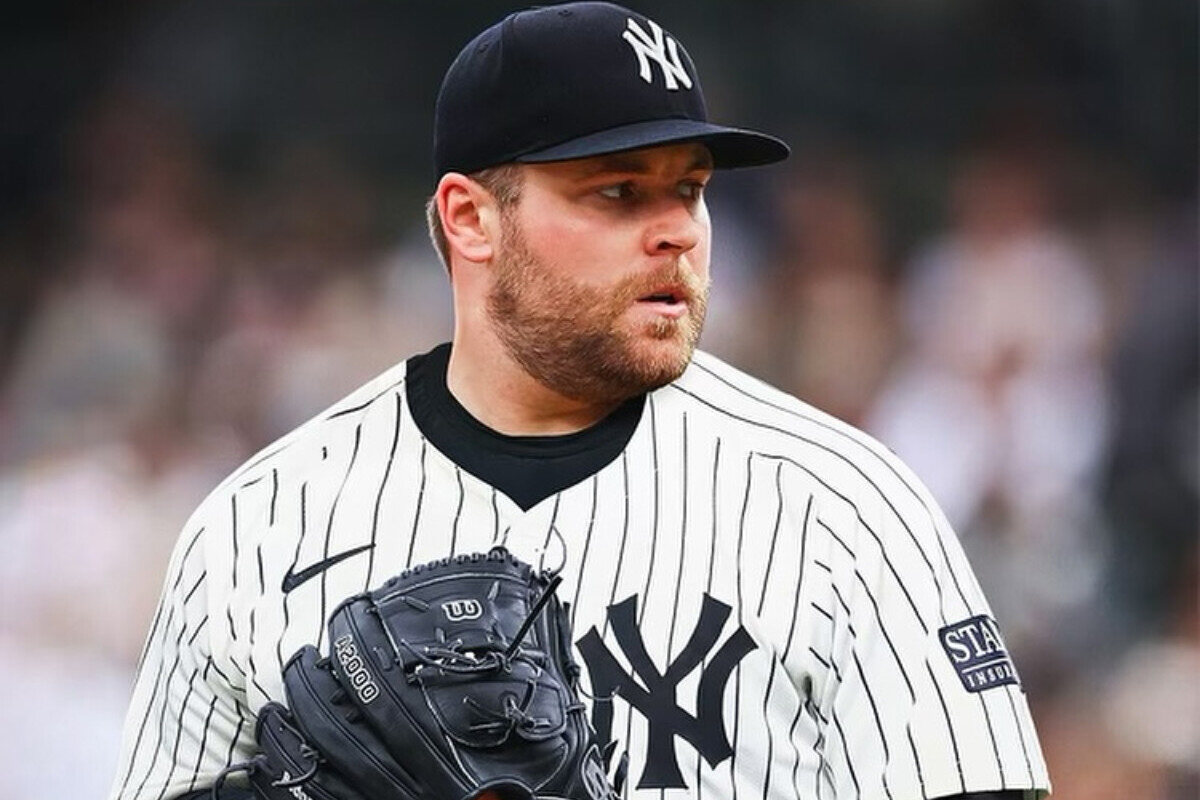
One element of context that both Bednar and Boone acknowledged without dwelling on is the World Baseball Classic. Bednar pitched for Team USA in March, appearing four times during the tournament. He allowed a run across those four appearances. That workload arrived during what would otherwise have been a ramp-up period for a major league pitcher preparing for a 162-game season.
Closers typically build arm strength gradually through spring training. The WBC compressed that timeline and replaced competitive preparation with genuine high-leverage tournament pressure. Bednar pitched in situations that mattered in March, which means his arm entered April with more innings on it than most closers carry out of a typical spring.
The cold temperatures at Yankee Stadium have not helped. Pitchers lose feel for pitches when their hand and forearm muscles are fighting against cold air. The splitter, which requires precise grip manipulation, is especially vulnerable to temperature-related grip changes. Bednar called out the cold directly in his postgame comments. He is not wrong that it is a real variable.
A bigger-picture concern for the Yankees bullpen
The specific details of one blown save on April 9 are manageable. What the Yankees are watching, along with every team that faces them in the coming weeks, is whether this particular stretch represents a temporary condition or the first visible crack in a bullpen structure that carries less depth than it did one year ago.
Devin Williams and Luke Weaver, who both departed for the Mets in free agency, combined for 18 saves and major late-inning contributions in 2025. Bednar replaced both of them with one arm. On nights when the rest of the bullpen holds, that works. On nights when Bednar needs to be at his sharpest and the fastball is sitting two miles per hour below its peak, the margin disappears.
Bednar’s record entering Wednesday was spotless. Five saves in five opportunities. An ERA that reflected a closer doing exactly what he was signed to do on a one-year, $9 million deal. One blown save in 11 games is not a crisis. His xwOBA against in 2026 per Statcast stands at .408, which does suggest some negative regression from luck is arriving, but the sample is still tiny.
The Yankees are 8-3 and lead the AL East by 3.5 games. Bednar is emphatic that there is nothing to panic about. The numbers in their current form support his position. The question the Yankees front office and their fan base will keep monitoring is whether Wednesday was a one-game weather and workload story, or the beginning of a longer conversation about the weight one closer can carry when there is limited elite backup behind him.
For now, Bednar’s answer is the same one he has given at every difficult point in his career. He gets the ball. He finds a way. He asks for another chance. The Yankees are counting on that to hold.
What do you think? Leave your comment below.