


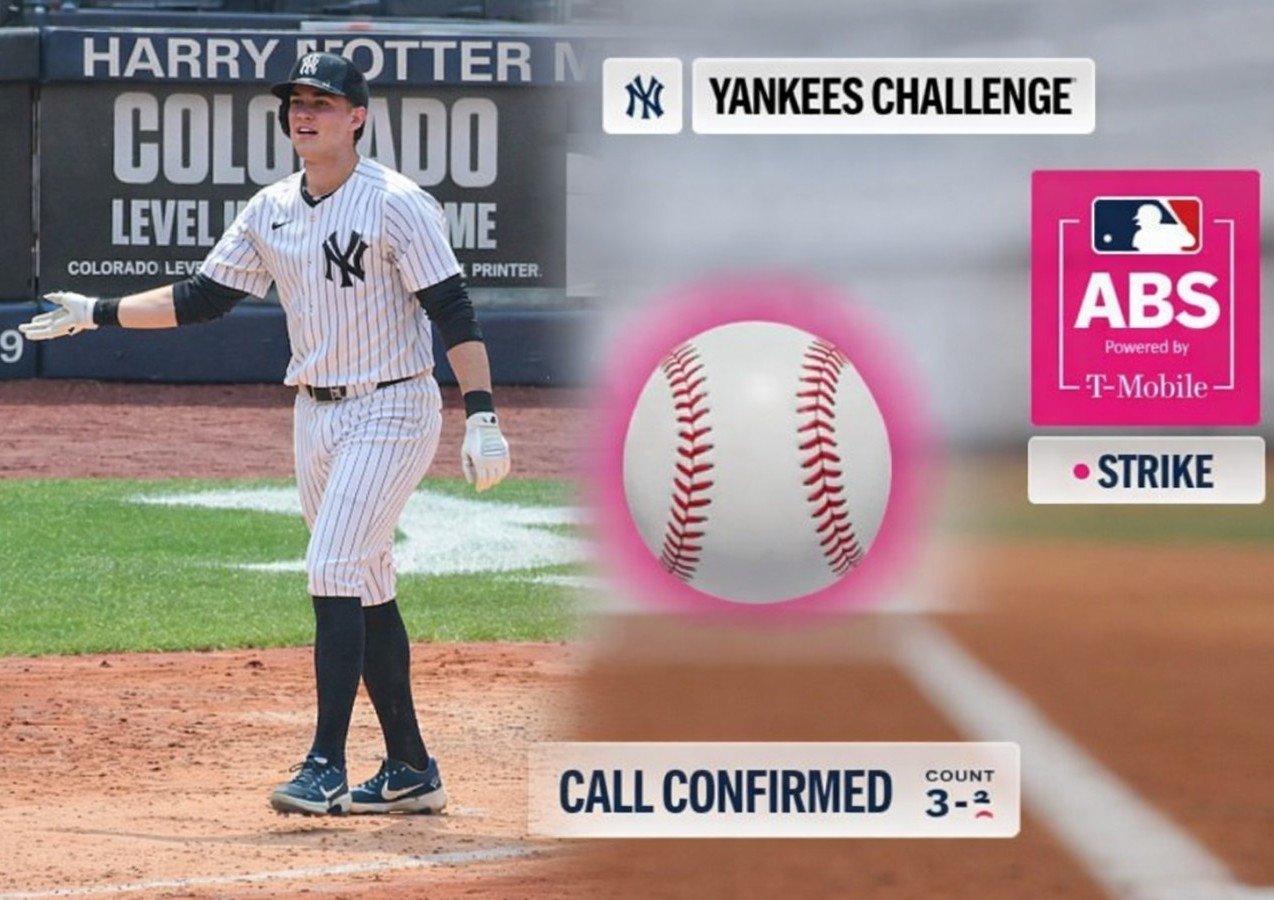
NEW YORK — Ben Rice is having one of the hottest starts of any hitter in baseball. Through eight games, the Yankees’ first baseman is slashing at an elite clip with a 1.380 OPS. He has three home runs. He is fast becoming one of the best young offensive players in the American League.
But Rice did something during the Miami Marlins series last weekend that has set off a conversation in the Bronx. He wasted two Automated Ball-Strike challenges in two days. Both were bad. And the Yankees, a team that has built one of the most sophisticated ABS strategies in the sport, can’t afford to keep absorbing those mistakes.
Yankees rank among MLB’s best at ABS challenges
The Yankees entered the home opener having converted 13 of 16 challenges for a success rate of 81.3 percent, second-best in baseball. Only the Baltimore Orioles were better, at 85.7 percent. New York’s 13 successful flips also ranked second in the majors, trailing only the Minnesota Twins’ 19.
That performance did not happen by accident. The organization’s preparation for ABS began in 2021 when the system was first introduced in the Arizona Fall League, and the Yankees have been analyzing its implications ever since. Catching coach Tanner Swanson described the club’s philosophy as one built on sharp situational thinking.
“There are opportunities to be super aggressive,” Swanson said. “The dealer’s got 2-7? Let’s go. Let’s push our chips in here.”
Pitching coach Matt Blake said the Yankees have been studying their challenges and those made across the rest of the league, constantly refining their approach so that in-game decisions become closer to reflex than calculation within the two-second window players have to act.
“Just bringing some attention to the types of times we would want to challenge,” Blake said, “who should be challenging, what some of the discrepancies are in calls when you might get a ball or strike called and why it might get overturned. Bringing some awareness to the group on all of the situations that might come up so that they’re more prepared.”
The Yankees also have a strong framing foundation to build on. Catcher Austin Wells finished third in the majors last season in framing runs added with 11, per Baseball Prospectus. Through the first nine games of 2026, Wells leads the team with four successful challenges.
Rice burns two challenges in 48 hours
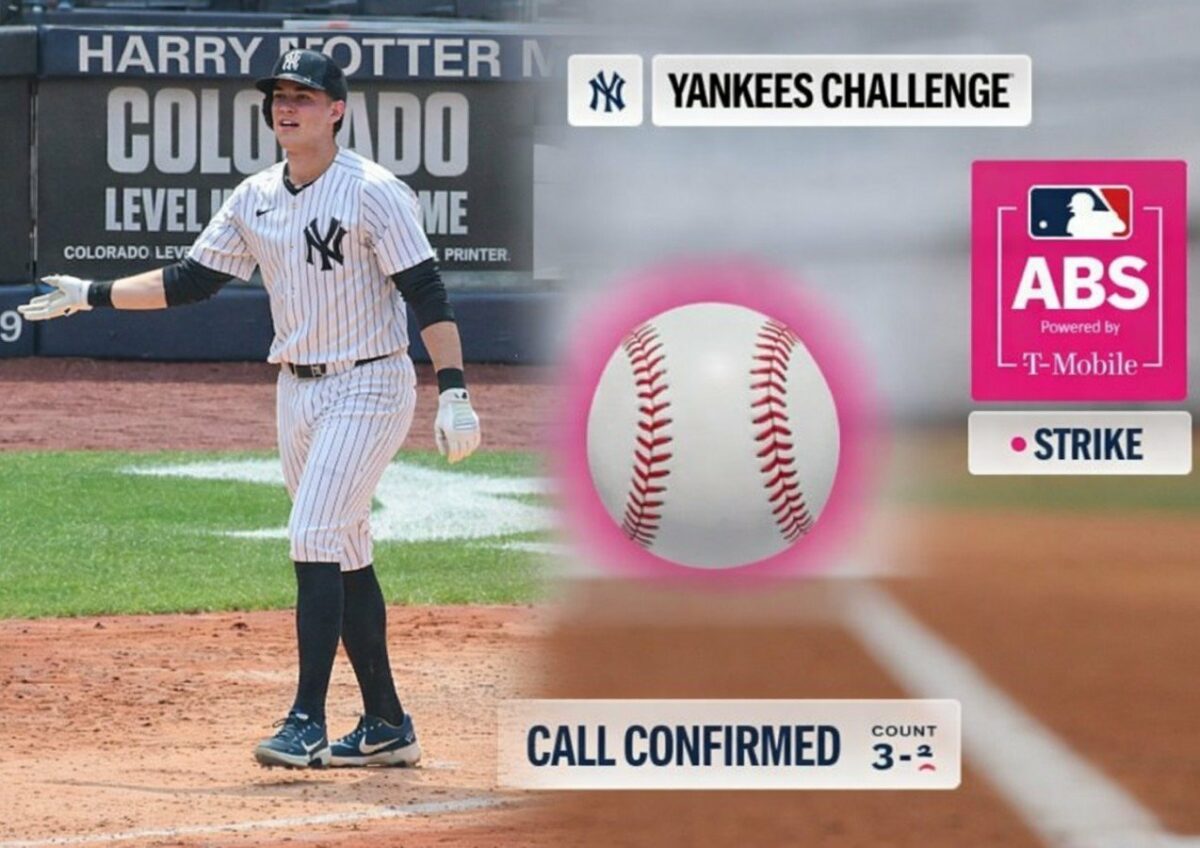
That careful team-wide approach is what makes Rice’s back-to-back mistakes stand out so sharply.
On Friday against the Marlins, Rice challenged a 1-1 slider from pitcher Eury Perez in the second inning of a game the Yankees were leading 4-1. YES Network broadcaster David Cone described the pitch location as clearly a strike, and the ABS system confirmed it. The challenge failed. Rice then walked on the next pitch, which made the sequence even more frustrating since he burned a team resource on a call that was not in dispute.
On Saturday, Rice challenged again. This time it was a low fastball from Andrew Nardi on a 3-1 count in the fifth inning with two outs and no one on base. The pitch was again ruled a strike. Two Yankees challenges burned in two days, neither one defensible in context.
The Yankees’ challenge pool is not unlimited. Each team gets a set number per game. Burning one on a clearly called strike in a non-critical situation is exactly the kind of preventable waste that Swanson and the coaching staff have been working to eliminate. Analyst Colin Keane of Yanks Go Yard noted bluntly that these were not close calls or high-leverage gambles. They were poor reads by a Yankees player who has otherwise looked like one of the best hitters in the game this season.
Boone faces a decision about individual challenge privileges
The question now being raised around the Yankees is whether manager Aaron Boone should step in and either revoke or restrict Rice’s ability to call for an ABS review. It is not a question that has come up often in the early days of the system, but Boone has already been deeply invested in ABS strategy and has spoken extensively about it.
“We’re going to be good at it,” Boone said. “That’s the expectation.”
Swanson reinforced that the Yankees are treating ABS challenges as having measurable run value across a full season. He calculated that overturning enough calls across 162 games could add two, three, or even four wins to the Yankees’ total.
“We want to see how many calls we can overturn throughout the course of a season,” Swanson said, “and understand how every one of those overturns has a run value, and if you add them together, you’re talking about two, three, four or a handful of wins, which we all know how impactful that can be. The difference between winning the division and not winning the division.”
Applying those stakes to what Rice did last weekend, two wasted challenges represent real value left on the table. If Boone does decide to restrict which players can initiate a challenge, he would have clear justification. Rice’s offensive numbers give the conversation a degree of nuance. A manager rarely wants to discipline a player hitting at an elite level in the early going. But ABS is a team resource, and the Yankees have made it a competitive priority.
Swanson made the Yankees stakes plain: teams that master the system gain an edge, and teams that are still figuring it out pay a price.
“There’s definitely an edge to be had for teams that are good at this,” Swanson said, “and it could be really detrimental to teams that are maybe for the first time trying to figure it out.”
Rice already knows that. The Yankees just need to make sure he acts like it at the plate.
What do you think? Is ABS Yankees’ secret weapon this season?











Outside of an obviously egregious call, ABS challenges should be situational and likely late in games. If more were allowed, sure, use the early innings to get the umpire on his toes. But that ain’t happening.