SAN FRANCISCO — The New York Yankees spent a lot of mornings this spring talking about something brand new to Major League Baseball. The automated ball-strike challenge system. How to use it. When to use it. When to hold back.
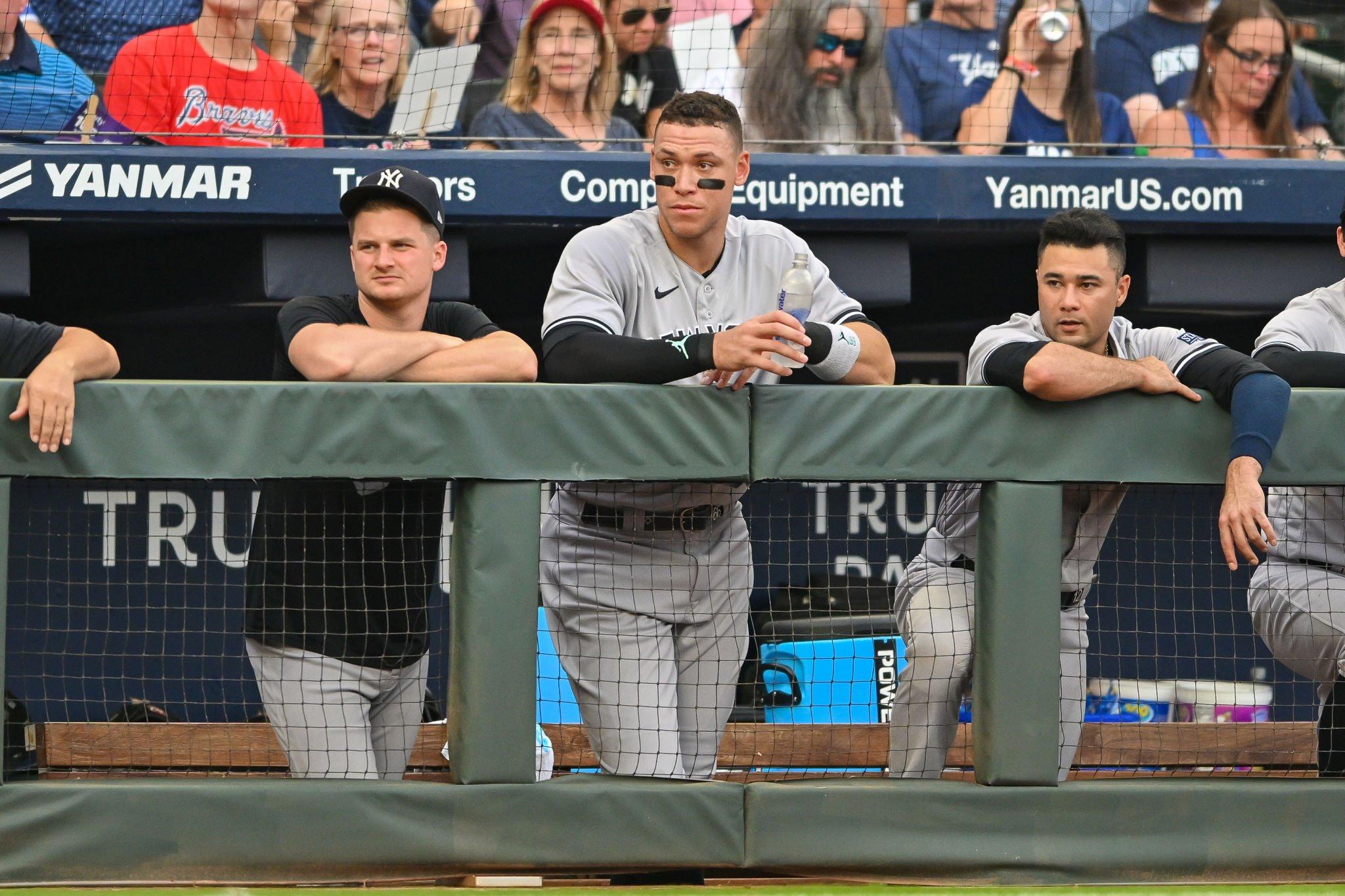
Aaron Judge joked about the volume of those sessions.
“We had too many meetings about it, in my opinion,” Judge said with a grin. “It’s all good stuff.”
Three games into the 2026 season, all that homework is paying off. The Yankees went 5-for-6 on ABS challenges during their sweep of the Giants, including 3-for-3 on Saturday in a 3-1 victory.
Two of those Yankees challenges directly changed at-bat outcomes. One led to two runs. The other erased a baserunner. With the way this roster is built, ABS could be a competitive edge all season.
Boone’s obsessive prep gave the Yankees a head start
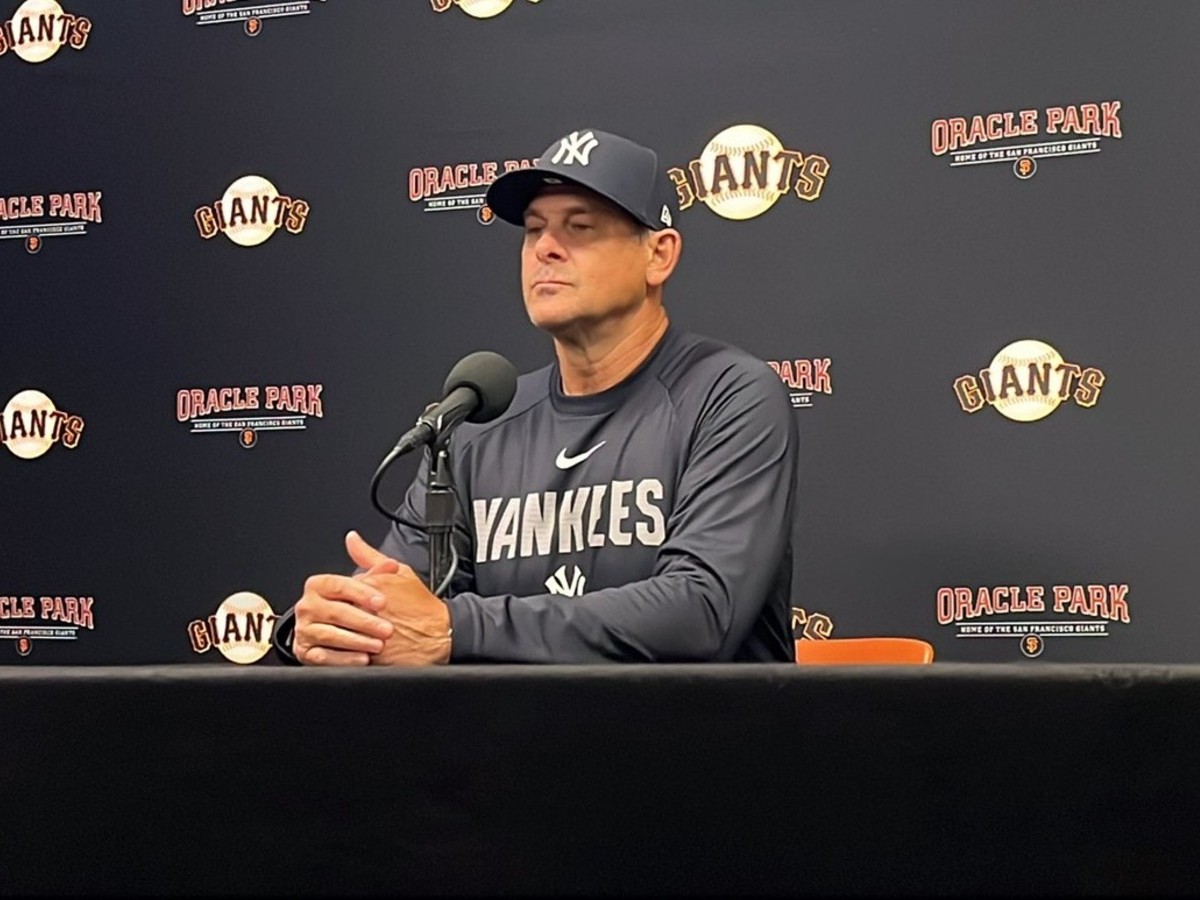
Manager Aaron Boone described himself as “obsessive” about ABS during spring training. He routinely told hitters why he liked or disliked specific challenge decisions. At the end of camp, he showed the team eight to 10 examples and walked through the reasoning.
No team used the challenge system more in spring training than the Yankees, who tied Cleveland with 48 challenges and led all clubs with 24 successful overturns.
“I feel like our team makeup should lend itself to it being a good thing for us, an advantage for us,” Boone said. “That’s not a given. We got to continue to evolve with it, learn from it, and hopefully it is something that is a strength. That’s my expectation.”
No team chased fewer pitches outside the strike zone last season than the Yankees. Their catchers, Wells and J.C. Escarra, bring elite zone awareness. That plate discipline gives the Yankees a built-in ABS advantage most rosters lack.
How ABS flipped Saturday’s game in the Yankees’ favor
Saturday’s finale showed exactly what Boone envisioned. Seven ABS challenges were made against plate umpire Chad Whitson. All seven calls were overturned. The Yankees’ three challenges all arrived in high-leverage moments.
In the third inning, Trent Grisham faced a 2-2 pitch from Tyler Mahle that Whitson called strike three. Grisham tapped his helmet. The pitch was high. The call flipped to ball three. Grisham walked and scored on Ben Rice’s two-run double.
“That sets up a lot right there,” Boone said.
Without the challenge, the inning ends. Instead, the Yankees took a 2-0 lead that held up the rest of the afternoon.
Wells handled the other two challenges from behind the plate in the seventh. He flipped a ball call into a strike on Jake Bird’s 0-1 pitch to Casey Schmitt, who struck out one pitch later. When Tim Hill entered to face Jung Hoo Lee, Wells challenged an 0-2 ball call and got a called third strike to end the frame.
“I love what I’m seeing from Austin Wells back there, overturning a couple big calls to shift the momentum onto our side,” Judge said.
Judge’s ABS payback could reshape his at-bats
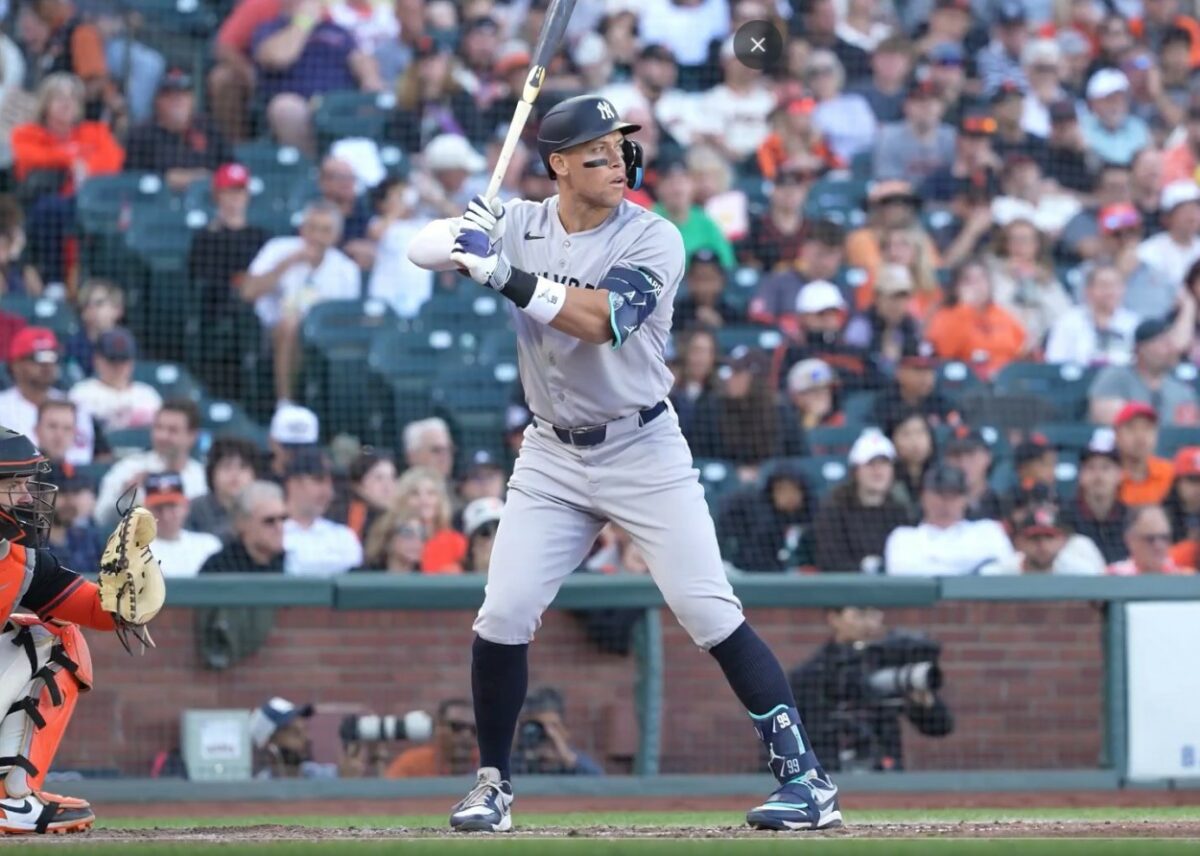
Nobody in baseball has been hurt more by incorrect strike calls than Judge. From 2017 through 2025, the 6-foot-7 Yankees slugger had 368 low strikes called against him, the most in MLB. Josh Bell ranked a distant second at 233. Judge also tied Mookie Betts at 638 total strikes called on pitches outside the zone.
On Friday, Judge used the system for the first time. With Goldschmidt on second and no outs, Robbie Ray‘s slider broke just below the zone. Umpire Chad Fairchild called it a strike. Judge tapped his helmet. The pitch missed by 0.1 inch. The count shifted from 1-1 to 2-0.
Five pitches later, Judge crushed a full-count fastball 405 feet over the left-field wall for a two-run homer.
The count flip mattered. Last season, MLB hitters posted a .669 OPS in 1-1 counts and .974 in 2-0 counts. Judge’s career gap is even larger: 1.373 OPS after 2-0 counts compared with .945 after 1-1.
“He’s so tall, and somehow he gets rung up on that call,” teammate Cody Bellinger said. “I think it’s gonna benefit him a lot.”
“I’m not going to try to sit here and challenge every one I think is close,” Judge said. “But if it’s a big spot, where I think I’ve got a chance to flip the count, I’m going to do it.”
First challenge in MLB history came from a Yankee
Jose Caballero made the first ABS challenge in major league history during Wednesday’s opener. It was unsuccessful. The strike call against him was upheld. But his helmet was authenticated and sent to the Baseball Hall of Fame.
“It’s cool,” Caballero said. “I wish it was the other way around.”
Wells recorded the first successful Yankees challenge on Friday, turning a ball into a called third strike against Rafael Devers to end the first inning for starter Cam Schlittler.
On Saturday, they reach the next level. But the way the Yankees are leveraging ABS may matter more than any milestone.
What do you think? Will it make Aaron Judge more dangerous?