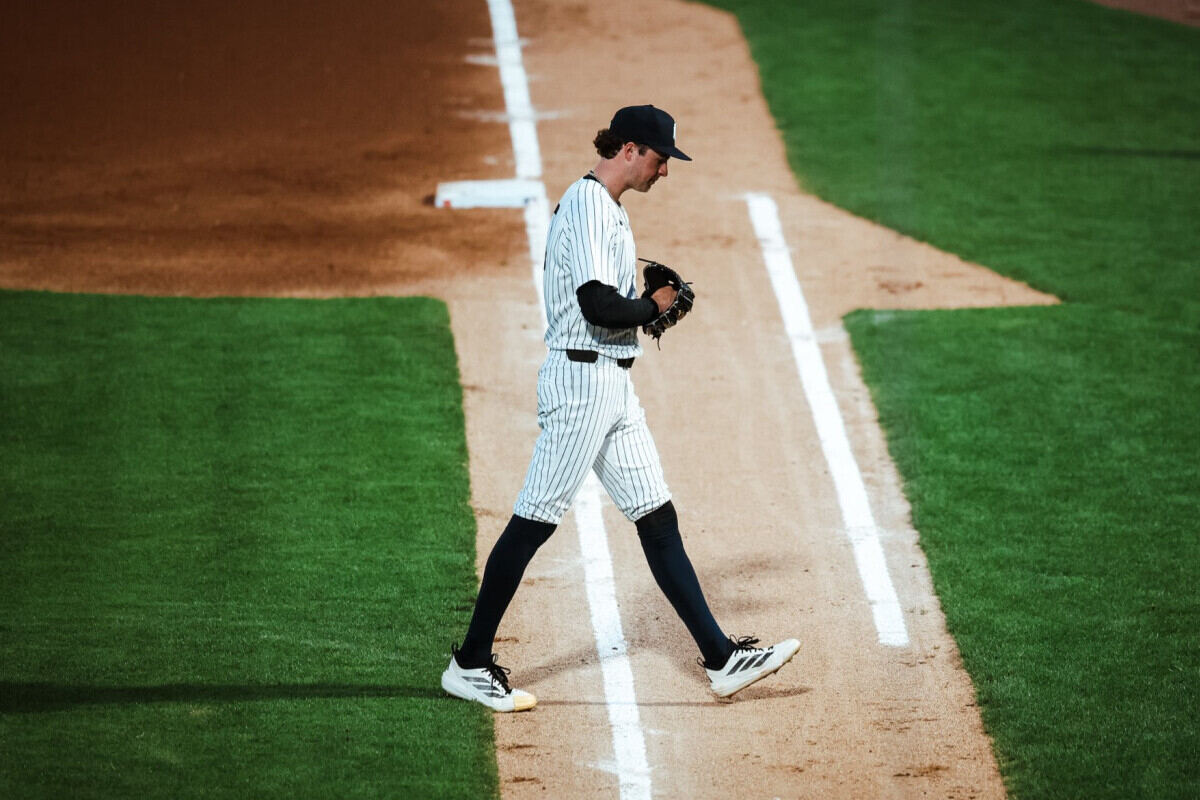
NEW YORK — Cam Schlittler looked like a promising young pitcher heading into 2026. Through two starts this season, he looks like a problem nobody in the American League has solved yet.
The New York Yankees right-hander has thrown 11.2 innings so far. He has not allowed a single run. Hitters have managed just three hits against him. The numbers look absurd because they were never seen in MLB.
There is a reason this is happening. Cam Schlittler and the Yankees spent the 2025-26 offseason making very deliberate adjustments to his approach. Three specific changes stand out. Together, they have transformed a talented pitcher into one of the hardest arms to face in the major leagues right now.
The arm angle shift that hitters cannot see coming
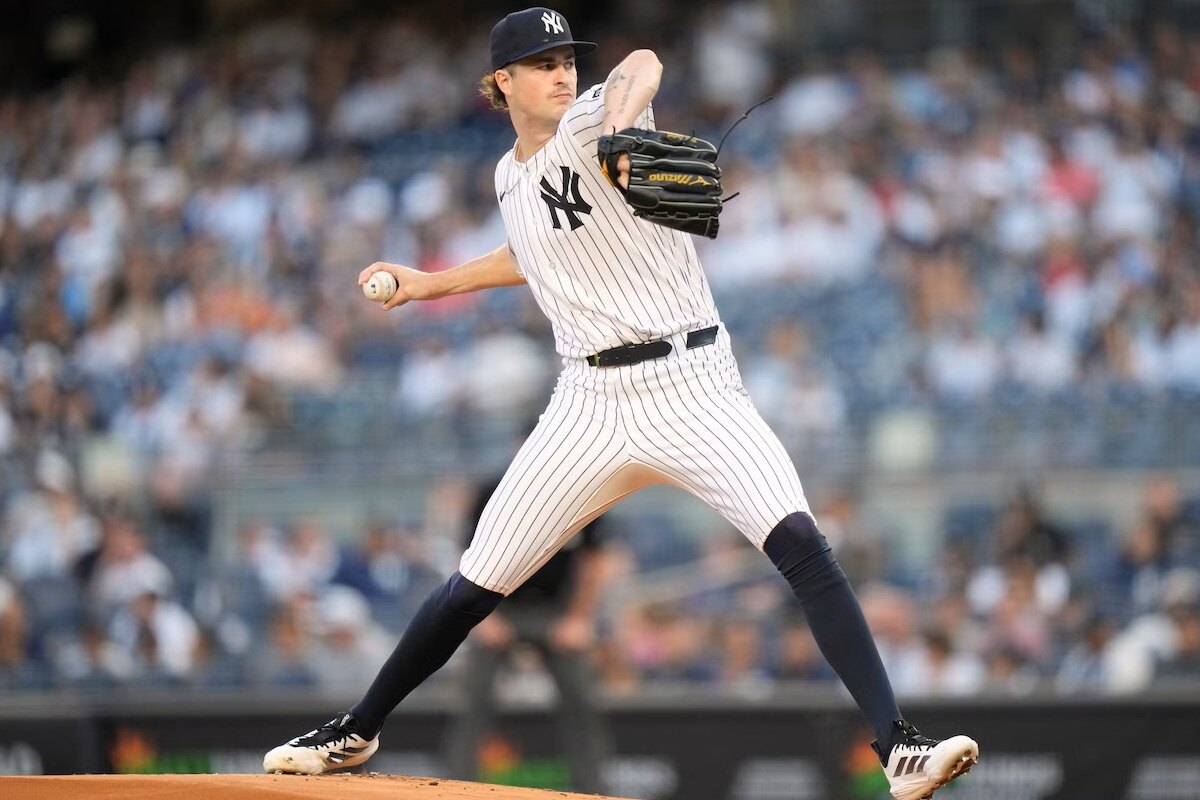
The least talked-about change is the one that may have the most impact. Schlittler altered his arm angle by 7.4 degrees heading into this season, per The Sporting News. That adjustment looks small on paper. For a hitter in the box, it is anything but.
Even a minor shift in arm angle changes the plane of the pitch, how it moves and where it appears to originate from the hitter’s perspective. Batters who saw Schlittler in 2025 are now tracking a delivery that arrives from a subtly different position. Their visual reference point is slightly off, and by the time the ball gets to the plate, the damage is done.
This kind of quiet mechanical work rarely makes news. It does show up in results. The 7.4-degree change has made everything in Schlittler’s Yankees arsenal a little harder to pick up. It is the foundation under the more visible adjustments that followed.
The three-fastball system that is destroying hitters’ timing
The biggest development in Schlittler’s game heading into 2026 is the full commitment to a three-fastball pitching approach. He now relies on a four-seamer, a cutter and a sinker as his three core offerings. Breaking pitches remain part of the mix, but close to 90 percent of what he throws is a fastball variant of some kind.
The key to why this works, flagged by Empire Sports Media and highlighted by the Fireside Yankees analytics account on X, is tunneling. All three pitches leave Schlittler’s hand looking exactly the same. The four-seamer, the cutter and the sinker have nearly identical release points and trajectories for the first portion of their flight. They separate only as they near the plate, far too late for a hitter to make a meaningful swing adjustment.
The four-seamer is the anchor. It sits at 98 to 99 mph, has riding action and is posting a 51.5 percent whiff rate through the early Yankees games of 2026. That figure for a fastball is elite by any measure. The cutter carries sharp late bite. The sinker generates substantial run and has been especially punishing for right-handed hitters trying to sit on the elevated heater.
Schlittler and the Yankees pitching staff, led by coach Matt Blake, worked throughout the offseason to build this three-pitch fastball identity around his natural velocity. The results through the first two weeks suggest the plan is working exactly as intended.
Heavier cutter usage: the weapon opponents cannot ignore
Within the three-fastball system, the Yankees pushed Schlittler to throw his cutter with much greater frequency in 2026. Last season it was a secondary option. Now it is a primary weapon, used nearly as often as his four-seamer in certain counts and situations.
The cutter works because of what the four-seamer sets up. A hitter timing up a 98 mph ride at the top of the zone is not ready for a pitch that breaks sharply down and in at the last moment. The cutter gets swings and misses, induces weak contact and has produced a steady stream of broken bats when hitters try to pull the trigger early.
What makes the increased cutter usage particularly valuable is location. Schlittler is not leaving it over the heart of the plate. He is working the inner half against righties, the outer edge against lefties and the bottom of the zone when he needs a ground ball. The command behind the weapon is what makes the Yankees weapon worth carrying.
Historic numbers and national attention follow
The results of these three adjustments have produced moments that MLB tracking data had never recorded before. In his second start of the 2026 season in Seattle, Schlittler threw 6.1 innings, allowed two hits, walked no one and struck out seven. According to Pitchergami, no starting pitcher in MLB history had ever posted that precise line in a single outing. A two-hitter through 19 outs with no walks was almost always a complete game, and the specific strikeout combination had apparently never aligned that way before.
The Yankees entered 2026 at 4-1 after that outing, and the Yankees pitching staff carried a team ERA hovering just above 0.68 through five games. Schlittler has been a significant reason for those numbers alongside Max Fried.
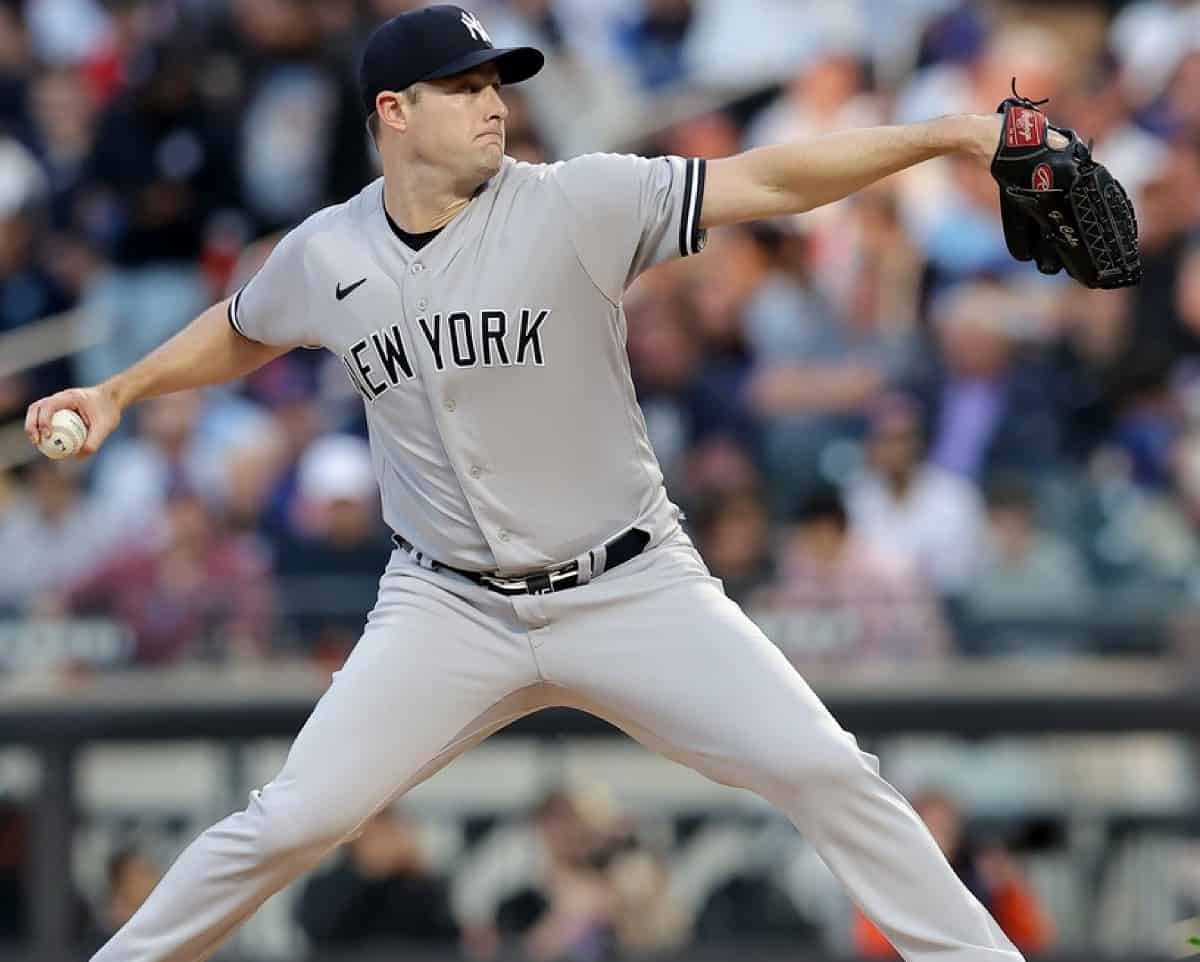
ESPN insider Buster Olney has placed Schlittler among the top starters in the American League through early April 2026, with comparisons circulating to a young Gerrit Cole. Both pitchers have worn Yankees pinstripes. The comparison carries a specific meaning in the Bronx.
Schlittler himself has absorbed the attention and the pressure without blinking.
“Everyone hates us,” he said after his recent outing, via Gary Phillips. “And that’s fine. We know what comes with wearing this jersey, and honestly, I like it. It means people are paying attention.”
The 25-year-old posted a 2.96 ERA with 84 strikeouts in 73 innings during his 2025 Yankees debut. He is under Yankees team control for six more seasons. The three changes made over the winter have turned a prospect with upside into a starter who is making history in real time. The Yankees knew something was coming. The rest of the league is finding out now.
What do you think? Leave your comment below.