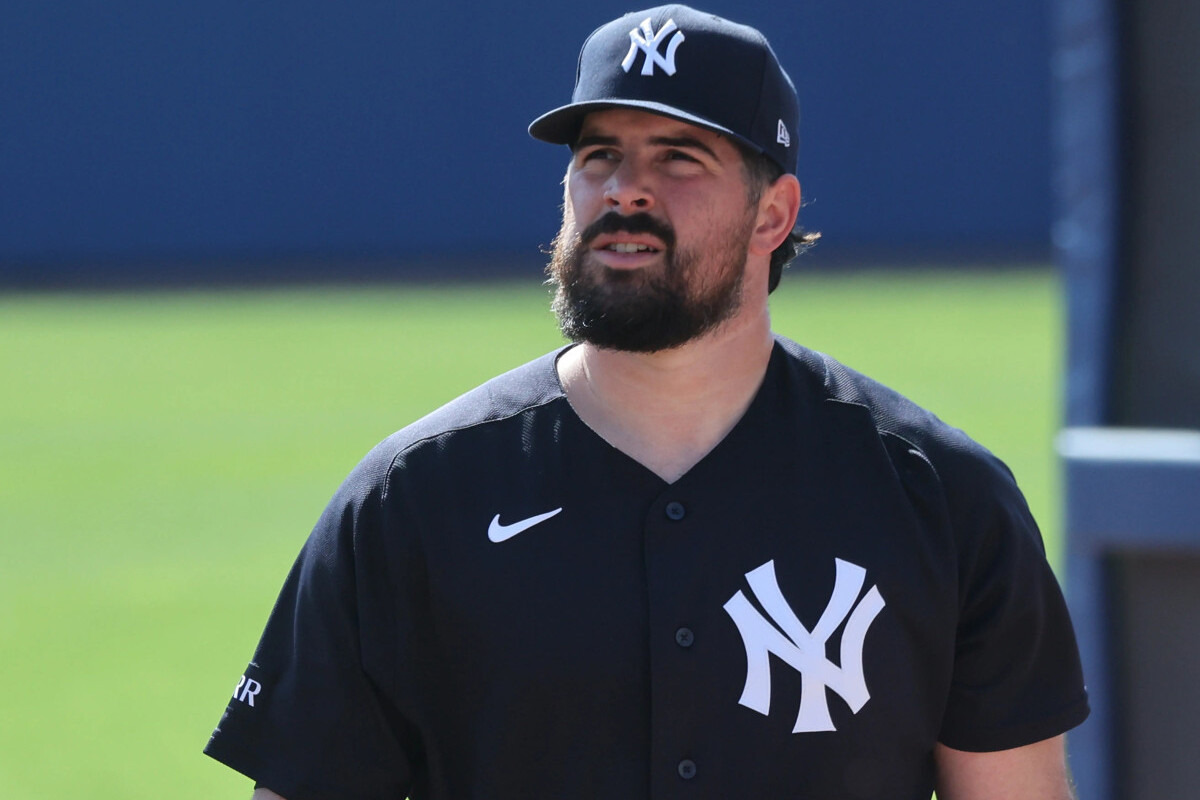
TAMPA, Fla. — Carlos Rodon made 33 starts for the Yankees last season. He won 18 games, struck out 203 batters and posted a 3.09 ERA across a career-high 195 1/3 innings. He was named an All-Star for the third time in his career.
It was, by every measure, the best season of his Yankees tenure since signing a six-year, $162 million deal before the 2023 campaign. But behind those strong numbers was a reality that Rodon kept mostly to himself for months. A reality he shared with reporters Saturday in Tampa that will make some Yankees fans deeply uncomfortable.
Rodon’s dominant 2025 masked a painful secret
The left-hander was not healthy last season. Not close. By his own account, the elbow problems were a slow progression over three to four years, a chronic condition that worsened as the 2025 campaign wore on. Loose bodies had accumulated in his throwing elbow. A bone spur was grinding away inside the joint. His range of motion deteriorated to the point where basic daily tasks became difficult.
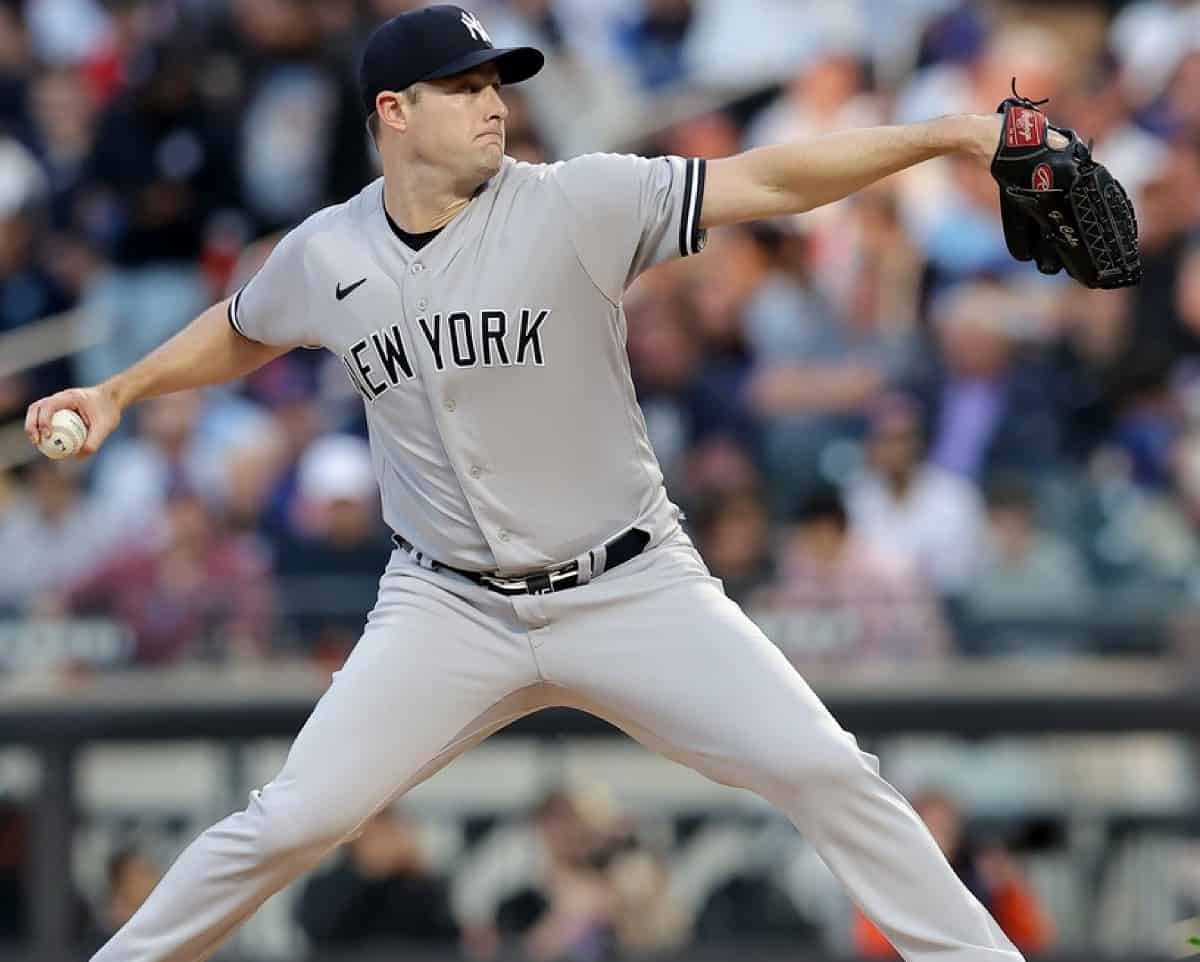
And yet Rodon kept taking the ball every fifth day. He pitched through it in April. He pitched through it in July. He pitched through it in the postseason, including a rough Game 3 outing in the ALDS against the Blue Jays where he allowed six runs in 2 1/3 innings.
The toll showed in the numbers most fans never checked. His four-seam fastball averaged 94.1 mph in 2025, down from 95.4 the year before. From March through July, he sat around 94.4. Over the final weeks, that dipped to 93.8. He threw fewer sliders and leaned more heavily on his fastball, a possible sign he was losing feel for his best breaking pitch as the elbow barked louder.
When the season ended, Rodon went under the knife in October. Surgeons removed the loose bodies and shaved down the bone spur. The procedure that many in the industry did not see coming confirmed what Rodon had been quietly enduring.
Rodon’s own words raise the difficult question
Speaking to reporters at the Yankees’ spring training facility Saturday, Rodon pulled back the curtain on just how bad things were.
“It was fun, let’s just put it that way,” Rodon said with a chuckle. “It was fun every day to challenge myself to go pitch. I couldn’t really bend my arm. I couldn’t button a shirt. Just normal things were interesting.”
He admitted the pain was a factor on virtually every start.
“Now did it hurt? Sometimes, sure, pitching. But I’d rather go out there and compete. And I was throwing well, so I couldn’t just say, ‘Oh, I can’t pitch.’ It was manageable.”
The frustration in his voice was clear when he explained why he eventually opted for surgery.
“The reason I did the surgery is the velocity and things were kind of taking a step back. It was just not who I normally — I was serviceable, but it wasn’t the normal version of me. So I wanted to make sure we got this fixed.”
That admission lands hard. The Yankees knew about the elbow. Manager Aaron Boone confirmed as much.
“We knew he was really struggling with range of motion,” Boone said. “It obviously wasn’t affecting his performance a lot. He didn’t have a ton of velocity by Carlos’ standards, but in a lot of ways, I think that’s something that can happen to pitchers over time.”
There is the tension. The Yankees were aware their $162 million pitcher could not bend his arm properly. They watched his velocity decline. They kept sending him to the mound, including in a postseason where every game mattered. The medical staff reportedly assured Rodon he was not at risk of making the injury worse. But for a fan base that has seen the club lose high-value arms to mismanaged workloads before, the optics are unsettling.
Rodon insists the choice was his to make
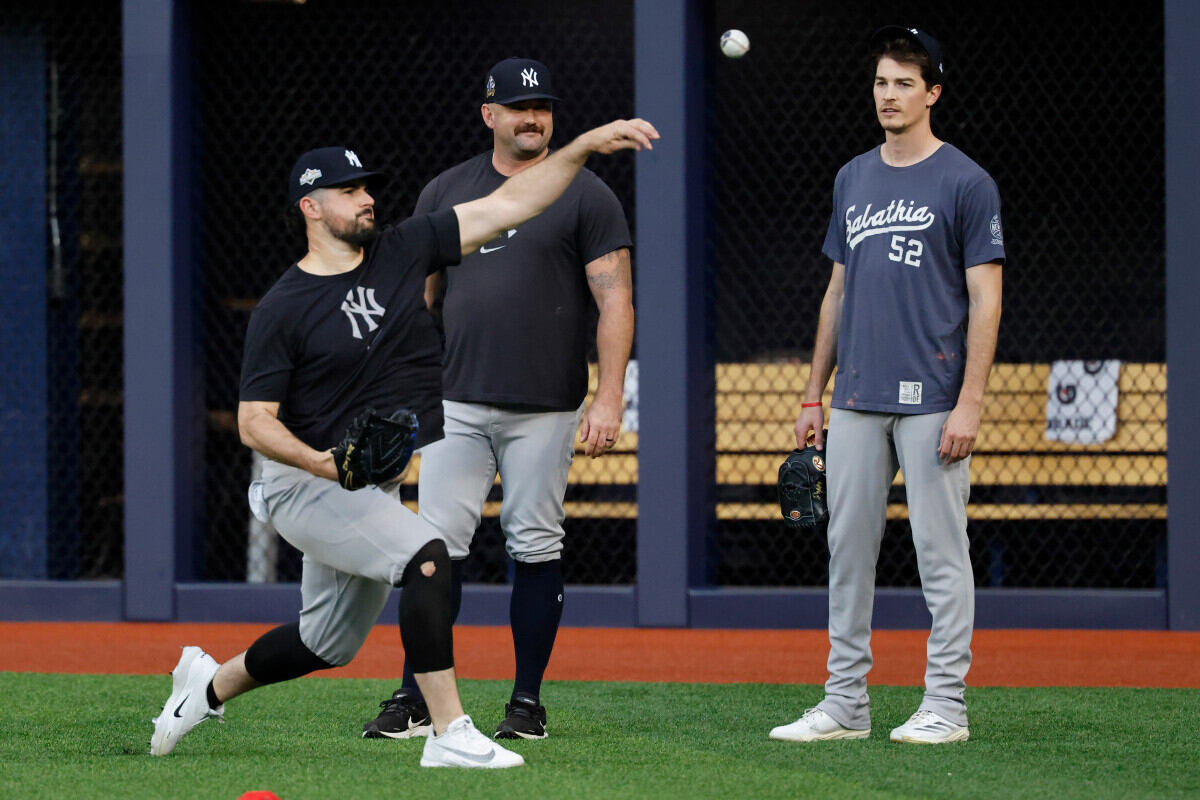
To his credit, Rodon did not blame the organization. He framed the decision as his own, rooted in a competitor’s mentality shaped by years of injury setbacks, including Tommy John surgery with the Giants in 2019.
“Being a guy that’s been on the injured list a good part of his career, missing that time sucks,” Rodon said. “If I think I can pitch at 80 percent and help the team win and I can do that, I’m going to do that, because that’s what I was brought here to do, was to compete and try to win baseball games for the New York Yankees but also my teammates.”
He then offered a line that captured the mental toll.
“The frustrating part was I knew I had more, but when your body’s betraying you, it’s an interesting battle. It’s an interesting dynamic in your head going through that.”
The rehab is progressing but the Yankees need patience
Rodon threw his fifth bullpen session Saturday at George M. Steinbrenner Field. He mixed in fastballs, changeups and sliders across 20 pitches. He has received two PRP injections to accelerate healing. The first came after the surgery left his arm feeling, in his words, like it
Boone said Rodon’s range of motion in his left arm is now right where the team wants it. That alone is a significant improvement over where he was at the end of last season. The velocity in Saturday’s session was encouraging.
“The velo was good today, so just more volume, more pitches,” Rodon said.
The Yankees are targeting a late April or early May return. Rodon hopes to face live hitters in Grapefruit League games before spring training ends, but he tempered expectations.
“The volume has got to pick up,” he said. He also noted that his command is still adjusting to the extra range of motion he now has but has not used in years.
For the Yankees, the math is straightforward. Max Fried anchors the rotation to start the year, backed by Cam Schlittler, Luis Gil, Will Warren and Ryan Weathers. When Rodon returns, and eventually Gerrit Cole from his Tommy John rehab, the staff could become one of the deepest in the American League.
But Rodon’s candid admission raises a larger question that lingers beyond the stat sheet. The Yankees let a pitcher who could not button his own shirt keep throwing in games that determined their postseason fate. Rodon says it was his call. The medical staff says the risk was managed. The results say he was still effective. And yet, hearing a pitcher describe competing at 80 percent while his body betrayed him is the kind of revelation that sits uneasy, no matter how the numbers turned out.
What do you think? Leave your comment below.