ST. PETERSBURG, Fla. — Jazz Chisholm Jr. could not get through a single game this series without becoming the story. Not once.
Friday he was part of a Yankees team that blew a late lead. Saturday he bobbled a grounder in extra innings, had a viral moment admitting he was unsure of a baserunning rule, and watched social media pile on overnight. Then came Sunday, and a new chapter nobody saw coming.
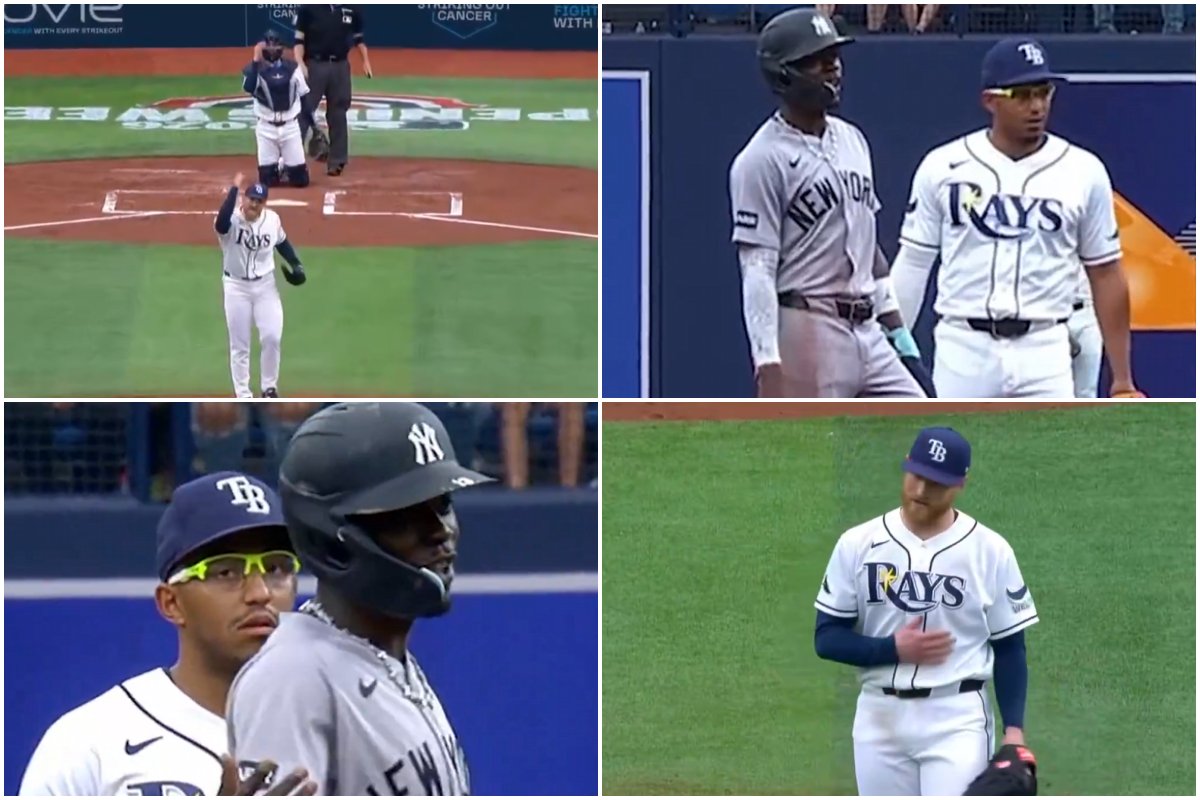
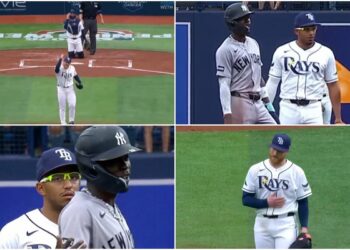
In the second inning of the Yankees’ 5-4 loss to Tampa Bay, Chisholm doubled and appeared to relay pitch location information to Randal Grichuk at the plate. Rays starter Drew Rasmussen, watching from the mound, did not like it. He turned and scolded Chisholm directly. A brief argument followed. Grichuk struck out anyway.
Then, three innings later, Rasmussen appeared to walk back toward Chisholm and apologize.
The exchange in the fifth inning caught the YES Network broadcast off guard. Yankees outfielder Chisholm had just flied out to right when Rasmussen approached him and appeared to say something conciliatory. YES play-by-play voice Michael Kay described what he was watching in real time, clearly caught off guard by the gesture.
“He said, ‘I’m sorry,'” Kay said on the YES broadcast. “Wow, you don’t see that very often.”
Rays pitcher Drew Rasmussen apologizes to Jazz Chisholm Jr. after thinking he was relaying his pitch location while on second base 👀
What Rasmussen did in the second inning was understandable but also technically without a rulebook basis. Runners on second base reading and relaying the catcher’s setup has been a standard part of baseball gamesmanship for generations. Teams use pitch-com systems, rotate signs, and vary sequences precisely because they expect the man at second to be watching. Rasmussen’s anger was real, but Chisholm was not breaking any rule.
That Rasmussen felt the need to go back and acknowledge as much says something about how the moment played out. It also says something about the week Chisholm has had that even a pitcher’s apology became part of the news cycle.
Boone steps in to defend his Yankees second baseman
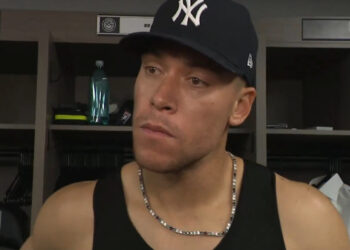
Before Sunday’s game, Yankees manager Aaron Boone had already addressed the fallout from Saturday night. Jazz Chisholm’s postgame explanation about the double-play rule had gone viral, with many fans interpreting his uncertainty as a sign that he did not understand a basic baseball situation. Boone had watched the video and pushed back firmly on that reading, arguing that Chisholm’s casual way of speaking in front of cameras was being misread as ignorance.
“He’s not dumb,” Boone said. “He’s not confused on it. I think that’s his kind of default answer when he’s got (media) in front of him or whatever.”
Aaron Boone responds to Jazz Chisholm Jr.'s postgame comments from Saturday night's game.
Pressed on whether Chisholm actually knows the rule, Boone did not hesitate.
“I think he does know the rule, yes,” Boone responded.
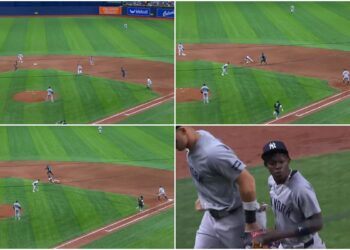
Boone also walked through the play itself, noting that the bobble changed everything about what was possible. Had Chisholm fielded it cleanly, tagging Yandy Diaz and firing to first for the double play was achievable. The ball bouncing off the glove made that sequence nearly impossible to execute.
“It turns out to be a tough play,” Boone said. “I watched it back. There might have been a chance to where if (Chisholm) gets it cleanly, he gets the tag off. It’s hard to know how exactly Diaz reacts in that moment. But once it chops like that, it’s obviously going to be a tough one to turn the normal 4-6-3.”
Asked how he felt about Chisholm being mocked online, Boone was direct. He did not defend the postgame comments as perfectly delivered, but he made clear the mockery was disproportionate to what actually happened.
“Look, I think part of it comes to answering those things in a better way, but you guys know Jazz,” Boone said. “He’s not a dumb guy. So it’s just sometimes how you present yourself in certain situations.”
The slump behind the noise
ElTioElie@X
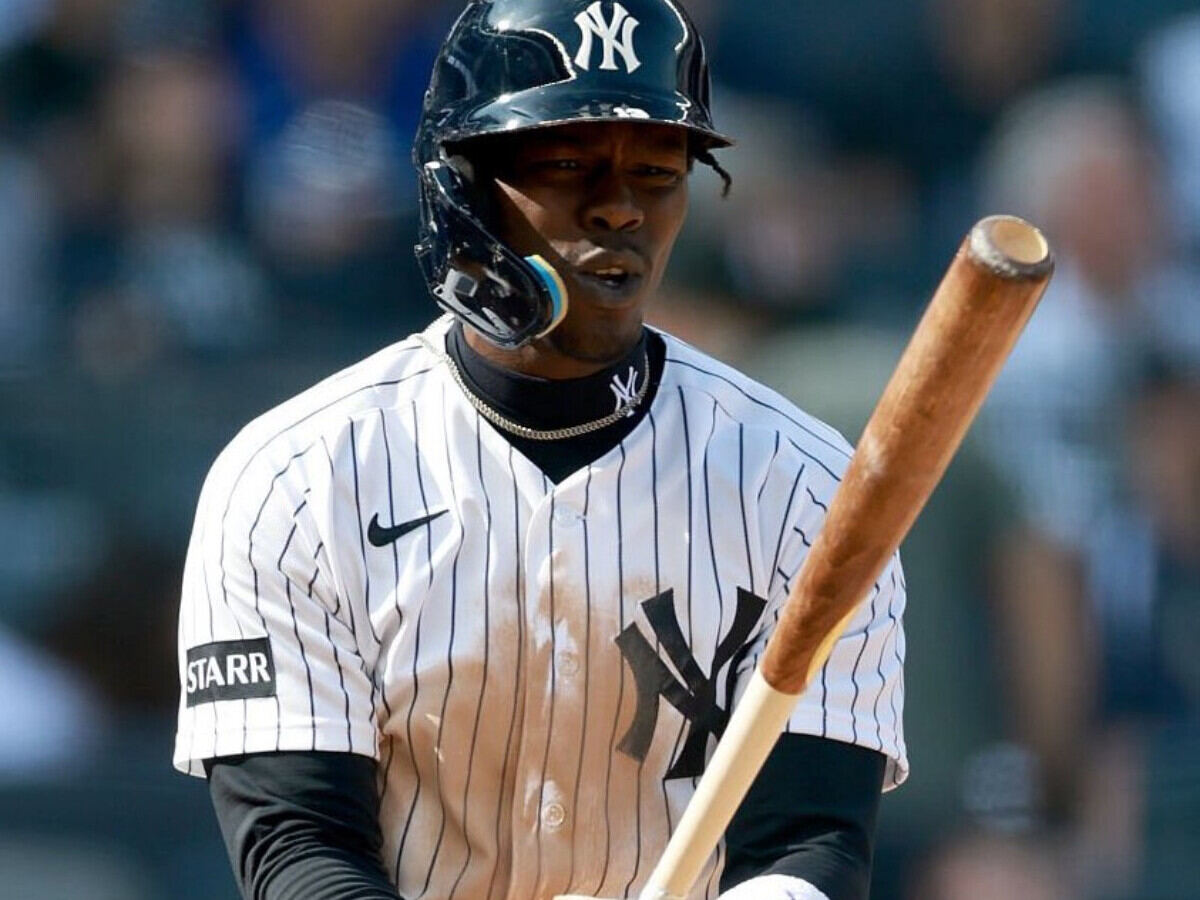
What makes every incident around Chisholm louder right now is the bat. He is hitting .179 on the season through 15 Yankees games, with no home runs and two RBIs. His OPS over his last 10 games entering Sunday sat at .495. Those are not the numbers the Yankees expected from a player brought in to add energy and production near the top of the lineup.
When a Yankees player is producing, small flash points fade fast. When he is not, everything sticks. The bobble becomes a symbol. The rules confusion becomes evidence. The Rasmussen argument becomes one more item on a list. None of that is entirely fair, but it is the reality of playing for the Yankees while slumping.
Trent Grisham, who had been sitting next to Chisholm in the Yankees clubhouse on Saturday night when the rules conversation happened, was the one who stepped in to clarify the scoring situation. He did so without fanfare. That detail alone showed the clubhouse was not treating Chisholm’s confusion as a crisis. Boone’s public backing before Sunday’s game reinforced the same message.
One week, three Yankees games, three stories
Across three games in Tampa, Chisholm delivered: a 1-for-4 effort on Sunday, a costly bobble and viral interview on Saturday, and now a mound confrontation capped by a pitcher’s apology. The Yankees lost all three games and left with a five-game losing streak.
The Rasmussen incident by itself would have been a footnote in a normal week. Coming at the end of this particular Yankees series, it became the closing act of a three-day stretch that put Chisholm’s name in the headlines every single day.
He finishes the series hitting .179, with questions about his plate approach still unanswered. The Yankees head home for a seven-game stand starting Monday against the Los Angeles Angels. Whether the noise follows him out of Tampa depends mostly on what his bat does next.