THE BRONX, N.Y. — They hit a ball 116 mph into the outfield wall. They drew 30 walks across the series, a number that shattered a franchise record set in 1934. Ben Rice launched a 410-foot rocket into the second deck before the first inning was finished.
And they still lost.
The Yankees dropped a 7-6 decision to the Miami Marlins on Sunday at Yankee Stadium, falling short in a ninth-inning rally that summed up the offensive story of the afternoon: bursts of power and patience mixed with an alarming inability to cash in when runners were in scoring position.
Two for 12 with runners in scoring position. Eleven men stranded on base. Bases loaded with nobody out in the third and nothing to show for it.
The Yankees scored six runs and still felt like they left a dozen behind.
Rice delivers early, then Marlins pitching goes quiet

The first inning felt like a statement.
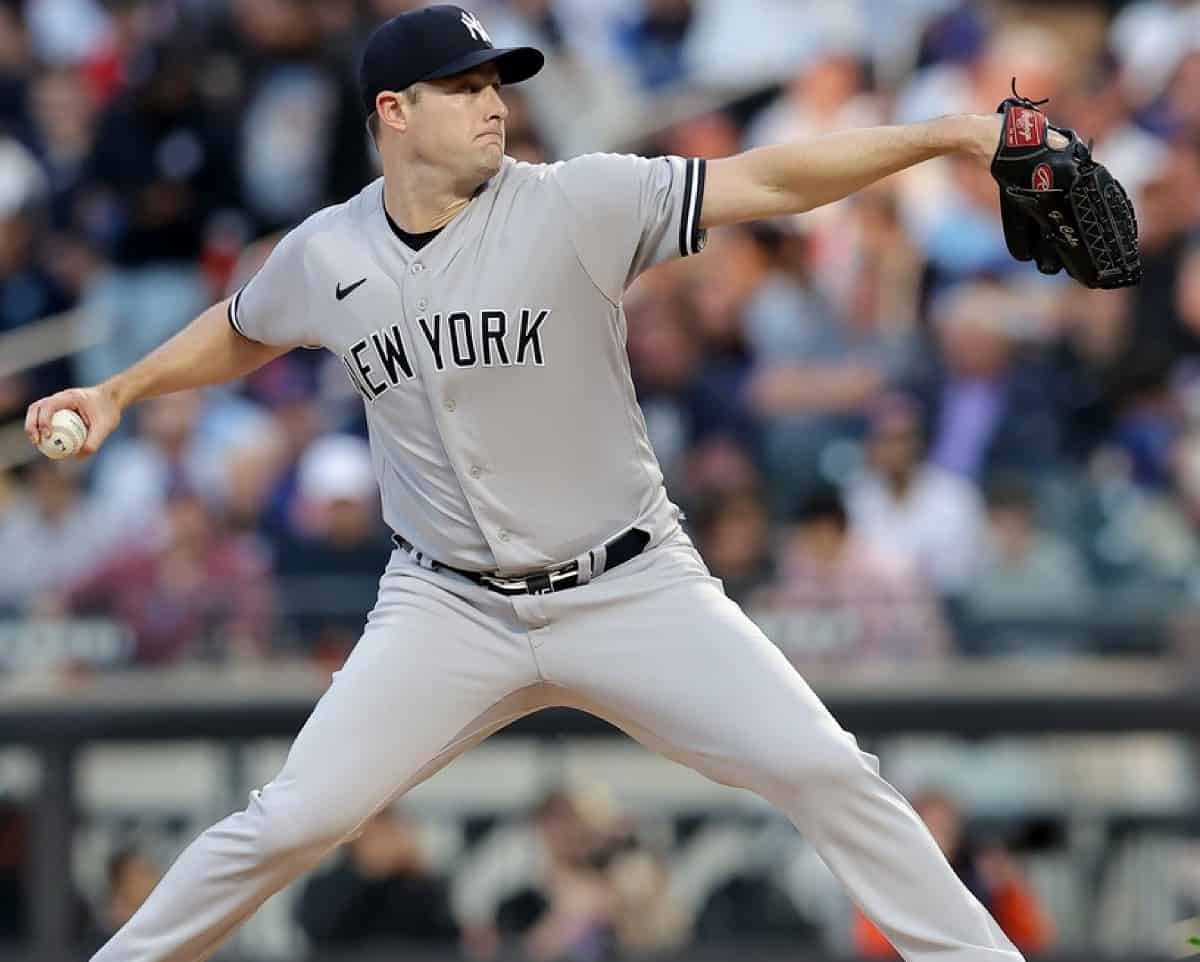
Miami opened with closer Pete Fairbanks as their pitcher, a one-game arrangement that allowed him to return to Florida quickly ahead of his wife’s scheduled Monday delivery. The plan backfired almost immediately.
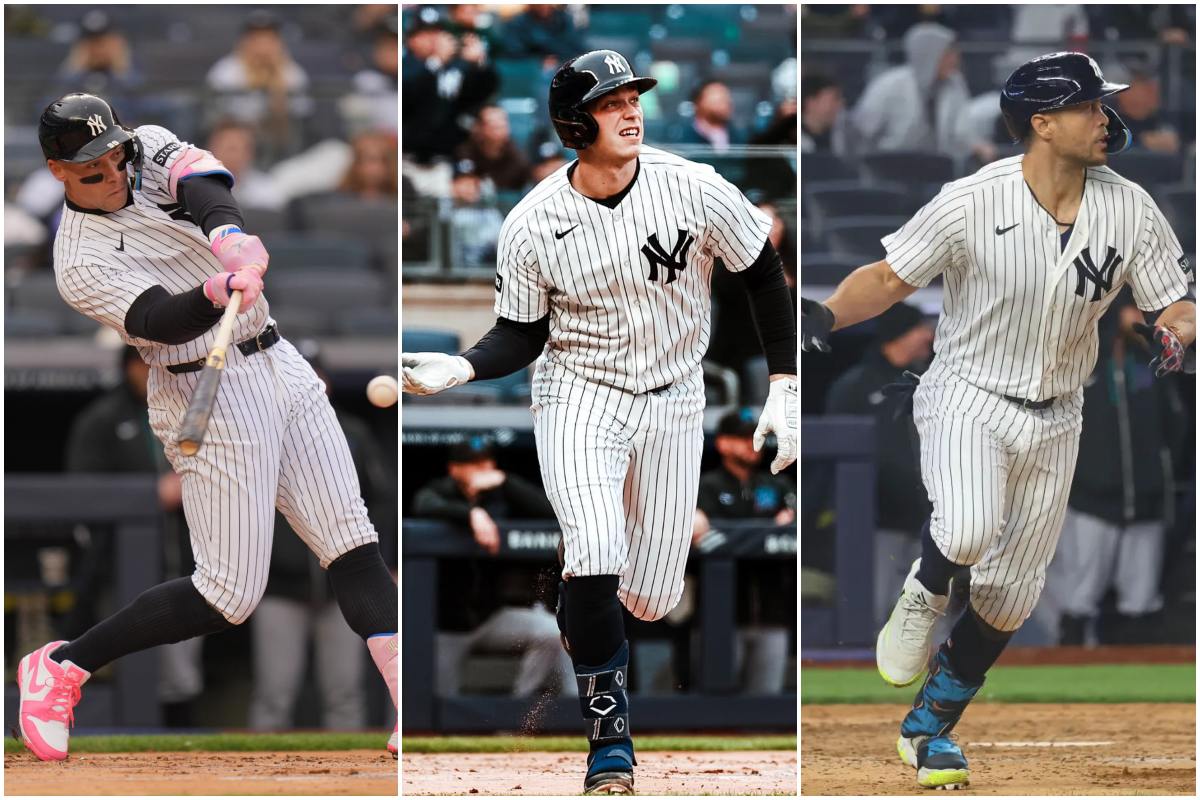
Ben Rice worked a count, then turned on a fastball and sent it 410 feet into the second deck in right field. The blast registered 110 mph off the bat. It was Rice’s third home run in his past four games, and it gave the Yankees a 3-1 lead before the first inning was done.
Rice reached base safely in all nine of his games to open the 2026 season. He drew three walks on Sunday alone, a reflection of both his approach and the Yankees’ overall patience at the plate. He has reached base multiple times in each of his last five games.
Aaron Judge opened the third with a double. Cody Bellinger walked. Rice then hit a potential double-play grounder that Marlins first baseman Connor Norby threw away, allowing Judge to score and stretching the lead to 4-1. It seemed like more than enough for Max Fried to work with.
Then the offense largely went silent.
Stanton hits a wall, literally, but offense stalls in key spots
In the seventh inning, with the Yankees leading 4-3 and Ben Rice on first, Giancarlo Stanton stepped in and hit one of the harder balls put in play all afternoon.
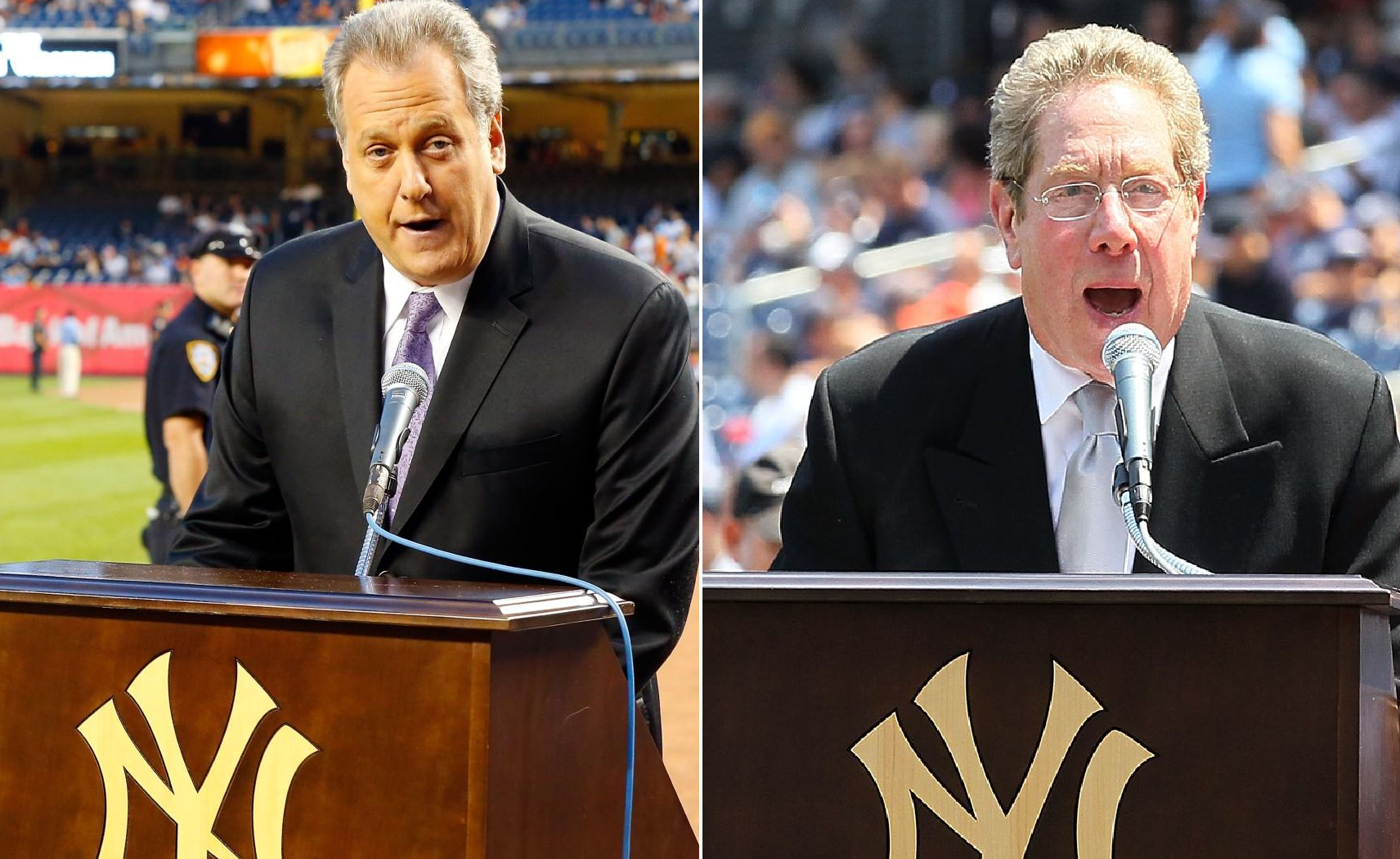
It was a line drive at 116.3 mph off the left field wall at Yankee Stadium. The ball left an actual dent in the padding. YES Network’s Michael Kay described it on the broadcast as a blistering line drive that almost went through the wall.
The ball bounced directly back to the left fielder. Rice held at first. Stanton was kept to a single. No run scored.
That sequence captured the Yankees’ offensive afternoon in one at-bat: ferocious contact, miserable luck, nothing to show for it.
The Yankees entered the eighth still holding a 4-3 lead but had already left runners stranded in nearly every inning since the third. The bullpen then surrendered four runs without recording an out against the heart of the New York lineup, and the deficit suddenly stretched to 7-4.
Bases loaded, nobody out, and nothing scoring: the RISP problem defined
The most damaging sequence of the game came in the third inning, and it had nothing to do with the pitching.
The Yankees had runners on second and third base with nobody out following a Marlins throwing error. The middle of a lineup that had been scoring runs freely all weekend had a chance to put the game away in the third inning.
Giancarlo Stanton grounded out.
Jazz Chisholm Jr. flied out to shallow center.
Austin Wells struck out.
Three up, three down, zero runs. A golden chance to turn a close game into a blowout evaporated in three at-bats. The Yankees finished the game going 2-for-12 with runners in scoring position and left 11 men on base. Over the full three-game series, they were 6-for-38 in those situations.
Chisholm was particularly damaging with runners on base on Sunday. He hit inning-ending groundouts with runners on second and third in the fifth, and again with runners on first and third in the seventh. He entered the day batting just .194 on the season, and Sunday’s earlier at-bats did nothing to push that number upward.
Aaron Boone acknowledged after the game that the bottom of the order has been a concern.
“I like the ball he hit to left and his at-bats were better than we saw in Seattle, [when] I felt like he was in-between a lot,” Boone said of Ryan McMahon. “I thought his intent was good on his swings on a couple of fastballs. Hopefully he builds on that.”
McMahon breaks slump but deeper questions remain

Ryan McMahon had been one of the most glaring offensive problems on the roster entering Sunday. He snapped an 0-for-22 stretch with a single in the sixth inning and added a walk later. It was a modest step, but Boone welcomed it given how long McMahon had been searching for contact.
The concern with McMahon runs deeper than one hitless streak. He came into Sunday’s game with a strikeout rate above 40 percent, well above his career mark of 32.3 percent, which itself was the highest among qualified hitters in all of baseball last season. He adjusted his stance before the season to reduce swing-and-miss. The adjustment has not produced results.
“He’s a little bit in-between,” Boone said. “He doesn’t want to chase or make bad decisions, which is great, but you’ve also got to go up there and let it rip. It’s an early-season scuffle. He’s really talented, [has] pop [and] does know the strike zone.”
McMahon was acquired for his defense, and that value remains real. But with Jose Caballero and Austin Wells also below expectations offensively, the bottom third of the Yankees lineup has been a net drain on games where the top of the order cannot do everything alone.
Sunday was precisely that kind of game.
Chisholm’s ninth-inning double too little, too late
Down 7-4 in the ninth, the Yankees showed enough fight to make the final scoreline more respectable.
Bellinger worked a walk. Rice drew another one. Then Chisholm, batting just .194, stepped up with two outs and ripped a two-run double into the right-center gap that cut the deficit to one.
“We don’t think the game is over until the last out, until the umpire calls the last out or the last strike,” Chisholm said. “So for us, we always go out there battling until the last minute.”
Anthony Bender walked Austin Wells intentionally to put the potential winning run on base. J.C. Escarra, pinch hitting for Jose Caballero, went down swinging on three pitches to end it.
The tying run sat on second base. The winning run sat on first. The game ended at 8:34 p.m. after a scheduled first pitch of 1:35.
The Yankees walked 30 times over the three-game series, two more than the previous franchise record set against the Chicago White Sox in May 1934. They scored 22 runs across the three games. They scored six on Sunday and still found a way to lose by one.
The offense was there. It just was not there when it mattered most.
What do you think? Leave your comment below.