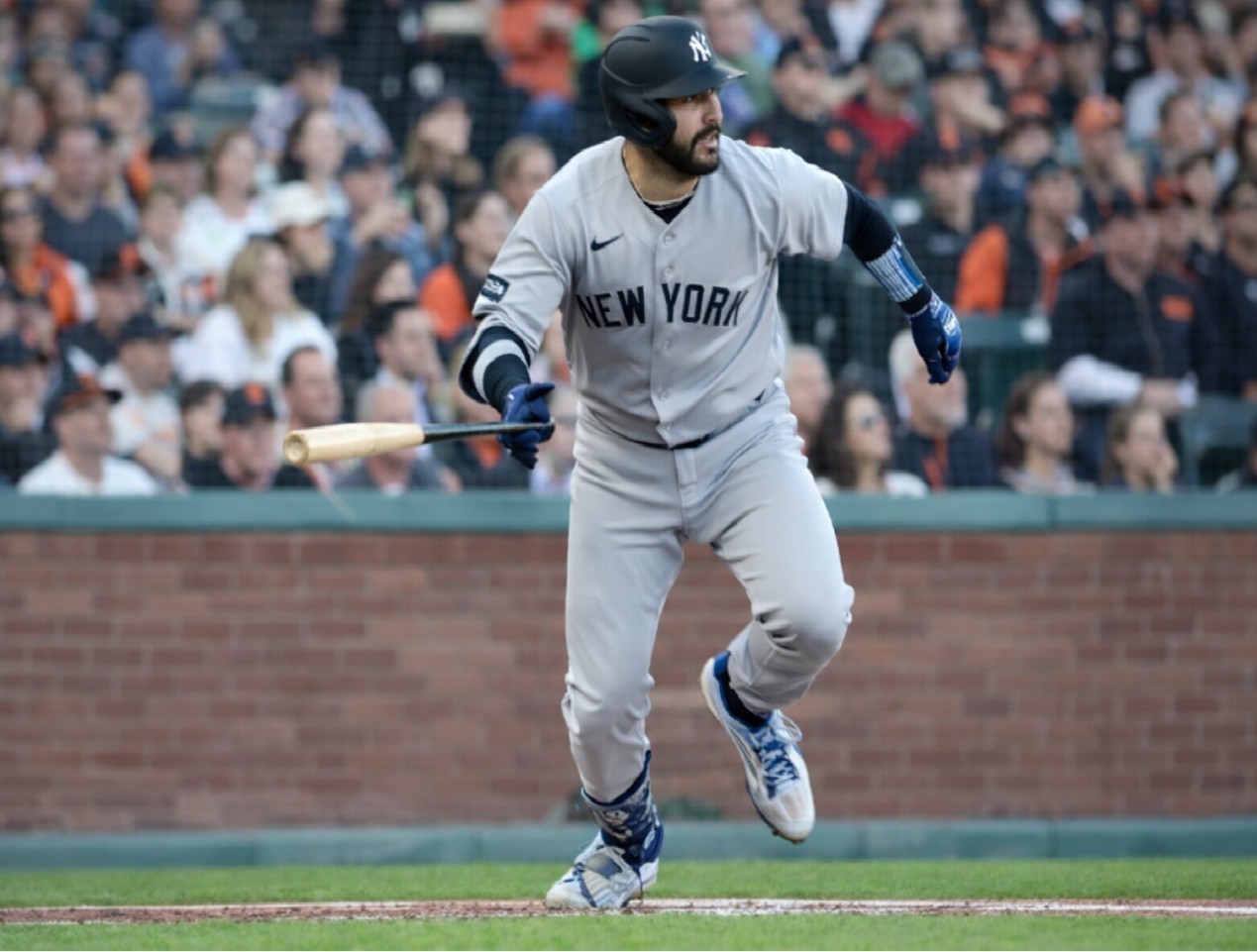
NEW YORK — Before the Yankees’ 2026 season began, Aaron Judge sat down with NBA star Kevin Durant for a Boardroom cover story interview and did something few star players bother to do. He went out of his way to name the teammates he believed would be the difference-makers.
He did not talk about the rotation depth. He did not talk about the bullpen additions. The captain named three specific position players he was counting on X-factors, who could help push the Yankees to a World Series they have been chasing since 2009.
One of those three names was Austin Wells.
After one game, that prediction is looking very good.
Judge puts Wells front and center
In his conversation with Durant, Judge spoke about the Yankees’ catcher with a confidence that stood out given that Wells hit just .219 last season.
“Our catcher, Austin Wells,” Judge said. “He has been with us for a while; we drafted him. He is another guy that I see tweaking and learning each year. But I think he controls that pitching staff; he controls the whole game.”
That last phrase is the key one. Judge was not simply talking about Austin Wells hitting the ball harder. He was talking about a player who understands the game at a level that influences outcomes beyond what shows up in a box score.
The Yankees selected Wells 28th overall in the 2020 MLB Draft out of the University of Arizona. He earned a Rookie of the Year finalist nod in 2024 with his bat leading the way. Then 2025 arrived and his offensive numbers quietly went backward, finishing with a 94 wRC+, six percent below league average, while his walk rate cratered and his chase rate climbed.
The power was still there. The plate discipline that made him a first-round pick was not.
What changed this spring
The adjustment Wells made was mechanical rather than philosophical. He returned to the toe-tap load he used in his 2024 rookie season after abandoning it mid-2025 for a bigger leg kick that was costing him timing. The quieter movement gets him into launch position faster, lets him see the ball deeper, and keeps his hands from dropping during the swing.
It is the kind of subtle fix that rarely makes headlines in March but becomes a significant talking point by July.
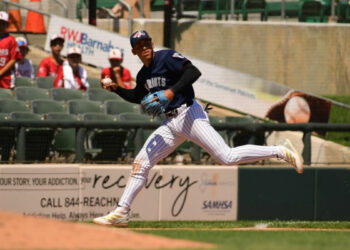
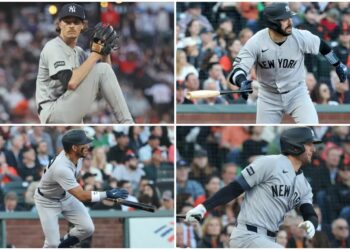
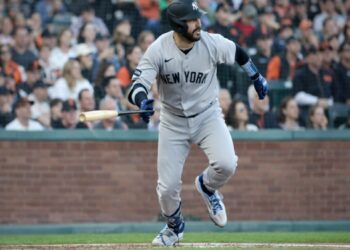
Against the Giants on Opening Night Wednesday at Oracle Park, that adjustment showed up immediately. Wells went 2-for-3 with two singles and a walk against a pitching staff that was not giving anything away for free. He reached base in each of his three plate appearances, scoring once as part of a 7-0 blowout that had the Yankees’ clubhouse buzzing.
The walk may have been the most telling moment of the three. It came on a full-count breaking ball that Wells read early and laid off cleanly. Breaking ball recognition in a pressure count is exactly what separated him during his 2024 breakout. It is also what disappeared in 2025 when he was pressing.
The approach on Wednesday looked like the version of Wells that Judge has apparently been watching in the cage all spring.
The bottom of the order is now a weapon
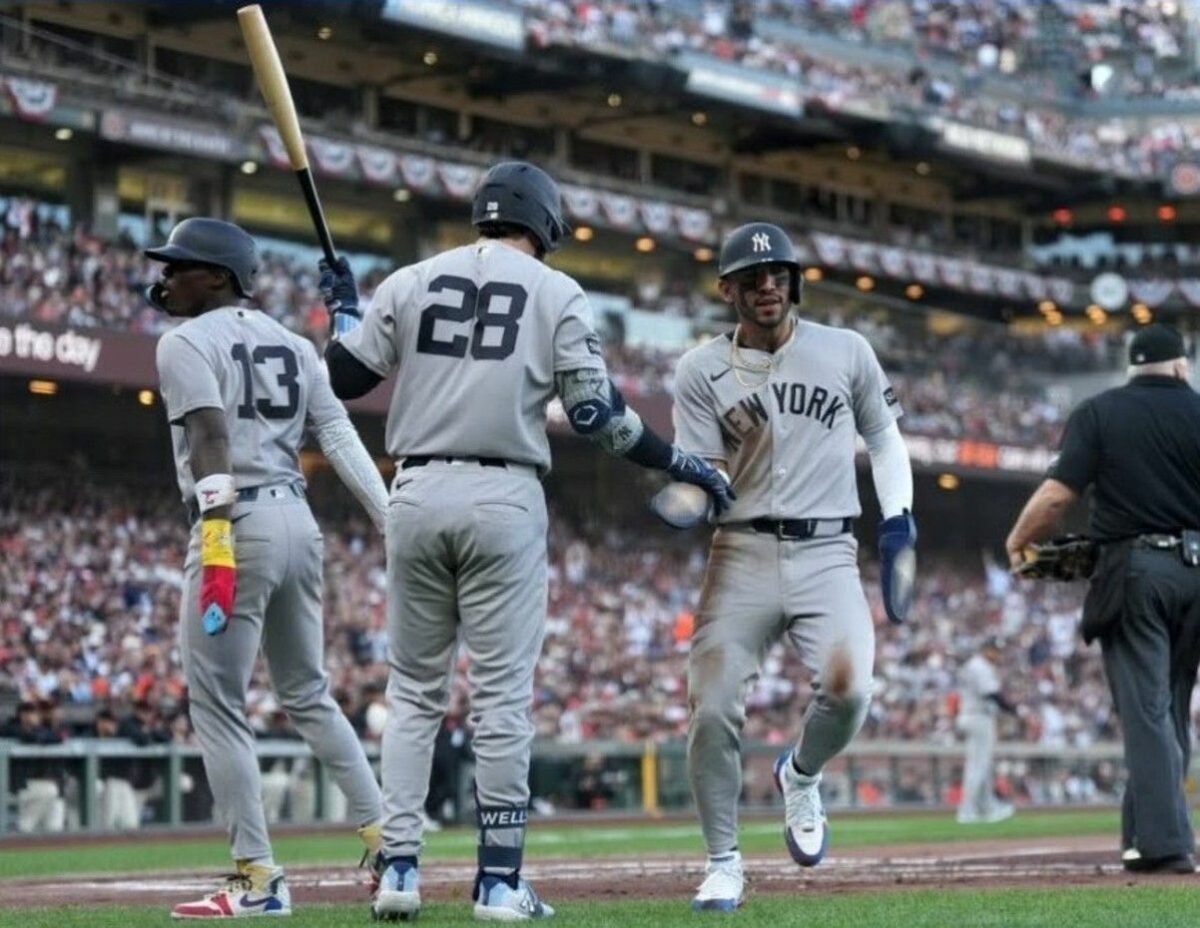
Wells bats ninth for the Yankees, which ordinarily should make him a low-leverage presence in the lineup. This offense does not work that way.
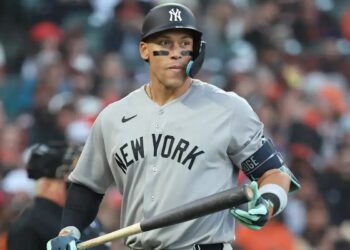
The Yankees scored seven runs in Wednesday’s opener, including five in a five-run second inning, without hitting a single home run and without Judge getting a hit. He went 0-for-5 with four strikeouts. Every other starter in the lineup collected at least one hit.
Wells scored as part of the second-inning rally. His baserunning gave the inning an extra dimension it would not have had otherwise. Trent Grisham then capped the frame with a two-run triple that pushed the lead to 5-0.
“We have got a lot of guys with different abilities,” Wells said after the game. “Our lineup blends really well and we all feed off each other, starting with Grish at the top and working its way down one through nine.”
That last phrase, one through nine, is the entire argument for why Wells matters in this lineup. The Yankees do not need him to be a cleanup hitter. They need him to be dangerous enough that opposing managers cannot get a free out at the bottom of the order. Wednesday showed he can be exactly that.
The other two names Judge mentioned
Wells was not the only player Judge singled out in his Boardroom interview. Jazz Chisholm Jr. was the first name on his list.
“I will start with our second baseman, Jazz Chisholm,” Judge said. “He had a great year last year, 30-30, did all that. But this kid has talent, man; he can be one of the greats in the game. I think this year, especially about to be a free agent, this will be a big year for him to take that next step.”
Chisholm finished 2025 with 31 home runs, 31 stolen bases, 80 RBIs, and a .813 OPS. Judge believes a contract year adds another layer of motivation on top of already elite production.
The third name was Ryan McMahon. Judge praised his defense and indicated that playing in New York, away from Coors Field, could bring out a better offensive version of the third baseman.
McMahon went 1-for-3 with two RBIs on Wednesday. All three players Judge named contributed to the win. He did not.
A lineup the rest of the AL should fear
The Yankees led the majors in runs scored in 2025 with 849. They had a 119 wRC+ that was six points ahead of the second-place Los Angeles Dodgers. That was the offense without the internal growth that Judge, Wells, and others are predicting for 2026.
If Wells rebounds offensively, if Chisholm has the contract year everyone is anticipating, and if McMahon becomes more comfortable in the American League, this offense could be meaningfully better than the version that already ranked first in baseball a year ago.
That is the quiet argument the Yankees have been making all offseason about running the same roster back. It is not about standing still. It is about believing the players already in the building can be better than they were.
Judge named Wells first among the position players he was watching. After Opening Night in San Francisco, that vote of confidence is starting to look exactly right.
What do you think about it?