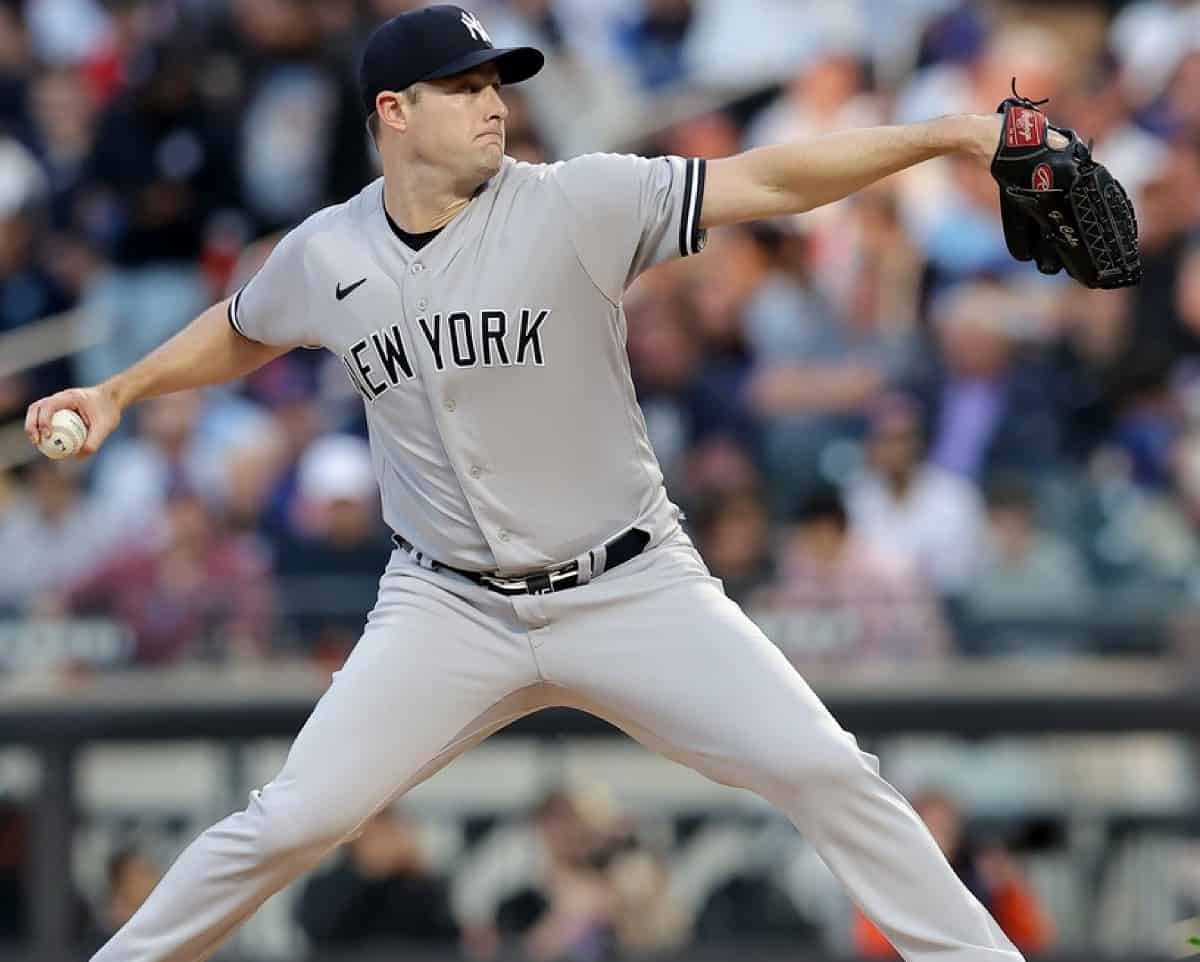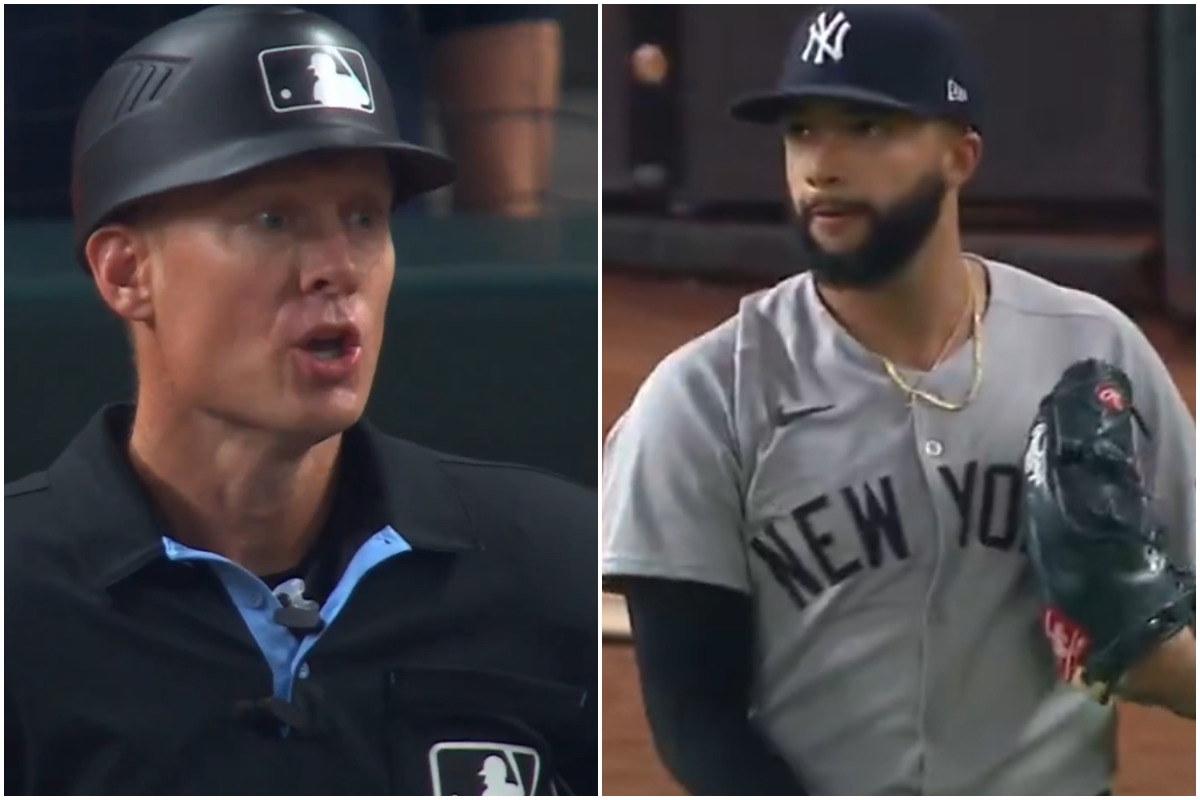
HOUSTON – The eighth inning started innocently enough. Devin Williams jogged to the mound with the game tied 4-4, another chance to prove his worth in pinstripes. What happened next will haunt Yankees fans for weeks.
By the time Williams left the field three batters later, he had triggered the most catastrophic Yankees bullpen collapse of the season. His meltdown, combined with home plate umpire Brian Walsh’s controversial calls, turned a winnable game into an 8-7 nightmare that could define New York’s playoff push.
The moment everything changed for Yankees

Williams faced his first batter with confidence. Carlos Correa had struck out three times already, clearly struggling against Yankees pitching. Then Williams made the mistake that started the avalanche.
The fastball caught too much of the plate. Correa, who had been baffled by changeups all night, jumped on the mistake and lined it into the right field corner for a double. Suddenly, the tying run was in scoring position with nobody out.
What should have been damage control became damage maximization for the Yankees. Williams walked Jesus Sanchez on four pitches, putting runners on first and second. The crowd at Daikin Park began to stir, sensing opportunity.
After striking out Yainer Diaz, Williams faced Christian Walker with a chance to limit the damage. Instead, the Yankees reliever issued another walk to load the bases with one out. The stadium erupted as Houston smelled blood in the water.
When walks become weapons
The next sequence will be dissected for days in Yankees circles. Williams got ahead of Ramon Urias 0-2, then watched four straight pitches miss the strike zone. Somehow, he had escaped with a strikeout on a full count, leaving runners stranded.
But Taylor Trammell stepped into the box as the most dangerous hitter of the night. Not because of his skill, but because of his patience. The No. 9 hitter worked Williams into another full count, fouling off tough pitches and laying off borderline calls.
Then came the pitch that changed everything for the Yankees. Williams’ 3-2 changeup caught the outside edge, close enough that he began walking toward the dugout. Home plate umpire Brian Walsh had other ideas.
Walsh’s strike zone becomes talking point
“Ball four,” Walsh called, and Williams’ face immediately changed. The walk forced in the go-ahead run, putting Houston ahead 5-4. More importantly, it marked the fourth questionable call in the Yankees reliever’s brief appearance.
“Just ridiculous to have the inning that I had,” Williams said after the game, his frustration still boiling over hours later. “I was making pitches that were further from the zone than pitches he was calling balls.”
The Yankees reliever had reached his breaking point with Walsh’s inconsistent zone. As Williams walked off the mound after being pulled, he let the umpire know exactly how he felt about the strike zone.
Walsh’s response was swift and decisive. The ejection came without warning, marking the first time Williams had been tossed in his career. The crowd roared its approval as the struggling reliever headed for the tunnel.
Boone follows his player out
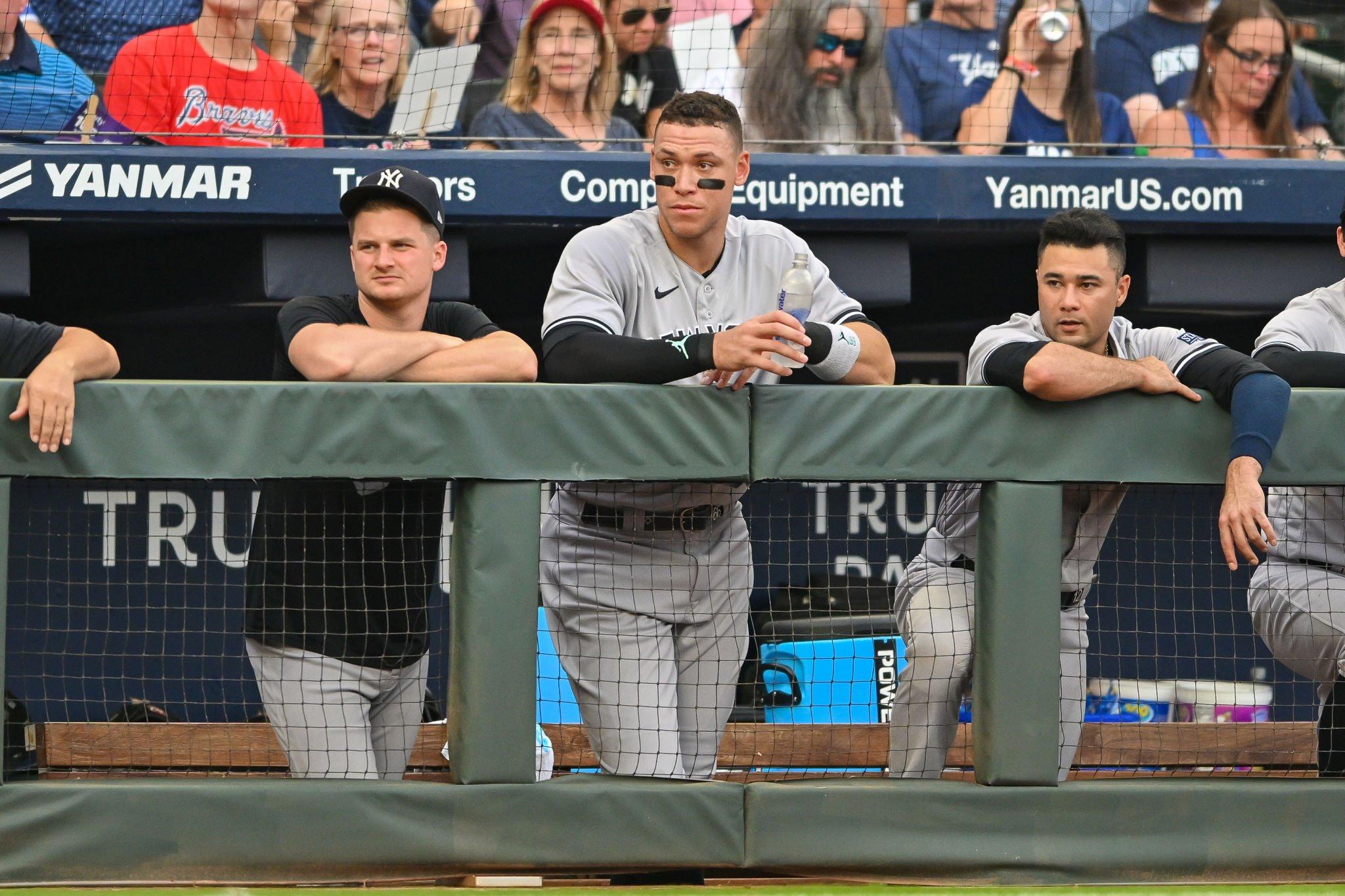
Yankees manager Aaron Boone watched the ejection unfold from the dugout steps. When Walsh turned toward the Yankees’ dugout with a defiant stare, Boone had seen enough of the umpire’s antics.
The heated exchange across the diamond lasted only seconds before Walsh ejected Boone as well. The Yankees manager’s sixth ejection of the season came at the worst possible moment, leaving his team without leadership during a critical inning.
“I thought it was maybe a little inconsistent,” Boone said diplomatically when asked about Walsh’s zone. But his measured words couldn’t hide the frustration of a manager watching his season slip away one questionable call at a time.
Broadcasting legend David Cone didn’t hold back during the game telecast, criticizing the umpiring crew for “antagonizing the Yankees and trying to bait them after tensions reached their peak.”
The collapse accelerates
Camilo Doval entered to face Jeremy Pena with the bases loaded and two outs. The inherited runners represented Williams’ legacy from the inning, and Doval was about to make it worse.
Pena’s first swing produced a sharp single to left field, scoring another run to make it 6-4. The hit charged Williams with his fourth earned run of the inning, pushing his ERA toward dangerous territory.
But Doval wasn’t finished adding to Williams’ misery. A balk scored the fifth run charged to Williams. Then came the wild pitch that brought home the sixth. In the span of three plays, the Yankees reliever went from struggling reliever to the goat of the biggest loss of the season.
Numbers tell devastating story
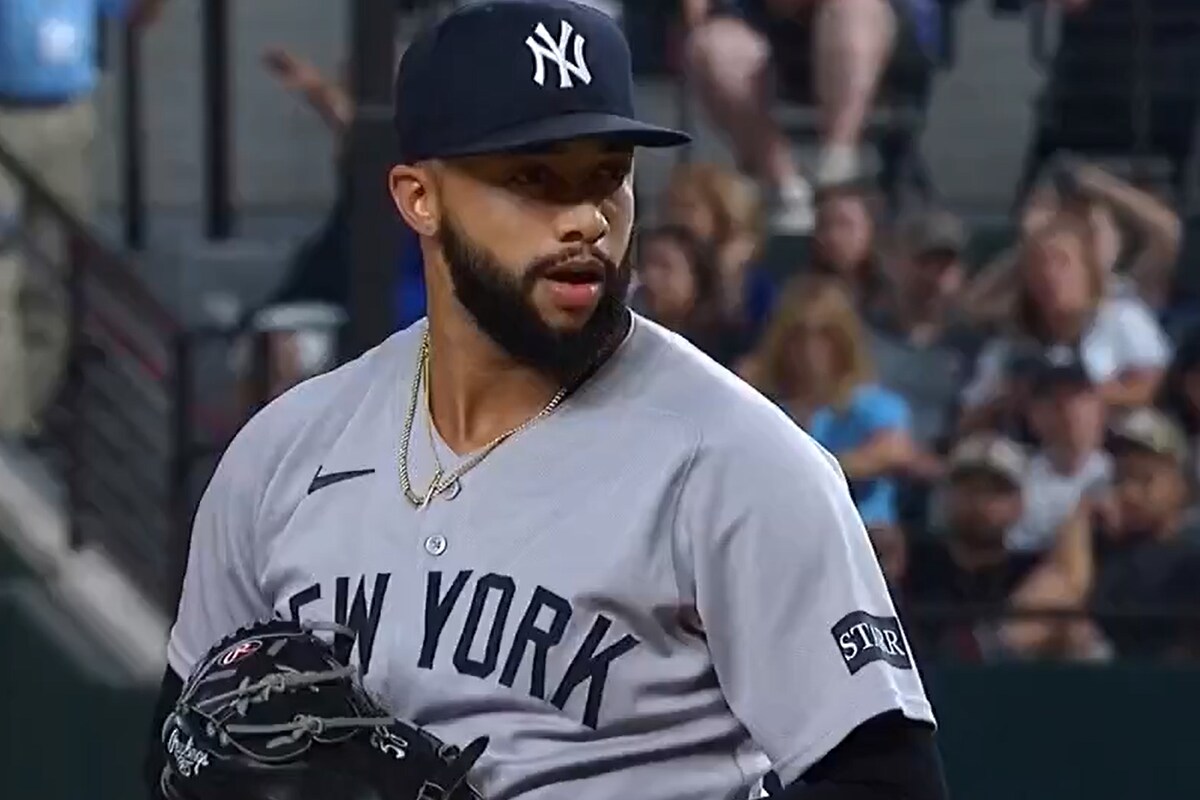
Williams’ final line read like a horror story. He threw 34 pitches but only 17 were strikes. He walked three batters, allowed a double, and was charged with four runs without recording an out after the leadoff hit.
His ERA climbed to 5.60, a number that would make most relievers unemployable. For a pitcher who won National League Reliever of the Year twice, the fall from grace has been swift and merciless.
The former Milwaukee Brewers star has struggled with American League hitters all season. His inability to command the strike zone has cost the Yankees multiple games, but none as costly as Wednesday’s disaster.
Walsh’s zone creates broader questions
The umpire’s inconsistency went beyond Williams’ struggles. Throughout the night, pitches called strikes early became balls in crucial moments. The shifting zone made it impossible for pitchers to establish rhythm or attack with confidence.
Jazz Chisholm Jr.’s game-ending strikeout came on a pitch that observers noted was “more off the plate than any of the others” Walsh had called balls against Yankees pitchers. The irony wasn’t lost on anyone wearing pinstripes.
Yankees players and coaches expressed frustration with Walsh’s approach, but the damage was already done. The inconsistent calls had already helped Houston build an insurmountable lead.
Late drama provides cruel twist
Cody Bellinger’s three-run homer in the ninth inning off Bryan Abreu made the final score 8-7 and brought the tying run to the plate. For a brief moment, Williams’ disaster seemed survivable.
But Chisholm’s strikeout on Walsh’s questionable call ended any hope of a miracle comeback. The Yankees infielder was so incensed by the strike call that base coaches had to escort him away from home plate to prevent an ejection. The near-miss only made the eighth-inning collapse more painful, showing just how winnable the game had been.
The Yankees left Houston with questions about their bullpen, their umpiring luck, and their ability to close out games when everything matters most. Williams’ meltdown provided all the wrong answers at the worst possible time.
What do you think? Leave your comment below.