COOPERSTOWN, N.Y. — When CC Sabathia stepped to the podium at the Clark Sports Center on Sunday, the newly inducted Hall of Famer delivered more than just a thank-you speech. The former New York Yankees ace used his platform to issue an urgent call about baseball’s diversity problem, declaring he doesn’t want to be “the final member of the Black Aces” or “the final Black pitcher standing here, giving a Hall of Fame speech.”
Sabathia’s words carried particular weight as he became only the third member of the exclusive Black Aces fraternity to enter Cooperstown, joining Hall of Fame legends Bob Gibson and Ferguson Jenkins. The Black Aces represent the 15 African American pitchers who have won 20 or more games in a Major League Baseball season, a club that hasn’t welcomed a new member since David Price achieved the feat in 2012.
The declining numbers tell a story
The state of racial diversity in Major League Baseball remains a serious concern. At the start of the 2023 season, only 6.2% of Opening Day rosters comprised African American players — the lowest percentage since records began in 1991, down from 7.2% during the 2022 season. That number fell further to just 6.0% in the 2024 season.
However, there was a modest uptick at the start of the 2025 season, when Black players again accounted for 6.2% of Opening Day rosters — the first year-over-year increase since 2018. Overall, 40.8% of MLB rosters came from diverse backgrounds in 2025, including Latino, Asian, Pacific Islander and Native American players.
A notable percentage of Black prospects are now prominent at the amateur level and in the Minor Leagues. On Opening Day this year, of the 59 Black players on active rosters, 17 had come through MLB’s developmental initiatives. Among MLB Pipeline’s Top 100 draft prospects, roughly 17% are Black, with a similar share represented in the Futures Game selections.
“Baseball has always been a great game for Black athletes, but baseball culture has not always been great for Black people,” Sabathia said during his induction ceremony. “Through The Players Alliance and our work with the commissioner’s office and the (Commissioner’s Ambassador Program), I hope we’re starting to turn that around.”
From Vallejo to the Bronx – Sabathia’s sojourn
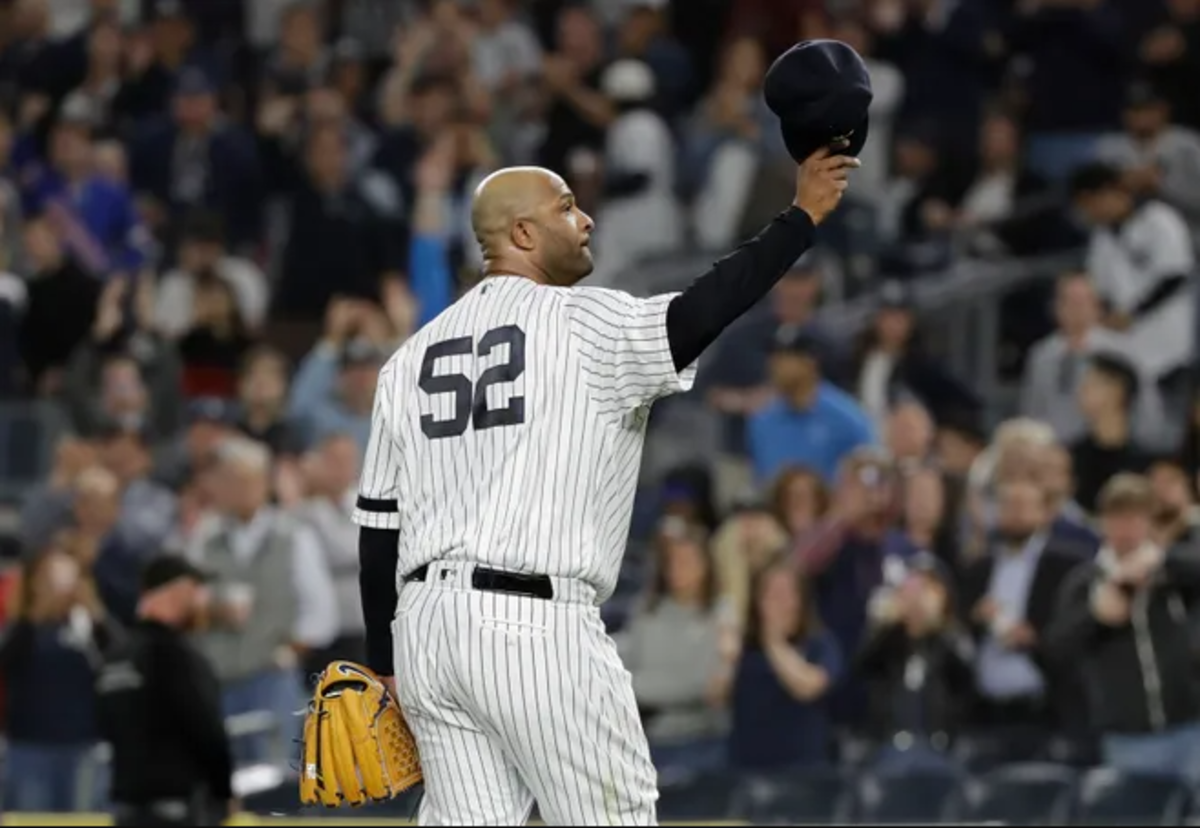
Sabathia’s journey from Vallejo, California, to baseball immortality serves as both inspiration and reminder of what’s at stake. Growing up in an economically challenged but culturally rich community, the future Yankees star was shaped by his African American heritage and French Creole ancestry from his paternal Louisiana roots.
During his speech, Sabathia recalled wanting to sign with the Los Angeles Dodgers before the 2009 season to stay closer to his hometown, admitting he “definitely didn’t want to go to New York and play for the Yankees, the furthest team away.” Instead, he and his wife Amber chose New York as a place to raise their family and plant roots.
The decision proved transformative for both Sabathia and the Yankees. He spent his final 11 seasons in pinstripes, compiling a 134-88 record with a 3.81 ERA and 1,700 strikeouts over 1,918 innings, helping deliver the franchise’s 27th World Series championship in 2009.
The MLB legacy of black aces
The term “Black Aces” was coined by Jim “Mudcat” Grant, who in 1965 became the first African American pitcher to win 20 games in American League history. Grant later authored a book about the group and personally mentored Sabathia about the responsibility that came with being a Black starting pitcher.
“Mudcat explained to me what a Black Ace was and how difficult it is to stay a starting pitcher in the major leagues,” Sabathia said. “I feel compelled to pay it forward and keep that going.”
Sabathia joined the exclusive fraternity in 2010 when he won 21 games with the Yankees, becoming the 14th member of the group that includes legends like Don Newcombe, Bob Gibson, Ferguson Jenkins, Vida Blue, and Dwight Gooden.
The most recent addition came when David Price won exactly 20 games during his 2012 Cy Young Award campaign with the Tampa Bay Rays. With Price now out of baseball, MLB entered 2023 without an active Black 20-game winner for the first time in two decades.
Fighting for the future
Sabathia’s Hall of Fame speech wasn’t just a lament about the past but a call to action for the future. The 45-year-old specifically mentioned fellow inductee Dave Parker as someone he watched growing up, noting there were fewer examples of Black players for today’s youth.
“In the [1980s] and early ’90s, when I first started watching baseball, me and my friends played the game because we saw those guys on TV,” Sabathia explained. “There was always someone who looked like me in a baseball uniform.”
That reality has changed dramatically. According to the Society for American Baseball Research, African American representation peaked at 18.5% in 1975 but has steadily declined since, with multiple factors contributing to the trend.
Youth baseball’s increasing costs, the popularity of basketball and football, and limited college scholarship opportunities all play roles in steering young African Americans away from baseball. Unlike college football and basketball, baseball scholarships typically cover only partial costs, making higher education more difficult for many families.
Working toward solutions
Since 2022, Sabathia has served as a special assistant to MLB Commissioner Rob Manfred, using his platform to address diversity issues. He’s actively involved with The Players Alliance, a nonprofit organization founded by current and former Black players to increase Black participation and representation throughout baseball.
MLB has implemented several initiatives, including the DREAM Series diversity-focused development program offered with USA Baseball. In the 2022 draft, four of the first five selections were Black players—all DREAM Series alumni—marking the first time in draft history that happened.
These efforts show promise for the future. Among Black players on Opening Day 2023 rosters, 63% were under age 30, with an average age of 27, suggesting a potentially younger pipeline of talent.
A Hall of Fame Moment
Sabathia was officially inducted alongside Ichiro Suzuki, Billy Wagner, and posthumously honored Dick Allen and Dave Parker during Sunday’s ceremony at Cooperstown. The 6-foot-6 left-hander finished his 19-year career with 251 wins and 3,093 strikeouts, making him one of only 17 pitchers in MLB history to reach 3,000 strikeouts.
He received 86.8% of Baseball Writers Association of America votes, earning first-ballot induction. His Hall of Fame plaque will feature a Yankees cap, cementing his legacy in pinstripes despite beginning his career with Cleveland and winning the 2007 Cy Young Award with the Indians.
But for Sabathia, individual accolades pale beside the larger mission of ensuring baseball’s diversity doesn’t continue shrinking.
“When I sit here and think about it now, who’s next?” Sabathia asked after his speech. “Who’s the next Black starting pitcher to win 20 games? Will there be another? Will there be another guy give a Hall of Fame speech? It’s on me and my generation to find the next kid.”
The path forward
Current rising stars like Hunter Greene of the Cincinnati Reds represent hope for the future. The 25-year-old flamethrower has emerged as one of baseball’s most promising young Black starters, though he has yet to reach double-digit wins in his career.
Other young Black pitchers making their mark include Tampa Bay’s Taj Bradley and Baltimore’s acquisitions like Jack Flaherty. But with Marcus Stroman at 32 being the senior member of the current group and never having won more than 13 games in a season, the path to 20 wins remains challenging in today’s game.
Modern pitching philosophy emphasizes pitch counts and innings limits, making 20-win seasons increasingly rare for all pitchers. The last pitcher of any background to win 20 games was Rick Porcello in 2016, highlighting how the achievement has become more elusive across all demographics.
Beyond the numbers
Sabathia’s Hall of Fame speech represented more than statistical analysis—it was a personal testament to representation’s power. Growing up in Vallejo’s Crest neighborhood, the Yankees legend found inspiration in players who looked like him, from Dave Parker to the original Black Aces.
MLB’s overall diversity remains strong at 40.5% players of color, with Latino players representing 30.2% of rosters, but the specific decline in African American participation demands focused attention.
As Sabathia took his place among baseball’s immortals in Cooperstown, his words served as both celebration and challenge. The newest Hall of Famer made clear that his legacy extends beyond wins and strikeouts to ensuring future generations of Black players have the same opportunities he received.
“It’s been a long road from Vallejo, California,” Sabathia reflected, “and I wouldn’t have made it all this way without the women redirecting Me when I got lost.”
What do you think? Leave your comment below.