NEW YORK — The New York Yankees are off to a 5-1 start, Cam Schlittler is rewriting record books, and the lineup is producing at an elite level. The season has barely begun and the Bronx already feels electric.
There is, however, a shadow forming behind the scoreboard. And it has nothing to do with injuries, roster decisions, or the AL East standings.
The Major League Baseball Players Association filed its annual federal disclosure form last week, revealing its combined war chest of cash and investments has surged to $415 million heading into 2026, up sharply from $284 million at the start of last year. That figure is not just a union accounting update. For the Yankees, it is a signal that a labor stoppage after this season is no longer just a possibility. It is something both sides are actively preparing for.
$415 million and a Dec. 1 deadline
According to the MLBPA’s federal filing, reported by the Associated Press, the union held $222.1 million in U.S. Treasury securities, $155.5 million in other investments, and $37.4 million in cash as of Dec. 31, 2025. Total assets, including fixed items, rose to $519 million from $353 million the year before.
The buildup is deliberate. The union’s executive board has withheld 100 percent of licensing money owed to players for both 2024 and 2025 to prepare for collective bargaining. That money could be paid out to players during a work stoppage to help them sustain themselves without paychecks.
The owners are not idle either. Reports, first from the New York Post, indicate MLB clubs have set aside approximately $75 million each from central fund distributions, totaling roughly $2 billion in reserve. Both sides are constructing financial fortresses in plain sight.
The current collective bargaining agreement expires at 11:59 p.m. ET on Dec. 1, 2026. Formal negotiations between MLB and the MLBPA were expected to begin after Opening Day, which arrived March 25.
Both sides have already said a lockout is coming
The language from both camps has not left much to the imagination. MLB commissioner Rob Manfred said more than a year ago that an offseason lockout would be a positive thing for the negotiating process. Former MLBPA executive director Tony Clark, who resigned in February 2026 amid an internal investigation, told reporters before his departure that a work stoppage was coming.
“Unless I am mistaken, the league has come out and said there’s going to be a work stoppage,” Clark said at the time. “So, I don’t think I’m speaking out of school in that regard.”
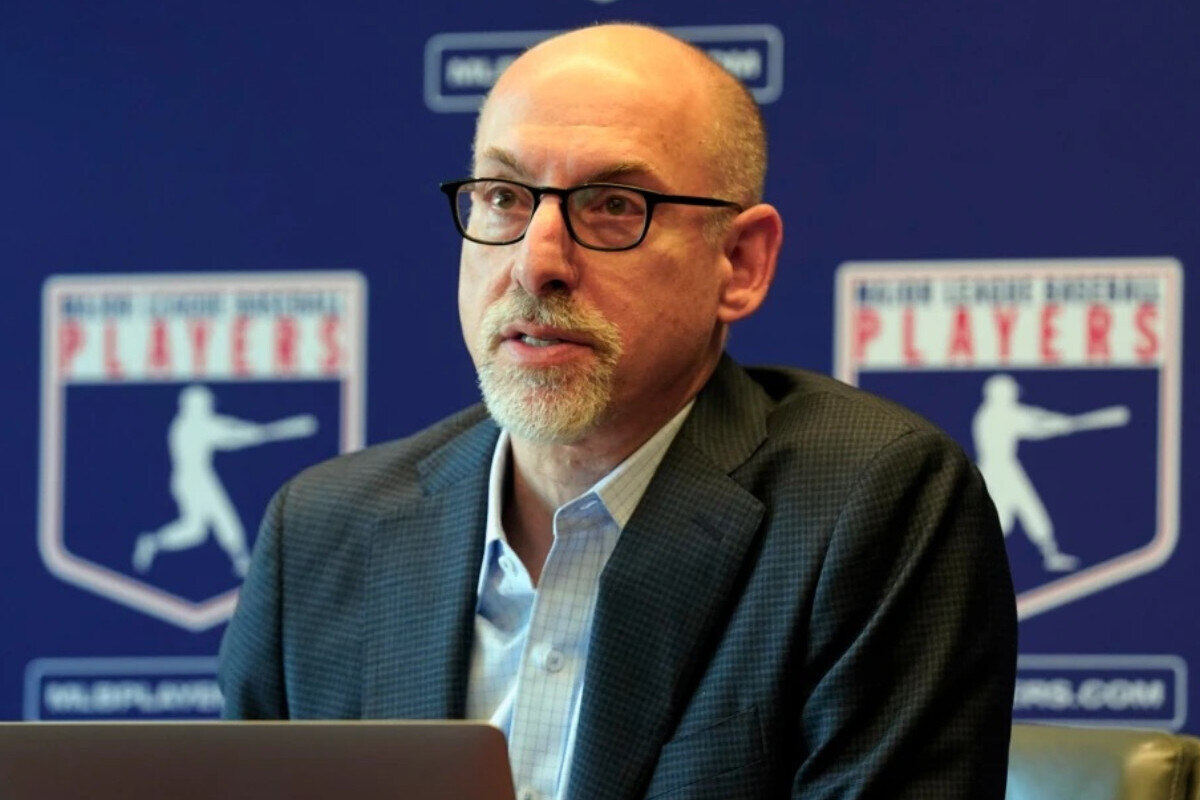
Bruce Meyer, unanimously elected interim executive director following Clark’s resignation, has been equally direct. He told reporters during spring training meetings with players from all 30 clubs that a lockout is all but guaranteed once the agreement expires.
“A lockout is all but guaranteed at the end of the agreement,” Meyer said, per Bleacher Report.
He also added that the union would approach bargaining in good faith. “We’ll be ready to meet wherever and whenever and bargain in good faith,” Meyer said. “If there’s a way to avoid it and get a fair deal for the players, we’re always looking to do that.”
A lockout is almost guaranteed. Here is why.
The current CBA, which took effect on March 10, 2022, expires at 11:59 p.m. ET on Dec. 1, 2026. Formal negotiations between MLB and the MLBPA are expected to ramp up now that the 2026 regular season has started, with the most critical talks likely occurring in November.
The language from both sides has been pointed. MLBPA interim executive director Bruce Meyer, who took over in February 2026 after longtime head Tony Clark resigned amid an internal investigation, has not softened the message.
“The league has pretty much already said there’s going to be a lockout,” Meyer said. “I think the commissioner more or less guaranteed it. I would be shocked if they didn’t do a lockout when the agreement expires.”
Commissioner Rob Manfred has acknowledged as much. He told The Athletic’s Evan Drellich in January 2025 that a lockout would be a good thing for the sport. Clark, before his departure, said at that time:
“Unless I am mistaken, the league has come out and said there’s going to be a work stoppage. So I don’t think I’m speaking out of school in that regard.”
The Ringer, analyzing the situation in late March, concluded that a lockout is effectively a certainty, pointing to the commissioner’s public statements and the union’s own expectations as evidence that negotiations will not be resolved before the deadline.
Salary cap is the core flashpoint
The central dispute is familiar. MLB owners want a salary cap. The MLBPA is opposed. The union has blocked every effort to install a cap since 1994, when the players’ refusal to accept one led to the strike that cancelled the World Series.
Meyer was direct about where the players stand.
“Our position, both historically and now, is pretty clear,” he said. “This union, and every executive director of this union, has always been of the view that it’s bad for players, and for that reason, historically, we’ve been opposed to it. I don’t see any reason to change our view on that subject.”
Meyer added: “The fundamental nature of a salary cap is bad for players on multiple levels.”
Other issues on the table include an international draft, expanded playoffs, minimum salary increases, and revisions to the pre-arbitration bonus pool system. The collapse of regional sports networks has also altered the financial landscape for many clubs, with some teams reporting significant revenue losses after losing local TV deals.
The core issues remain far apart. MLB is pushing for a first-ever salary cap, which the union has historically refused. Players want earlier and larger pay for younger players. The wealth gap between big-market franchises like the Dodgers, projected at $394 million in payroll for 2026, and the bottom-spending clubs only adds fuel to the standoff.
What a lockout would mean for the Yankees’ contract plans
Here is where the abstract becomes concrete for Yankees fans. The team is carrying a roster of players whose contract decisions will land directly in the path of the labor storm.
The most pressing name is Jazz Chisholm Jr. The second baseman is in his walk year, earning $10.2 million on a one-year deal in 2026. He becomes a free agent the moment the season ends. That is the same moment the current CBA expires and the owners could immediately lock the players out, as they did on Dec. 1, 2021.
Chisholm has already made his asking price public. He told NJ.com he wants eight to 10 years at $35 million annually. When asked if he would accept $25 million per year from the Yankees, he did not hesitate.
“I’d say no because I know I can get $35 million somewhere else,” Chisholm said. “That’s $10 million less a year. I’m 28. I want 8-to-10 years.”
Under normal conditions, his free agency would begin with the end of the World Series and teams would begin negotiations in November. A lockout would freeze all that activity the moment the CBA expired.
Contracts agreed to before the lockout would be honored. Ones not yet signed would enter a legal gray area. The Cot’s Baseball Contracts page for the Yankees already notes that Cody Bellinger’s opt-out rights in his deal are pushed back by one year if the 2027 season is canceled by a lockout.
The Yankees have not discussed an extension with Chisholm, per multiple reports. General manager Brian Cashman’s historical preference is to let players reach free agency and establish their value on the open market. That approach worked when the market functioned normally. A lockout scrambles the timeline.
If games are missed in 2027, the Yankees could begin their next competitive window without a resolution at second base, one of the most important positions in their lineup. Tarik Skubal, one of the players most closely linked to the union’s executive subcommittee, is also a free agent this cycle. The broader player market could be paralyzed for months.
Meyer put the stakes plainly when addressing possible Olympic participation in 2028. “If we don’t have a season, we’re not going to play in the Olympics,” he said.
That is the backdrop to a Yankees season that, on the field, looks genuinely exciting. Off it, the clock is ticking toward Dec. 1.
What do you think?