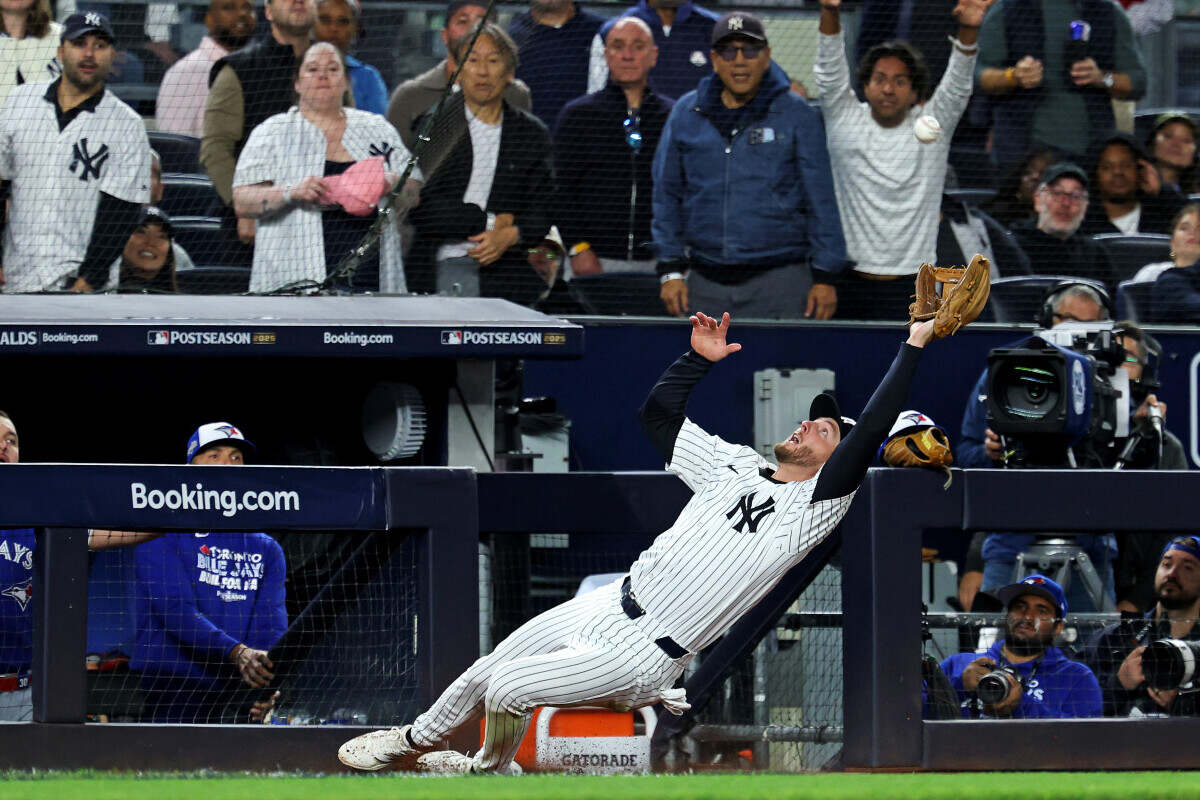
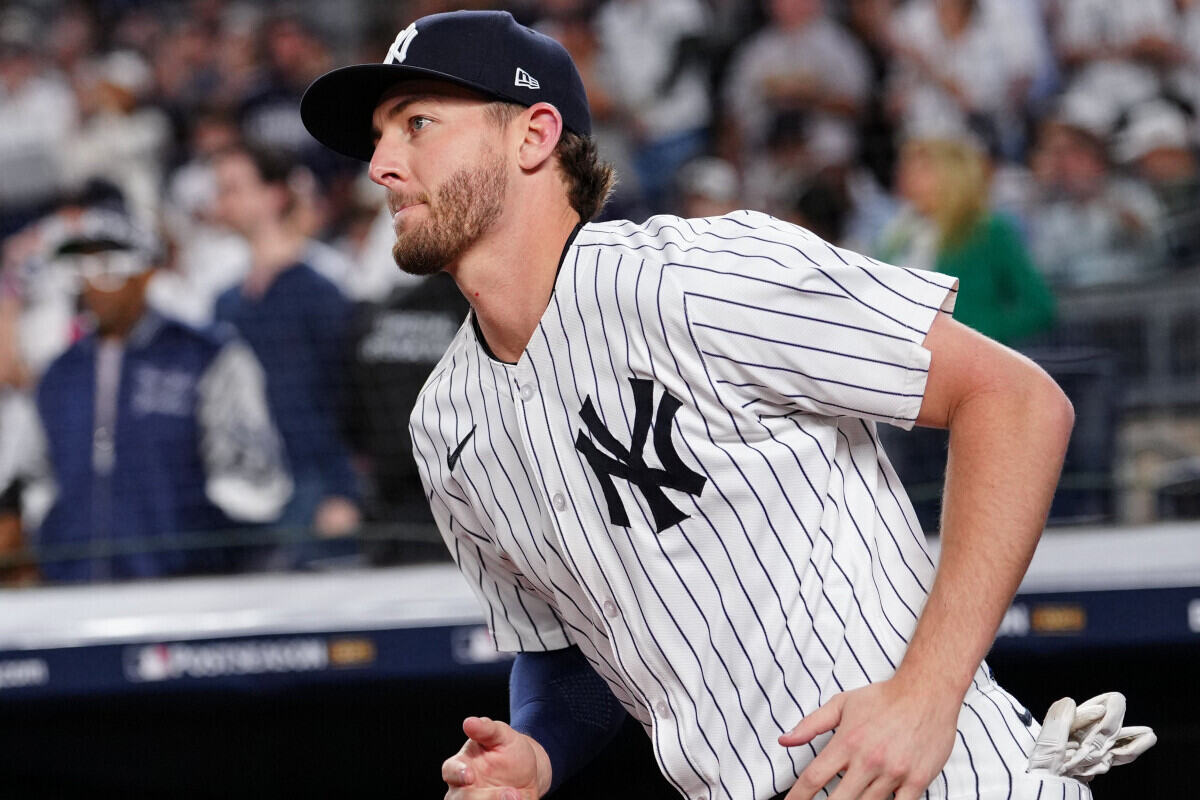
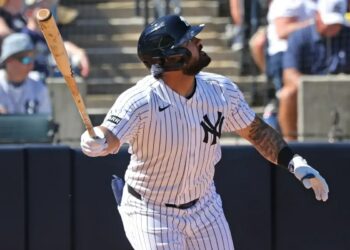
TAMPA, Fla. — Nobody questions what Ryan McMahon does with the glove. The 31-year-old locks down third base like few players in baseball. His elite defense made an immediate impact when the Yankees acquired him from the Rockies at last year’s trade deadline. His presence alone changed the shape of the infield.
The bat is another matter. McMahon’s OPS-plus has been below league average in every season of his career. He slashed .208/.308/.333 with four home runs and 18 RBIs in 185 plate appearances after arriving in the Bronx. His whiff rate ballooned to a career-high 35.2 percent. His strikeout rate sat at 32.3 percent, which ranked in the second percentile among qualified hitters.
The Yankees knew they had a problem. McMahon believes he has a solution.
Report slots $19M McMahon in 19th rank
The numbers caught the attention of national outlets. Bleacher Report recently released a ranking of every starting third baseman in baseball for 2026. McMahon landed at No. 19. That placed him squarely in the bottom half despite his Gold Glove-caliber defense.
“McMahon hit just .208/.308/.333 for an 81 OPS+ in 185 plate appearances after joining the Yankees at the trade deadline, but he still contributed 1.1 WAR during that time thanks to his elite defense at third base,” Bleacher Report’s Joel Reuter wrote. “Along with his reliable glove, he has also hit at least 20 home runs in each of the last six full seasons, and his floor is something similar to what Chase Headley provided for the Yankees a decade ago.”
Ryan McMahon in 2025 vs. 2026 projections! The numbers haven’t fallen off a cliff — but is third base fooling us? It is silently sinking the #Yankees and no one is talking about it! #RepBXpic.twitter.com/JaHQpQ3BQu
The Yankees had options this winter. Free agent Eugenio Suarez sat available on the market for months. The front office chose to stand pat, believing McMahon could deliver more with mechanical adjustments and a full offseason in the organization.
The Yankees knew they had a problem. They also believed they had a solution.
The stance overhaul McMahon needed
Shortly after the Yankees’ playoff exit last fall, McMahon sat down with the team’s hitting group for more than an hour. They reviewed his mechanics from every angle and identified two main areas of focus: narrowing his stance in the batter’s box and getting his hips to work more efficiently through his swing.
According to Baseball Savant, McMahon averaged 42.7 inches between his feet last season. That was the fourth widest among all major leaguers. Nearly every other hitter in the top 10 used an open stance. McMahon averaged zero degrees, meaning his feet were perfectly squared. The combination of extreme width and a straightaway alignment was working against him.
“Just things I’ve done in the past and things I kind of got away from,” McMahon said Thursday at Steinbrenner Field. “They pointed them out and we worked on them. … Trying to find a way to give myself basically the best chance every single time and be really consistent with it.”
McMahon’s contact problem is puzzling
Talkin’ Yanks@X
What makes McMahon’s offensive struggles unusual is that he has a legitimately good eye. His 11.9 percent walk rate last season ranked in the 89th percentile. He swings at the right pitches. He just does not connect with them often enough.
His contact rate on swings inside the strike zone was 77.8 percent, per Statcast. That ranked fourth lowest among qualified hitters. He can identify a good pitch. He just cannot catch up to it consistently.
“When I’m going bad, I’m just missing good pitches to hit,” McMahon said. “When I’m going good, I don’t miss it. Just find a way to be in that spot where I don’t miss it.”
The raw power is real. When McMahon does connect, the ball jumps. His 93.3 mph average exit velocity ranked 14th among qualified hitters, right behind Fernando Tatis Jr. That number is not inflated by Coors Field. The Yankees acquired him believing the power was legitimate. What they need is for McMahon to access it more often.
Rowson and Boone like what they see so far
Yankees hitting coach James Rowson said he would be guessing if asked whether the wide stance directly caused the swing-and-miss issues. But the early returns from a narrower setup have been positive.
“He’s in a stronger position to drive the baseball more consistently,” Rowson said. “Obviously throughout a major league season, you’re going to have some fluctuation depending on how you feel. Sometimes that can vary, your width. But right now, with him being a little bit more narrow, he’s ending up in a good spot to drive the ball from. I like what I see.”
“My career has been a lot of ups and downs,” said McMahon, an All-Star in 2024. “It’s just trying to find that middle line so I can stay there and be better more consistently.”
The platoon option and why the glove keeps McMahon in the lineup
The Yankees may platoon McMahon more this season, using Amed Rosario at third base against left-handed starters. That would allow the left-handed hitting McMahon to focus on righties, where his power numbers are significantly better. He has
a career .243 average and .763 OPS against right-handed pitching.
But removing McMahon’s glove from the field comes at a cost. His defensive impact was enormous after arriving from Colorado. With Max Fried and Carlos Rodon generating a high rate of ground balls to the left side, McMahon’s ability to range to both sides and throw accurately from difficult angles elevated the entire infield.
Manager Aaron Boone, a former third baseman himself, does not hide his admiration.
“That’s what I want it to look like,” Boone said. “He was born to pick up a ground ball. Then that big arm, has that quarterback movement about him, side to side. He’s really good.”
McMahon is owed $16 million in each of the next two seasons. The Yankees need his bat to justify that number. A narrower stance and better hip mechanics may not sound revolutionary. But for a hitter who ranks among the hardest in the game when he makes contact, even a small improvement in his swing-and-miss rate could unlock a different level of production.