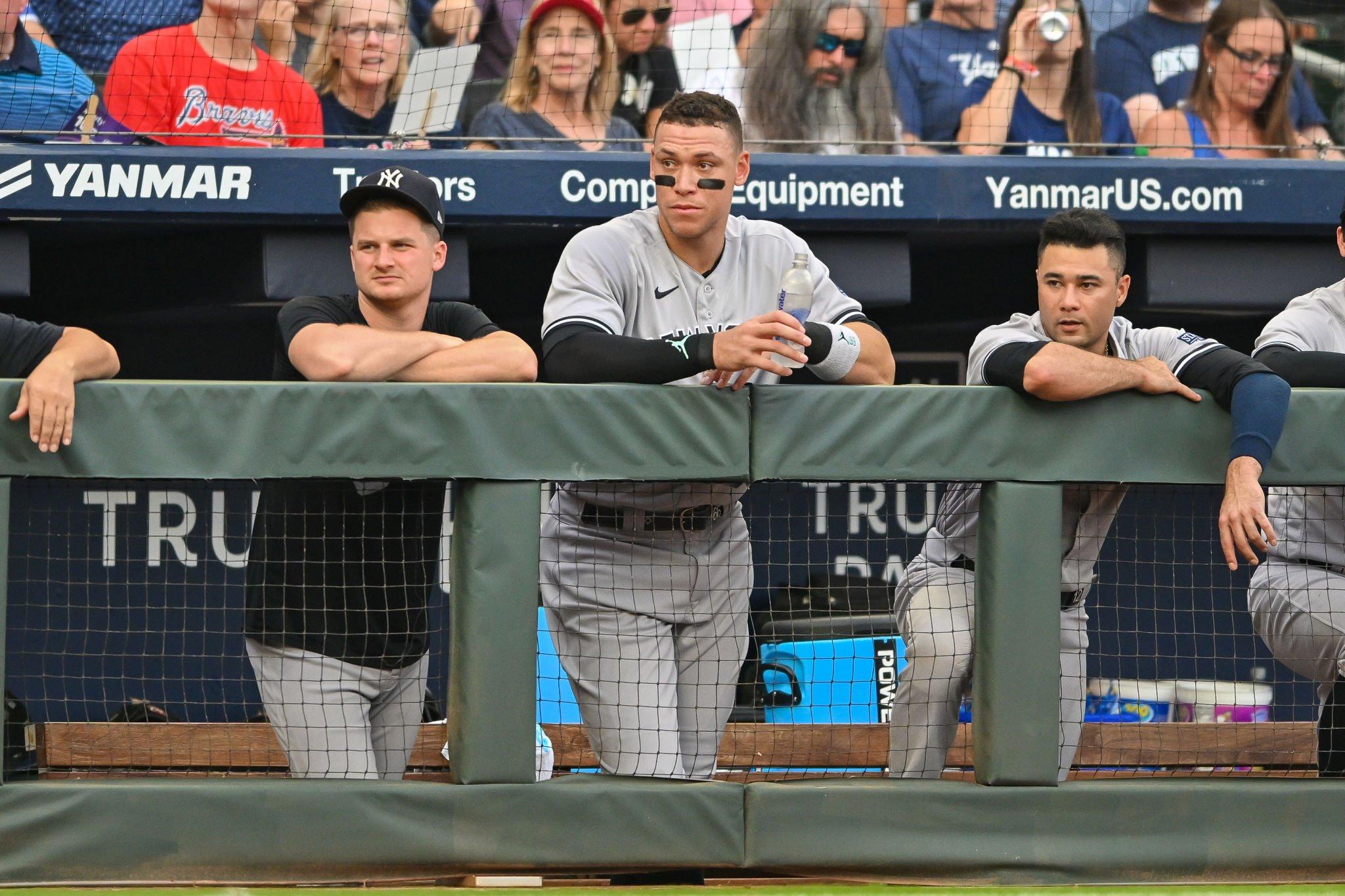
NEW YORK — The New York Yankees used sharp eyes and quick signals Sunday to expose Max Scherzer’s pitch tipping. That inside edge powered Ben Rice’s three-run homer and a 4-3 win over the Toronto Blue Jays, leaving their rivals angry at the veteran pitcher’s giveaways.
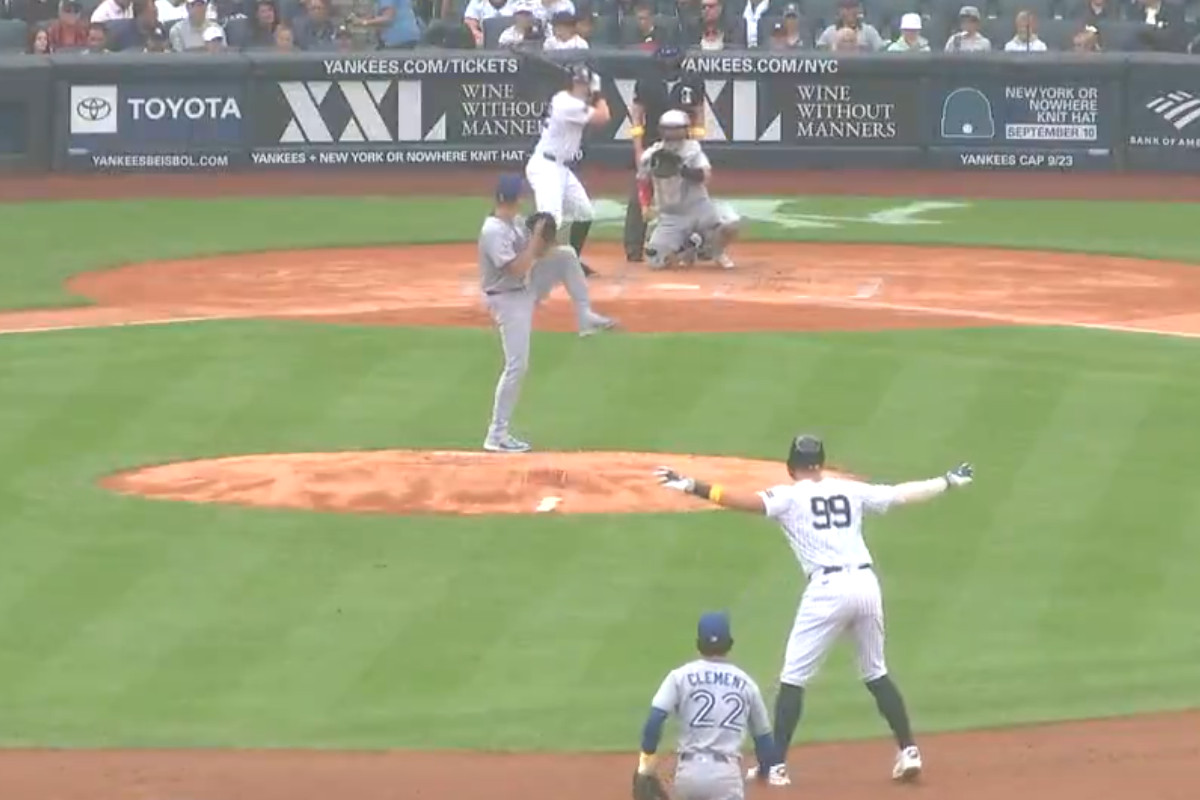
The spark came in the first inning when Cody Bellinger, standing on first base, spotted Scherzer telegraphing his changeup. Bellinger alerted Aaron Judge at second, who then spread his arms wide to signal Rice at the plate. The rookie responded with a game-changing swing during a grueling 10-pitch at-bat.
Rice nearly cleared the wall on an earlier changeup. On the tenth pitch, he crushed a 380-foot fastball for the decisive blast.
“That is correct. That’s what was happening,” Bellinger admitted afterward, making no attempt to hide the Yankees’ tactic.
Blue Jays manager calls out obvious signals
Toronto skipper John Schneider voiced frustration after the game. His anger was aimed at both Scherzer’s execution and the Yankees’ bold use of visible signals.
“They’re good at it,” Schneider said. “Max has got to be a little bit better. It was obvious in the changeups, Rice just missed one, foul homer, and it’s fair game.”
Schneider went on to criticize his team for letting the advantage slip away.
“Major League Baseball knows the Yankees are good when they got something. I’m not the only one that’s going to say it,” he added. “Maybe I’m the only one that’s going to say it publicly, but we got to do a better job of making sure we’re not giving anything away.”
Toronto first baseman Ty France confirmed he had seen the signals during Rice’s at-bat.
“(Bellinger) did it twice, and after the second one, that’s when I knew they had something,” France said. “It was pretty obvious. You know, guys at first don’t typically flap their arms like that.”
Scherzer admits widespread tipping problem
The three-time Cy Young Award winner knew about the issue before he even took the mound. Scherzer said teams across the league have pointed out that his changeup can be read from first base.
“It’s something we’re aware of, that you can get my changeup out of my glove from first base,” Scherzer said. “It’s something we’ve known. It’s not just the Yankees. Across the league, guys can do that.”
He believed he had corrected the problem in his preparation.
“I thought I had addressed it. I thought I had made the proper adjustment to get my glove in front of my face but clearly I hadn’t,” Scherzer said.
During Rice’s at-bat, Judge did not signal on the first changeup with an 0-2 count. But Judge spread his arms before a later changeup on the sixth pitch, giving Rice time to adjust. Judge repeated the motion before another changeup, which Rice fouled into the upper deck.
Pre-game scouting sets stage for exploit
The Yankees’ advantage came from hours of pregame preparation. The club’s staff and players study video for signs of pitch tipping before each series.
“We talk about it pregame, and you just go out there and look for it,” Bellinger explained. “If you see it, then you obviously do what you can.”
Bellinger said the Yankees keep detailed notes on opposing pitchers’ tendencies. That knowledge, combined with his position on first base, allowed him to spot Scherzer’s glove tell right away.
Judge and Bellinger execute relay system

Once Bellinger saw the giveaway, he moved his arms to alert Aaron Judge at second. Judge then spread his arms wide toward Rice at the plate when Scherzer was about to throw a changeup.
Judge held back his signal when Rice was behind 0-2. But later in the at-bat, the communication was clear. Rice fouled off one changeup deep into the seats, then stayed alive long enough to get the fastball he drove for three runs.
The sequence showed how the Yankees’ relay system works with precision in critical moments.
Yankees embrace aggressive approach
New York has leaned into its reputation for spotting tips. Earlier this season, Bellinger used arm motions to help Austin Wells against Seattle closer Andrés Muñoz in another comeback win.
“I guess we’re good at it,” Bellinger said. “It feels like a lot of people do it right now. We’re just so obvious with it [and] with our motion. That’s probably what it is. A lot of teams are discreet. We say, ‘We got it.’”
Rice capitalizes on extended at-bat

Ben Rice stayed calm despite falling behind early in the count. He fouled off multiple pitches, including the long drive that drew France to the mound.
After France’s visit, Scherzer moved away from the changeup. He threw a fastball and a curveball, but Rice fouled them both. Then came the decisive fastball, which Rice blasted into the seats for his three-run homer.
Catcher Austin Wells defended the Yankees’ actions.
“Every team we play tries to relay signs, whether it’s [about] location or pitch,” Wells said. “Everybody does.”
Controversy highlights ongoing issue
The incident again placed a spotlight on the Yankees’ strategy of exploiting tells. Their signals may be more visible than those of other teams, but they remain within the rules.
Earlier in the season, Jazz Chisholm Jr. and Atlanta coach Eddy Perez clashed after Chisholm read pitches from second base. That argument showed how quickly tensions can flare when players feel opponents are stealing signs.
For the Yankees, preparation and bold execution have become part of their identity.
“I’m sure it’s probably frustrating as a pitcher,” Bellinger said. “I don’t know what they think about it. For us, we have an idea of it pregame. You kind of go out, look for it in the game and if you see it, you see it.”
The controversy may have overshadowed the Yankees’ division win. Still, it underscored how attention to detail and in-game awareness can change outcomes at the highest level.
What do you think? Leave your comment below.