The New York Yankees’ decision to release DJ LeMahieu has taken a fresh twist after latest reports. The decision caught players, fans, and reportedly LeMahieu himself completely off guard. Now the Yankees are subject to mounting debate over their handling of a respected veteran.
The two-time batting champion was designated for assignment Wednesday and released Thursday. His seven-year tenure ended abruptly, leaving behind clubhouse tension and serious questions about front office communication.
New revelations continue to potray it as a symbol of deeper organizational problems.
Unexpected move stuns baseball world

LeMahieu’s release blindsided the baseball community. The 36-year-old wasn’t producing at an elite level, but his recent performance showed improvement. He was hitting .266 with a .338 on-base percentage across 45 games this season.
Physical limitations from lower-body injuries had affected his defense. Still, LeMahieu remained a valued clubhouse presence and veteran leader.
The Yankees absorbed a massive financial hit by cutting him. They owe $22 million on his remaining contract, creating $39.2 million in dead money. The organization rarely makes such costly decisions, making this move even more surprising.
MLB.com’s Bryan Hoch reported that LeMahieu “didn’t ask for his release and is not happy with the outcome.” The veteran was willing to work at third base again, but the position had become too physically demanding.
Extended discussions took place between LeMahieu, manager Aaron Boone, and GM Brian Cashman before the final decision. Those talks apparently didn’t resolve the underlying issues.
Cashman tries to clear the controversy
The Yankees organization found itself in turbulent waters after GM Brian Cashman made the call to release DJ LeMahieu, sparking widespread criticism from fans and media alike. Aaron Boone had tried to ease the transition by meeting with the seasoned player, outlining how Jazz Chisholm Jr.’s repositioning to second base would relegate LeMahieu to a substitute role.
The discussion proved unsuccessful, with LeMahieu expressing dissatisfaction about the proposed arrangement, ultimately accelerating his exit from the team. With the controversy now in the rearview mirror, fresh reports suggest Cashman had been contemplating this personnel move since the previous campaign.
Insiders claim that established players within the Yankees clubhouse rallied behind LeMahieu during last season’s deliberations, effectively preventing his departure at that time through their collective advocacy.
When confronted about these claims by Gary Phillips of the New York Daily News, Cashman offered a categorical rebuttal.
“That’s all false, 110% false,” the Yankees GM declared. “None of that’s true.”
Cashman’s unequivocal response challenges the emerging storyline that portrayed him as having orchestrated LeMahieu’s eventual removal months before it actually occurred.
Judge expresses disappointment

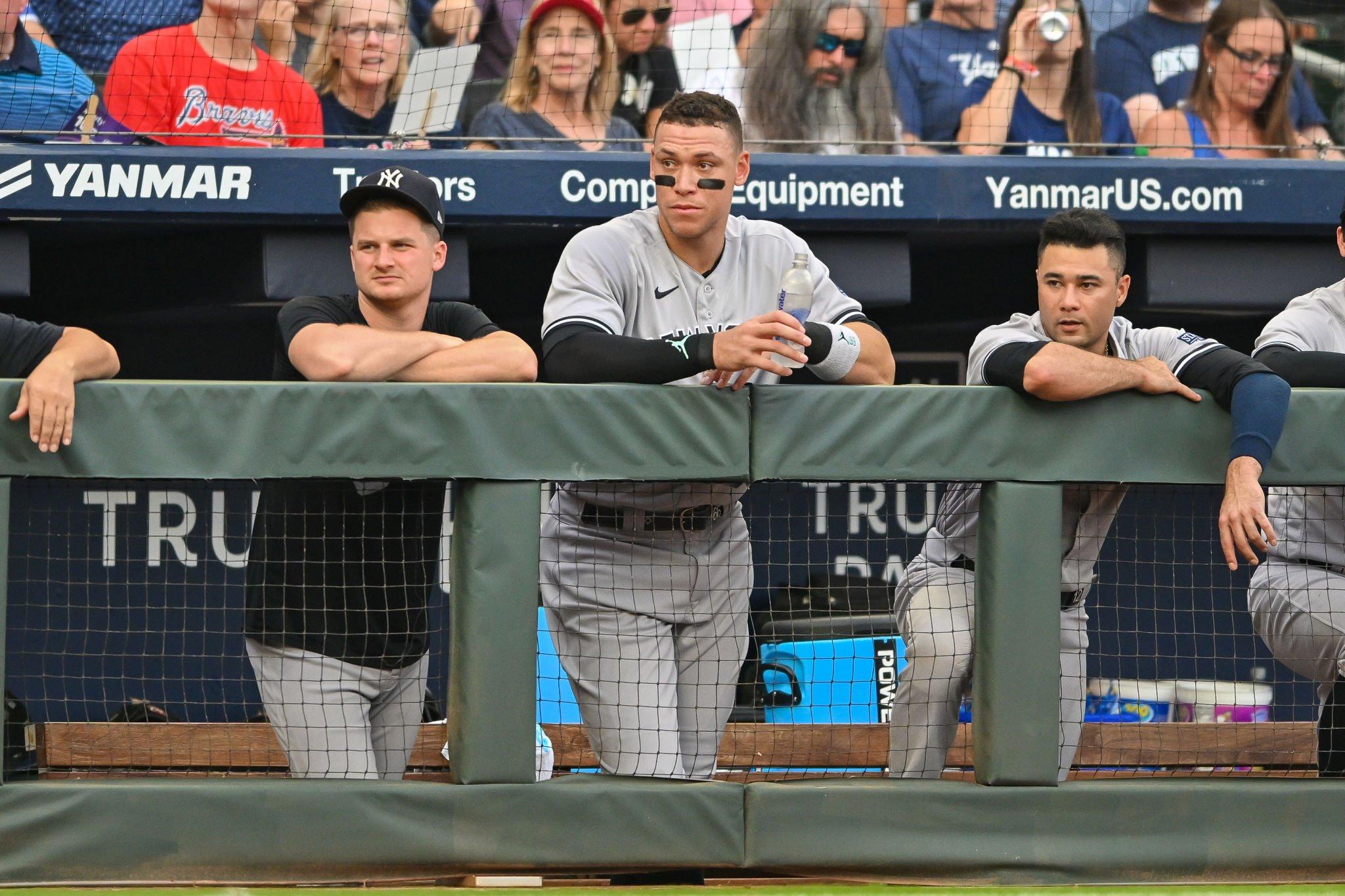
Aaron Judge didn’t hide his emotions when discussing LeMahieu’s departure. The Yankees captain struggled to find the right words about losing his longtime teammate.
“It wasn’t great,” Judge said. “Especially with what DJ has meant to this team and what he’s meant to me. A lot of those playoff runs we went on from 2019 on, we’re not getting there without DJ.”
Judge emphasized LeMahieu’s commitment to the team despite recent injury struggles. The veteran hated missing games and wanted to contribute in any way possible.
“He hated missing games. Hated not being there for us. Tough how it ended,” Judge said. “We’re definitely going to miss him here.”
Communication breakdown reveals deeper issues
The circumstances surrounding LeMahieu’s release suggest more than performance concerns. The Yankees’ evolving positional strategy played a major role in the decision.
Oswald Peraza now starts at third base while Jazz Chisholm Jr. has moved to second. LeMahieu’s limited mobility prevented him from playing third base consistently. The Yankees viewed that flexibility as crucial for their second-half plans.
Brian Cashman called the move “best for the roster configuration going forward.” However, LeMahieu’s willingness to accept a reduced role contrasts sharply with that explanation.
The disconnect has sparked debate about internal communication failures. Questions persist about whether this reflects broader organizational dysfunction.
Yankees face pressure
The Yankees’ on-field performance has deteriorated recently. They’ve gone 4-6 in their last 10 games and trail the Blue Jays by 2.5 games in the AL East.
Injuries have decimated their starting rotation. Gerrit Cole is out for the season while Clarke Schmidt underwent Tommy John surgery. Jake Cousins also suffered an elbow injury.
Meanwhile, the Boston Red Sox have surged with an 8-2 record over their last 10 games. They’ve moved into Wild Card contention, increasing pressure on the Yankees to make roster upgrades.
Brian Cashman faces mounting demands to improve the team before the trade deadline. Rumors link the Yankees to Arizona’s Eugenio Suarez and other infielders.
Cutting LeMahieu while absorbing over $39 million in salary obligations has confused fans and analysts. The timing seems particularly questionable given the team’s current struggles.
Seattle emerges as LeMahieu’s potential destination

LeMahieu may find a new home quickly. Jon Morosi of MLB Network reported the Seattle Mariners as a potential landing spot.
Seattle’s current first base and designated hitter options have struggled this season. The Mariners are pushing for a playoff spot and need reliable veteran production.
LeMahieu could rotate between first base, second base, and designated hitter. His experience and professionalism would benefit a young Seattle roster.
Despite his age, LeMahieu posted a 91 OPS+ through 142 plate appearances this season. That represents improvement from his injury-shortened 2024 campaign.
Postseason contenders value patient, professional at-bats in September. LeMahieu still provides those qualities despite declining skills.
End of an era
LeMahieu’s 2019 arrival generated little excitement among Yankees fans. He wasn’t guaranteed a starting position and seemed like a modest addition.
By season’s end, he had become an MVP finalist. His exceptional 2020 campaign earned him a second batting title and cemented his Yankees legacy.
LeMahieu’s departure marks the end of a successful era. His reliability and consistency helped anchor the Yankees’ lineup during their competitive window.
The manner of his exit has tarnished those memories. Poor communication and questionable timing have overshadowed his contributions.
“He’s been a part of this team all the way since 2019,” Judge said. “It’s going to be different, but we gotta keep moving forward.”
The Yankees plan to move forward from this controversy. However, their handling of LeMahieu’s exit has created more problems than solutions.
The organization must address these communication failures while trying to salvage its season. How they respond will determine whether this becomes a brief distraction or lasting damage to their credibility.
What do you think? Leave your comment below.