NEW YORK — The New York Yankees have seen their share of October drama. This time the stakes were not on the mound at Yankee Stadium. They were inside the power structure of Major League Baseball itself.
A former Yankees bullpen ace, once trusted in the ninth inning under the brightest lights in baseball, came within reach of reshaping MLB labor history. Then a player vote shifted the balance.
For Yankees fans who remember Andrew Miller‘s dominant run in pinstripes, the development carries weight beyond nostalgia. It touches the future of the sport, the power of the MLB Players Association and the possibility of another lockout when the collective bargaining agreement expires on Dec. 1.
From Yankees bullpen to union power broker
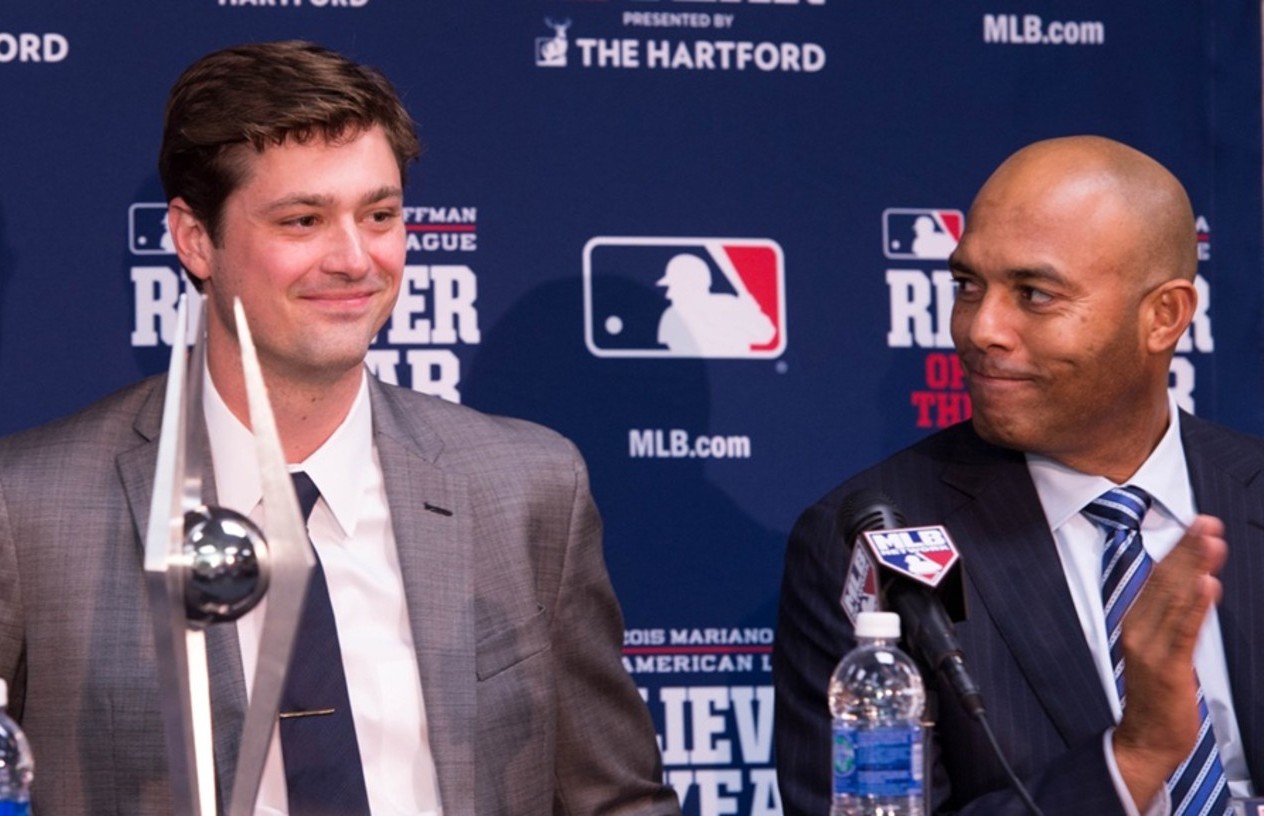
Andrew Miller’s Yankees tenure remains one of the most electric relief stretches in franchise history. He signed a four-year, $36 million contract in December 2014. In 2015, he posted a 2.04 ERA with 100 strikeouts in 61.2 innings. Opponents batted just .151 against him. His slider was nearly unhittable and earned him 36 saves. He won the Mariano Rivera AL Reliever of the Year Award and finished 10th in Cy Young voting.
In 2016, Miller earned his first All-Star selection and pitched to a 1.39 ERA with 77 strikeouts in 45.1 innings before the Yankees traded him to Cleveland at the deadline. He and Dellin Betances and Aroldis Chapman formed the fearsome “No Runs DMC” trio that terrorized opposing lineups. Despite mostly confined to set-up role and pitching with a fracture, Miller earned 12 saves. The Yankees traded him to Cleveland on July 31, 2016.
Miller was not just a premier closer. He was a thinking player who earned respect across MLB clubhouses for his grasp of labor issues. During negotiations that shaped the 2017 to 2021 CBA, Miller served as a key player representative. He helped shape compensation structures for draft picks and international signings. He also served on the MLBPA’s eight-man executive subcommittee that helped restart MLB during the COVID-19 pandemic in 2020.
After retiring in 2021, Miller stayed deeply involved. He joined the MLBPA as the special assistant for strategic initiatives. He assisted with labor bargaining during the 2021 to 2022 negotiations. When a sex scandal forced longtime MLBPA chief Tony Clark from his post this week, Miller’s name surfaced quickly as a candidate to replace him.
The vote that changed direction
The central news unfolded quietly but decisively. Clark resigned Tuesday after an internal investigation revealed an inappropriate relationship with his sister-in-law, who had been hired as a union employee in 2023. He is also the subject of a federal investigation into the MLBPA’s finances and governance. The timing stunned the baseball world. Clark was scheduled to begin the union’s annual tour of spring training camps on the same day he stepped down.
ESPN’s Jake Mintz reported that the leading candidates to replace Clark included deputy executive director Bruce Meyer, Miller, general counsel Matt Nussbaum and former big leaguer Kevin Slowey. Miller had deep credibility among players. But the union’s 72-member executive board, consisting of 38 major leaguers and 34 minor leaguers, voted unanimously on Wednesday to elevate Meyer to interim executive director. Matt Nussbaum was named interim deputy executive director.
Players opted for experience in legal and negotiation strategy over a former player figurehead. Sports Illustrated’s Tom Verducci described Meyer as “a logical yet remarkable choice” to replace Clark. ESPN reported that Meyer has a long record of passionate backing of player rights.
“Everything’s up to the players, but I don’t anticipate that anybody’s going to be leading negotiations other than me,” Meyer said on Wednesday.
For Miller, the outcome meant a missed opportunity. For Yankees fans, it marked the end of a brief moment when a former Yankees closer might have altered MLB labor history from the inside.
Bruce Meyer’s rise and what it means for lockout chances

Meyer is not new to Yankees negotiations or MLB labor fights. He joined the MLBPA in 2018 after decades of working with the NHL, NBA and NFL players’ unions. He served as the lead negotiator during the 2022 CBA talks that followed a 99-day lockout. He brokered the 2020 agreement to play baseball during the pandemic. He survived an attempted internal coup in March 2024, when a group of players tried to force his removal.
His elevation signals continuity at the bargaining table rather than a change in philosophy. The MLBPA maintains a deeply rooted opposition to a salary cap. Owners are pushing for one and are prepared to lock out the players on Dec. 1 if no new deal is reached.
“We don’t expect anything to change in terms of bargaining,” Meyer said. “We’ve been preparing for bargaining for years. Players have been preparing. Players know what’s coming at the end of the day.”
Angels lefty Brent Suter, a member of the executive subcommittee, framed the decision as a stability play. “We’re going to have an interim [director] and keep everything as stable as we can this year,” Suter told The Athletic.
For Yankees fans, the question is direct. Does Meyer’s selection lower the chance of another lockout? The answer is complicated. Revenue sharing and competitive balance tax thresholds remain the biggest points of contention. The Yankees consistently operate near or above the luxury tax limits. Their payroll structure often becomes a flashpoint during CBA talks. Any changes to the tax system directly affect how the Yankees build their roster.
Yankees legacy in MLB labor matters runs deep
The Yankees franchise has long influenced labor dynamics. From the days of free agency expansion to modern luxury tax penalties, the club has stood as the sport’s financial benchmark. The team will surpass $300 million in payroll for the third consecutive season in 2026.
Miller’s near ascent reinforced that link. His Yankees tenure elevated him into national prominence. His 2015 dominance and 2016 All-Star campaign cemented his reputation. That credibility carried into union politics after his playing days ended.
Though he did not secure the top role, Miller remains respected within MLBPA circles. His position as special assistant for strategic initiatives keeps him in the room. His voice is unlikely to disappear from the discussions that will intensify as the Dec. 1 deadline approaches.
A former Yankees closer who once altered games in the ninth inning nearly altered the structure of MLB labor negotiations. Instead, Bruce Meyer now holds that responsibility. The CBA expires in less than 10 months. Whether Meyer’s leadership cools tensions or intensifies them remains to be seen.
This time, the vote went another way.
What do you think?