A recent MLB.com analysis by Manny Randhawa has sparked controversy in the Bronx, challenging a sacred baseball belief. While acknowledging Yankees greats Robinson Cano and Mariano Rivera as the premier second baseman and reliever of the 2000s respectively, the study places franchise cornerstone Derek Jeter behind Francisco Lindor in the shortstop rankings—a conclusion that has Yankees faithful up in arms.
The methodology relies heavily on Baseball Reference WAR accumulated since 2000 to determine positional supremacy, alongside leadership in specific statistical categories. However, this statistical approach may fail to capture the full scope of Jeter’s impact on the game. A deeper examination reveals significant differences between these two shortstops.
While Lindor’s talent and impact on the game are undeniable, many fans and analysts remain steadfast in their belief that Derek Jeter—the longest-serving captain of the New York Yankees—holds an unrivaled place in baseball history. Let’s delve into the key arguments behind this contention and examine why his legacy endures despite modern comparisons.
Comparison: Derek Jeter vs. Francisco Lindor
| Metric | Derek Jeter | Francisco Lindor |
| Hitting Consistency | Elite contact hitter (.310 career BA) | More power, less consistent (.275 career BA) |
| Defense | Solid, reliable, but not elite | Elite, defensively superior |
| Postseason Success | Legendary (.308 average, 5 rings) | Limited postseason impact |
| Longevity/Legacy | 20 years, Hall of Fame career | Active, still building resume |
| Intangibles | Leadership, clutch moments, icon | Energetic, modern face of MLB |
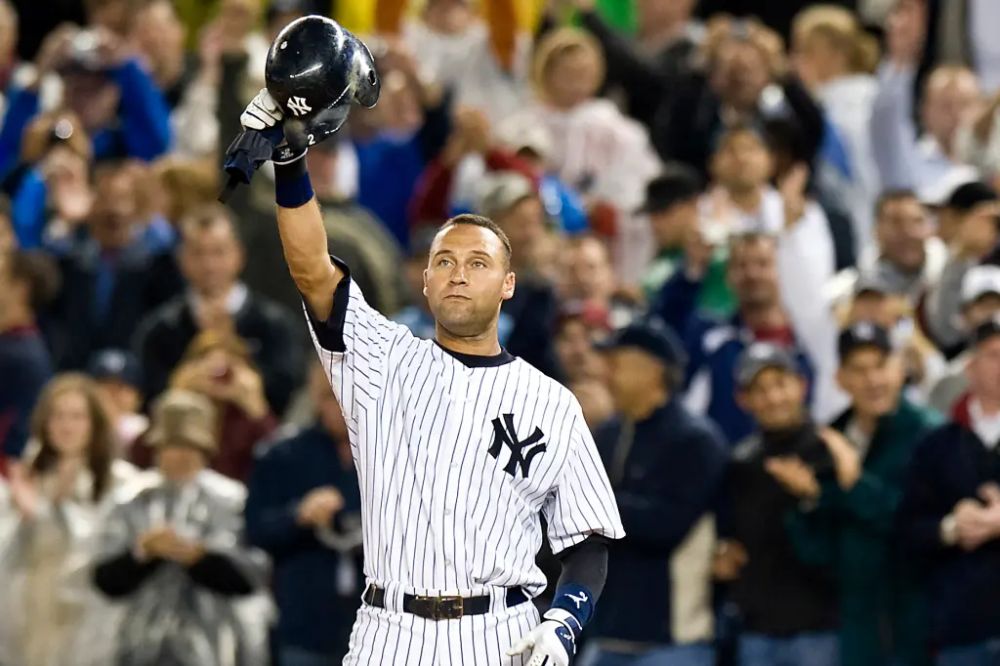
Lindor brings elite defense, better power numbers, and is arguably the more well-rounded shortstop. However, his legacy is still being written, and he lacks the postseason accolades that define Jeter’s career.
The Yankees legend has an edge in terms of leadership, postseason success, and overall legacy. His career-long consistency and status as the face of the Yankees during a dynasty era make him an all-time great.
His clutch moments, longevity, and legacy defines an era of baseball. Jeter’s historical impact likely gives him the upper hand overall—for now.
Here’s a comparison of Derek Jeter and Francisco Lindor’s achievements in a clean table format:
| Category | Derek Jeter | Francisco Lindor |
| World Series Titles | 5× (1996, 1998–2000, 2009) | 0× |
| All-Star Appearances | 14× | 4× |
| Gold Glove Awards | 5× | 2× |
| Silver Slugger Awards | 5× | 2× |
| Platinum Glove Awards | N/A | 1× (2016) |
| Career Hits | 3,465 (6th all-time) | ~1,400 (through 2023, ongoing) |
| Batting Average | .310 | .275 |
| On-Base Percentage | .377 | .341 |
| Slugging Percentage | .440 | .472 |
| OPS+ | 115 | 118 |
| Home Runs | 260 | ~200 (through 2023, ongoing) |
| RBIs | 1,311 | ~700 (through 2023, ongoing) |
| WAR (Wins Above Replacement) | 71.3 | ~44.6 (through 2023, ongoing) |
| Postseason Batting Average | .308 | .225 (limited postseason games) |
| Years Played | 20 (1995–2014) | 9+ (2015–present) |
Lindor is a great shortstop
Since debuting in 2015, Francisco Lindor has consistently showcased an elite level of play, earning multiple All-Star selections, two Gold Gloves, and two Silver Sluggers by the age of 29. His blend of power and agility redefines expectations for a shortstop, especially in today’s analytics-driven era.
The MLB writer’s argument centers on Lindor’s superior defensive metrics and more advanced skills compared to Jeter. For example, Lindor’s Defensive Runs Saved (DRS) metrics are significantly higher than Jeter’s throughout comparable seasons. Lindor’s ability to combine range, arm strength, and precision with modern defensive shifts has made him one of the most valuable defenders in the game today.
Offensively, Lindor’s career OPS+ of 120 demonstrates a level of power and efficiency that Jeter rarely matched. His home run tally is already impressive for a shortstop, and his prime years suggest he’ll continue to rack up stats that could rival the game’s all-time greats.
But Derek Jeter is the greatest shortstop
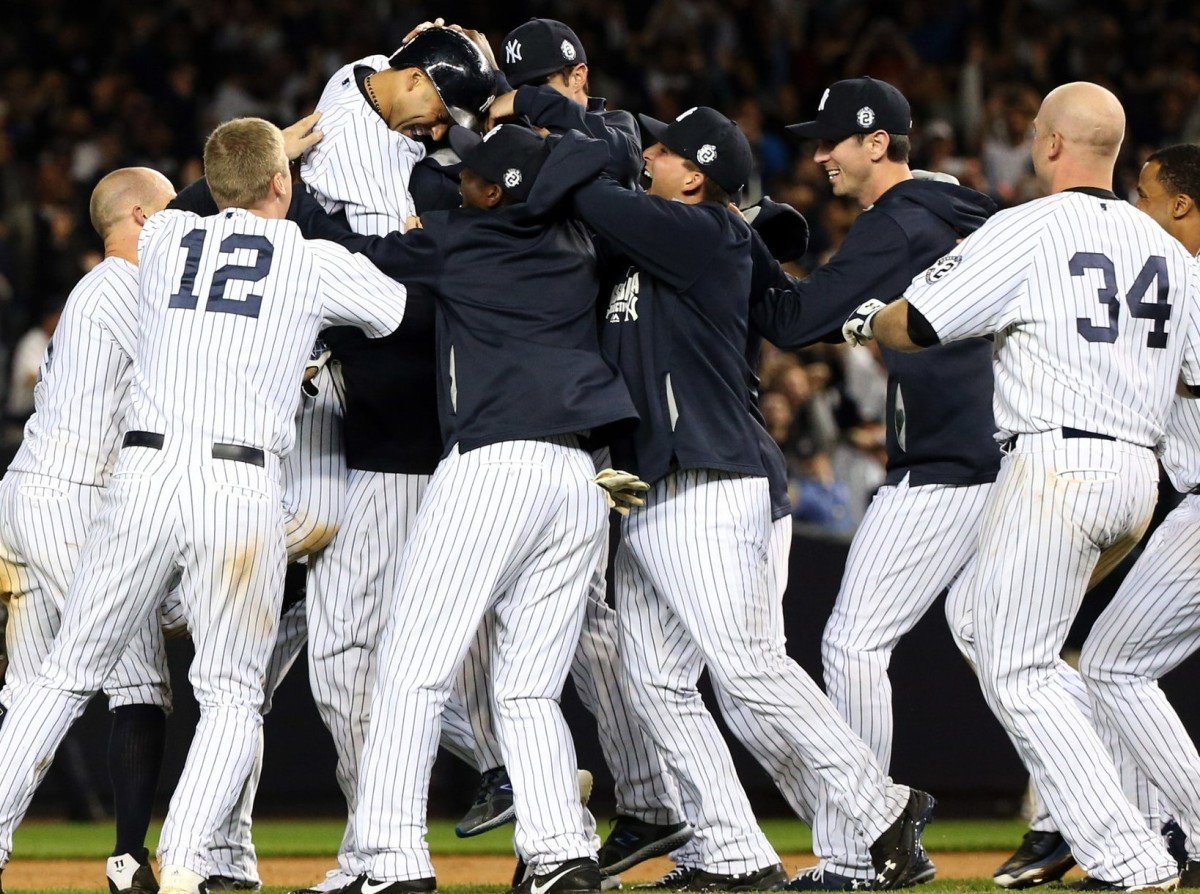
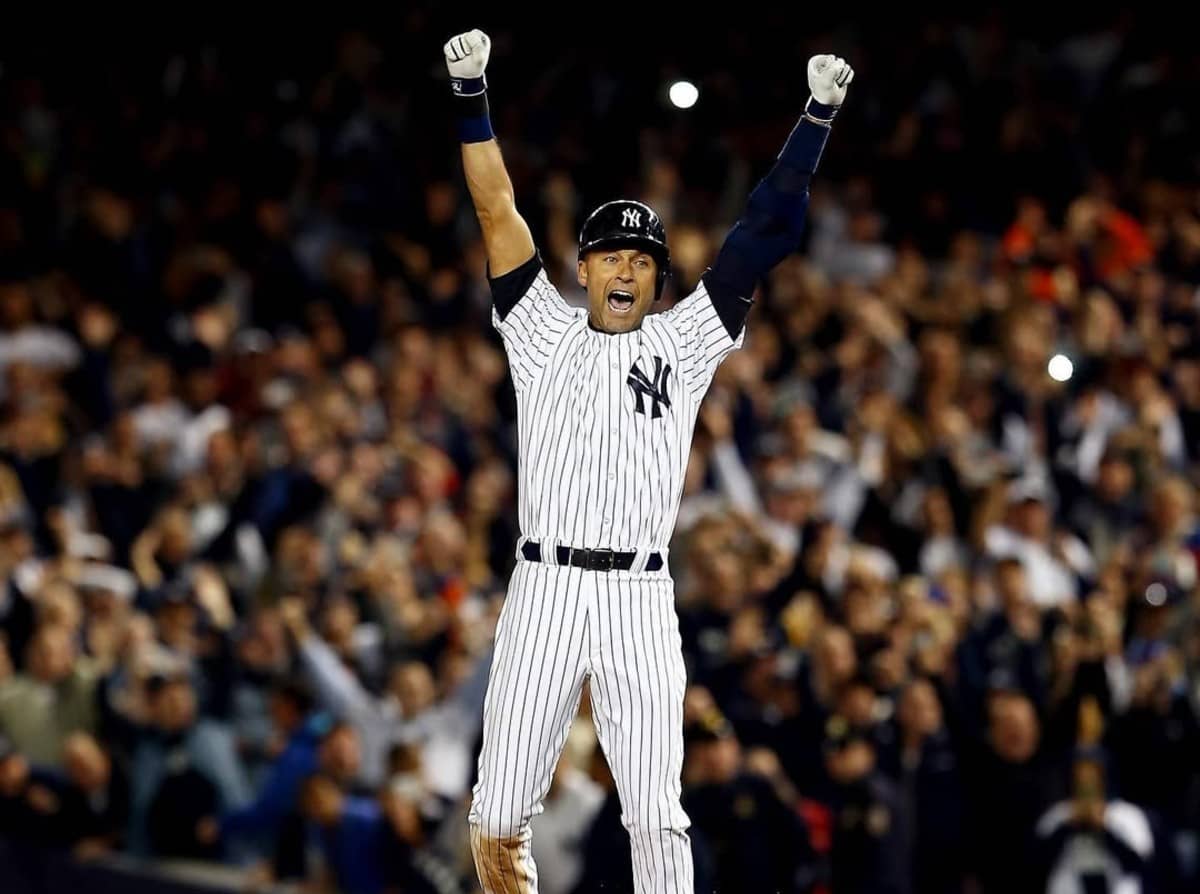
Derek Jeter’s legacy goes beyond stats. His impact on the Yankees dynasty of the late 1990s and early 2000s, his leadership qualities, and his reputation for delivering in the clutch define his unparalleled status in MLB history.
- Postseason dominance
Jeter’s postseason performance is legendary. Over 158 playoff games, he hit .308, belted 20 home runs, and racked up 200 hits. Few players in baseball history have matched his ability to rise to the occasion in October, earning him nicknames like “Mr. November.” Signature moments, such as “The Flip” against the Oakland Athletics and his walk-off homer in the 2001 World Series, are etched into baseball lore. While Lindor has had postseason success, including leading the Cleveland Guardians to the 2016 World Series, his resume pales in comparison to Jeter’s sustained excellence on the biggest stage.
- Consistency and longevity
The Yankees legend’s consistency over a 20-year career is remarkable. He retired with a .310 batting average, 3,465 hits (sixth all-time), and a .377 on-base percentage. Unlike many of his contemporaries, his ability to maintain a high level of performance year after year set him apart. While Lindor has shown brilliance, he still has a long road ahead to achieve the longevity and durability that defined Jeter’s career.
- Leadership and intangibles
What truly separates Jeter is his intangible value. As the captain of the Yankees, he epitomized professionalism and grace under pressure. Teammates, opponents, and fans alike recognized his ability to lead by example, making him one of the most respected figures in the sport. Lindor, while a charismatic leader in his own right, has yet to match the cultural and symbolic significance that Jeter brought to the Yankees and MLB as a whole.
- Defensive comparisons
Critics often point to Jeter’s defensive shortcomings, citing metrics like Defensive Runs Saved (DRS) that paint him as below average compared to his peers. However, these criticisms often fail to account for the context of his era. Advanced analytics were not widely used during Jeter’s prime, and his defensive reputation was built on reliability and iconic plays—like the aforementioned Flip and his famous dive into the stands against the Red Sox.
Lindor’s defensive prowess, measured in an era that values range and advanced positioning, certainly gives him an edge in this category. Yet, the legendary shortstop’s defensive shortcomings didn’t hinder the Yankees from achieving unparalleled success during his tenure.
A tale of two eras
Comparing Lindor and Jeter also highlights the differences in the eras they represent. Jeter played in a time when contact hitting, situational awareness, and leadership were paramount. His ability to come through in high-pressure situations made him indispensable to a Yankees dynasty that won five World Series titles during his tenure.
Lindor’s era emphasizes analytics, power, and defensive metrics. His ability to excel in these areas reflects the evolution of the shortstop position into one that demands more versatility and all-around excellence. While Lindor’s accomplishments are impressive, they come in a different context, making direct comparisons to Jeter challenging.
Legacy matters
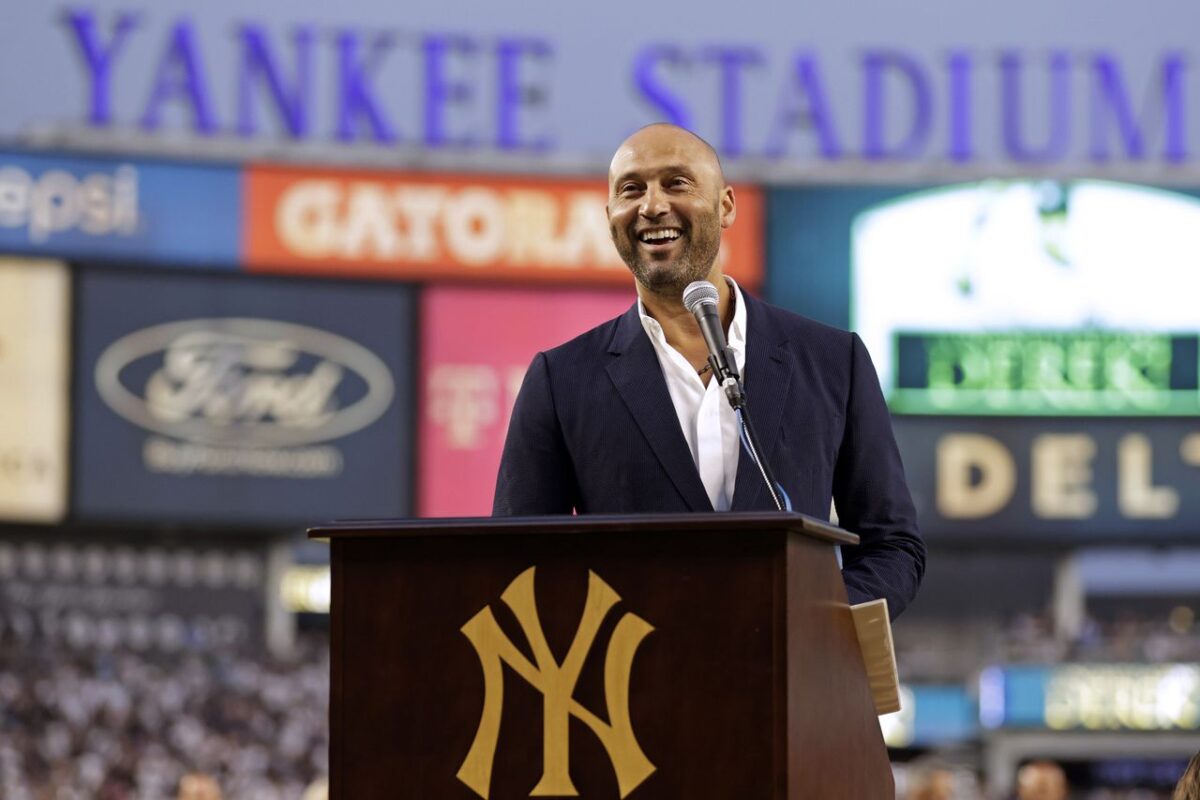
Derek Jeter’s legacy as the greatest shortstop in MLB history isn’t solely about numbers. It’s about what he represented for the Yankees, baseball, and sports culture. Jeter’s induction into the Hall of Fame with 99.7% of the vote underscores the universal respect he commands. His #2 jersey retirement and Monument Park enshrinement at Yankee Stadium further cement his place in baseball immortality.
Lindor, still in the prime of his career, has the potential to build a similarly impactful legacy. His leadership on the field, electrifying style of play, and potential to guide the Mets to postseason success could elevate him into the pantheon of all-time greats. However, surpassing Jeter’s legacy will require not just sustained excellence but also a series of defining moments on the biggest stages.

Conclusion: Jeter vs. Lindor
While the writer’s claim that Lindor has surpassed Jeter as the greatest shortstop is provocative, it’s premature to declare it definitive. Jeter’s combination of consistent greatness, postseason heroics, and leadership intangibles set a standard that few players—Lindor included—can match.
That said, Lindor’s career trajectory is impressive. Should he maintain his elite level of play, win championships, and continue to redefine the shortstop position, he could join Jeter in the conversation for the best to ever play the position.
For now, Derek Jeter remains the gold standard—a beacon of what it means to excel both on and off the field. Francisco Lindor may be the future, but Derek Jeter’s legacy as the greatest shortstop in MLB history endures.
What do you think? Leave your comment below.