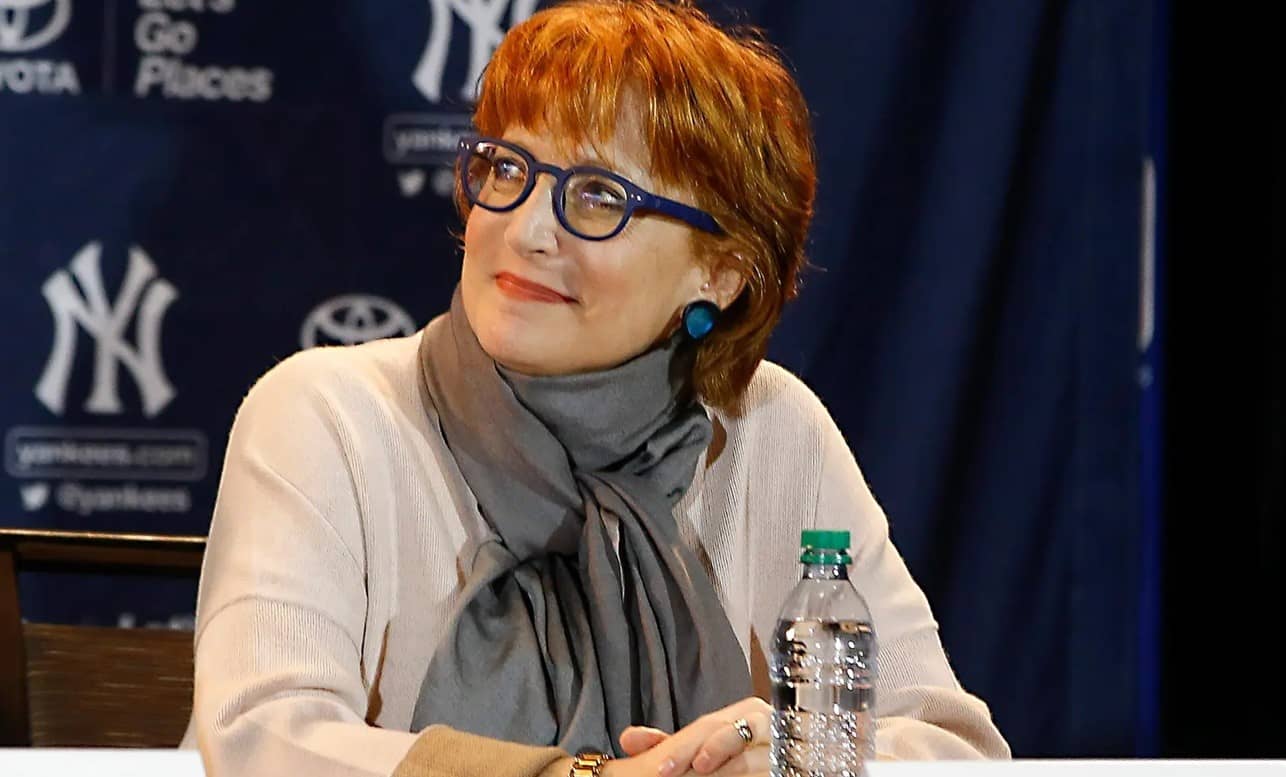
In the male-dominated halls of Major League Baseball front offices, Jean Afterman of the New York Yankees has long stood as a beacon of pioneering excellence, quiet strength, and strategic brilliance. For over two decades, she has served as the Yankees’ assistant general manager—making her one of the most influential figures in baseball history that most fans still know far too little about.
“She should be in the Hall of Fame,” said former Yankees superstar Alex Rodriguez in a recent podcast appearance. “She’s been the assistant GM to Brian Cashman for over 20 years. She was always the voice of reason in that organization.”
That kind of praise isn’t flattery—it’s truth backed by a track record. Appointed by the Yankees in 2001, Afterman became the third woman in MLB history to hold an assistant GM role, following in the footsteps of trailblazers like Kim Ng. But unlike many who come and go with front office turnover, Afterman has become a fixture in the Bronx, her longevity a testament to both her skill and adaptability.
Jean Afterman, when became assistant General Manager of the New York Yankees, she was the second woman to hold such a title in baseball history. She has remained in the position ever since, working closely with Brian Cashman. In 2012, she was given the title of “Senior Vice-President”.
In 2019, she was honored by Baseball America with the “Trailblazer Award” for her work in opening paths in baseball front offices for women.
Who is Yankees Jaen Afterman: A legal mind, a global visionary
Before she joined the Yankees, Afterman made her name as a trailblazing sports agent. She played a critical role in transforming the international player movement, particularly between Japan and the U.S.—years before it became the norm. Working alongside Japanese agent Don Nomura, she helped create legal loopholes that brought stars like Hideo Nomo, Alfonso Soriano, and later Hideki Irabu to the MLB.
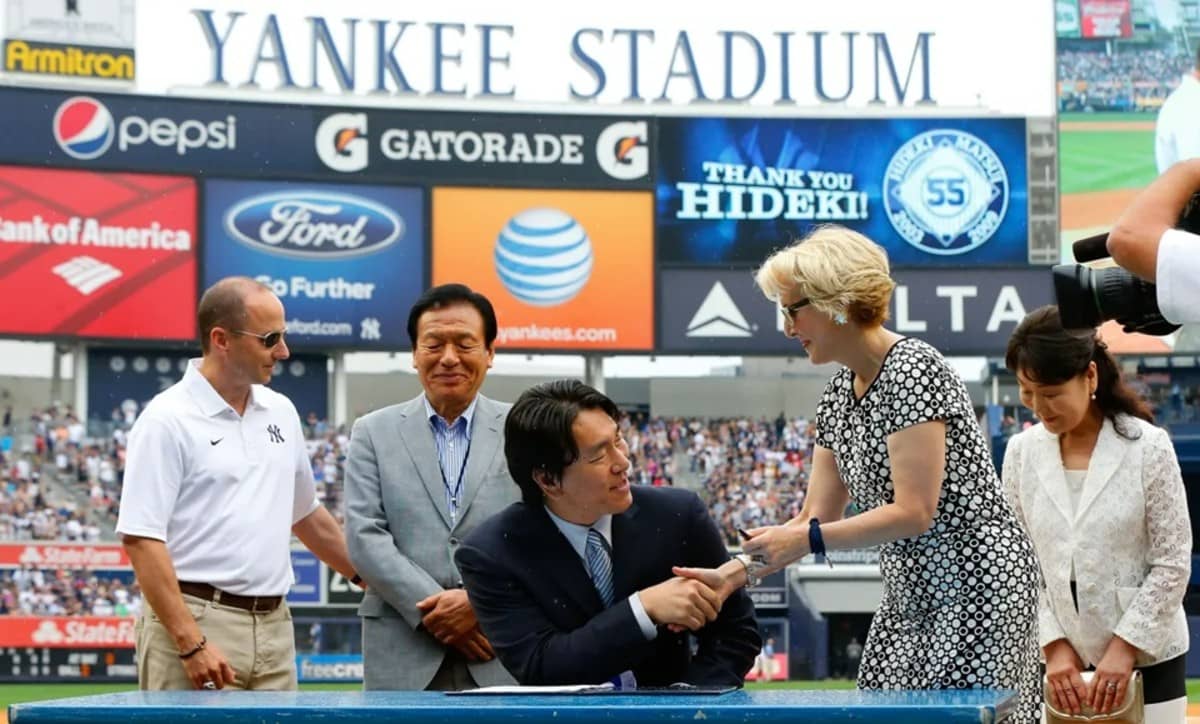
With the Yankees, she was instrumental in bringing over Hideki Matsui.
She was born in San Francisco, CA and her first degree, from the University of California, Berkeley was in art history. She then worked for Paramount Studios, after which she obtained a law degree from the University of San Francisco and became an attorney. One of the first cases she worked on involved licensing rights for baseball cards for members of the Player’s Association, her background in audio-visual production being useful to the case.
She struck a friendship with Don Nomura, who was an attorney for the MLBPA, and worked with him on the legal loophole that allowed Nomo to circumvent Japanese Baseball rules to achieve his dream of playing in Major League Baseball. She later became familiar to Cashman and then Yankees owner George Steinbrenner in working to bring Irabu and Alfonso Soriano from Japan to the team, leading to her later hire by the team.
She called it her “version of baseball civil rights.”
That work laid the groundwork for the modern posting system and arguably set the stage for the global explosion of baseball we see today—culminating in the meteoric rise of Shohei Ohtani, who just signed a record-setting $700 million contract with the Dodgers in December 2023.
But long before Ohtani was a household name, Afterman was identifying the untapped business and talent pipeline in Japan. On a trip in the 1990s, she was struck by Hideki Matsui’s discipline and talent. “The minute you saw him, you just knew,” she recalled. She later played a pivotal role in bringing Matsui to the Bronx—where he’d help power the Yankees to a 2009 World Series title and earn MVP honors.
“She was our secret weapon,” said Rodriguez of that 2004 Japan trip when the Yankees opened the season against the Rays. “She was like our super-agent and lead counsel.”
The glue in the Yankees’ power structure
In a franchise as high-profile and high-pressure as the Yankees, maintaining stability behind the scenes is no small feat. While Brian Cashman has been the face of the Yankees’ baseball operations for over 25 years, Afterman has quietly remained his trusted right hand—reviewing contracts, navigating complex negotiations, and helping steer the most iconic franchise in sports through decades of evolution.
“She was right in the middle of every major decision,” Rodriguez said. “She didn’t put up with BS, but everything she did came from a place of care and integrity.”
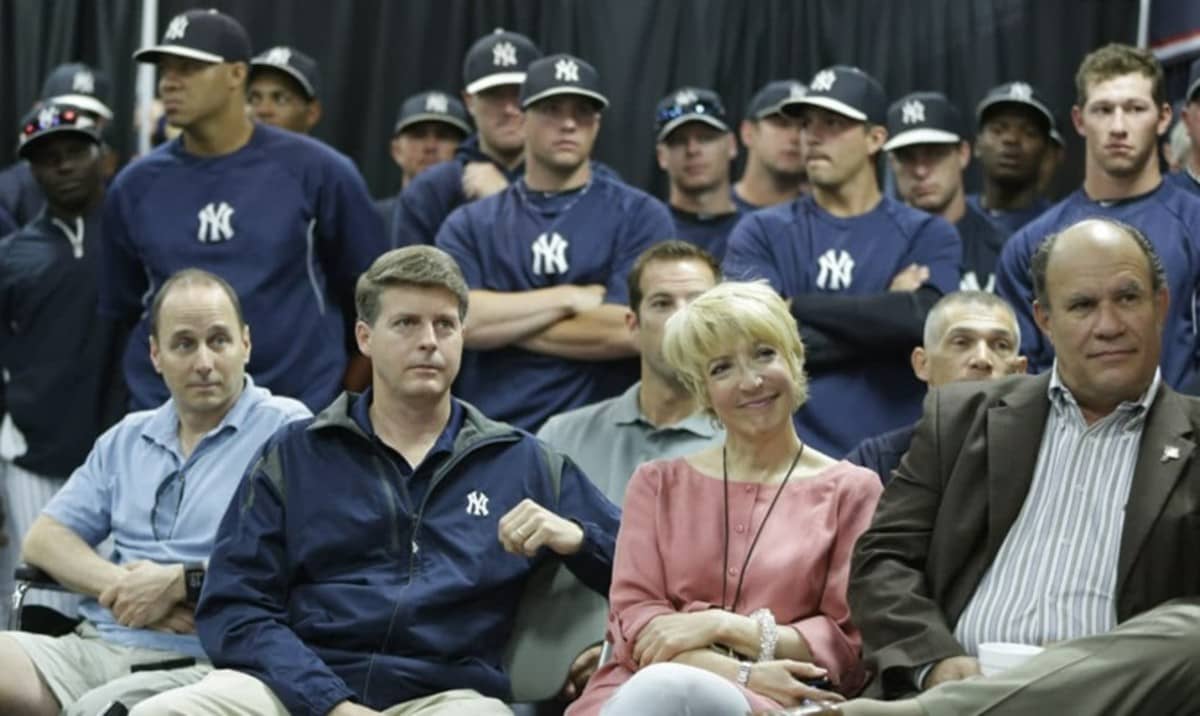
Afterman is also widely respected within the Yankees’ organizational culture. She credits her longevity to a deep-rooted belief in being prepared—something she learned directly from the late George Steinbrenner, the team’s legendary former owner.
“He always knew the one thing you didn’t know walking into a meeting,” she said. “So I learned to always be ready. But if I didn’t know something, I’d say so—and go get the answer.”
Her admiration for Steinbrenner remains strong. “He should be in the Hall of Fame,” she said. “He was all about the team, and he put players first—sometimes in ways that people didn’t even notice.”
Bridging generations of Yankees Leadership
Afterman has not only navigated the famously tempestuous Steinbrenner era but thrived under Hal Steinbrenner’s quieter, more analytical leadership style.
“Hal is rational, collaborative, and incredibly smart,” she said. “He listens. He wants to learn. He’s a modern leader—very different from his father.”
As for her partnership with Brian Cashman? It’s one of the longest-running and most productive front office duos in professional sports. “He doesn’t have a big ego,” she said. “It’s always a team effort with him.”
Rodriguez added, “He’s tough, but he’s got incredible emotional intelligence. I remember in 2009, when we were struggling, he came to Atlanta, spoke with the team, and from that moment we started playing .750 baseball and went on to win it all.”
A role model for the next generation of baseball executives
Beyond her legal acumen and front-office acumen, Afterman represents something even more powerful—visibility. For many young women watching baseball, she’s living proof that gender need not be a barrier to influence or success.
“When my daughter met Jean, she said, ‘Wait—she works for the Yankees? But she’s a woman,’” Rodriguez recalled. “That moment said everything.”
Afterman admits to still battling imposter syndrome from time to time, even after decades of accolades. But her humility belies the fact that she changed the game—literally and figuratively.
“I think my superpower is that I care so damn much,” she said. “Every day, I want to do my job well.”
She’s done far more than that.
As the conversation around expanding the Baseball Hall of Fame to better include contributors off the field continues, Jean Afterman’s name should be at the very top of that list. For breaking down international barriers, elevating women in baseball, and sustaining excellence in the Yankees organization for over two decades, her legacy is more than secure—it’s overdue for formal recognition.
What do you think?